 MinuteRead
30 min
Book summary
Premium summary · Opens in the app · 30 min read
Every day, in conference rooms and on video calls, in auditoriums and at kitchen tables, people attempt to persuade other people. They present slides. They share data. They make arguments. And most of the time, they fail.
**Author:** Harvard Business Review
**Estimated Reading Time:** 45 minutes
**What You'll Learn:**
- Why storytelling transforms audiences more powerfully than data alone - How to establish credibility before attempting to persuade - The science of emotional connection and why warmth precedes influence - How to frame messages so audiences immediately see what's in it for them - Practical frameworks for apologies, personal narratives, and visual communication - How to develop authentic presentation skills that make you memorable
**Who This Book Is For:**
Professionals who need to influence others through spoken communication. Whether you're presenting to a board, leading a team meeting, pitching a client, or navigating a career transition, the ideas in this collection will help you speak with greater clarity, connection, and impact.
Every day, in conference rooms and on video calls, in auditoriums and at kitchen tables, people attempt to persuade other people. They present slides. They share data. They make arguments. And most of the time, they fail. Not because their ideas are bad. Not because their information is wrong. But because they misunderstand what persuasion actually requires. The most common mistake is treating a presentation as an information delivery system. You have something to say. You say it. The audience receives it. If the information is good enough, the thinking goes, people will act on it. But that's not how human minds work. People don't make decisions based on information alone. They make decisions based on trust, emotion, identity, and narrative. They need to feel something before they can truly hear something. They need to believe in the messenger before they can believe the message. They need to see themselves in the story before they can imagine acting on it. This collection brings together some of the most important thinking on public speaking and presenting from Harvard Business Review. The articles draw on research from psychology, neuroscience, organizational behavior, and leadership studies. But more importantly, they draw on the real-world experience of people who have stood in front of audiences and changed minds. The central insight running through every piece is deceptively simple: a successful talk is a little miracle. People see the world differently afterward. That's a high bar. But it's the right bar. Because if your goal is simply to convey information, you could send an email. If your goal is to create change, you need something more. You need to understand how stories work, how trust is built, how emotions shape perception, and how authenticity creates connection. The challenge is that most of us were never taught these skills. We learned to write essays in school. We learned to structure arguments. We learned to create slides. But we never learned the deeper craft…
Continue reading in the MinuteRead app
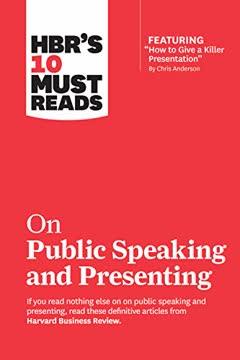
Get the complete 30-minute summary of HBR's 10 Must Reads on Public Speaking and Presenting
Get the complete summary in the appTell stories, not just facts. Stories are how humans make sense of experience.
Lead with warmth. People need to trust you before they can fully appreciate your competence.
Frame your message around your audience's interests. Show them what's in it for them.
Use vivid language. Metaphors, examples, and stories make abstract ideas tangible and memorable.
Balance direction, empathy, and meaning in your communication. All three are essential for motivation.
Apologize with candor and accountability. Specific details and a concrete plan for change rebuild trust.
"HBR's 10 Must Reads on Public Speaking and Presenting" is a strong fit if you want practical ideas around business, leadership, communication, especially themes like tell stories, not just facts. stories are how humans make sense of experience; lead with warmth. people need to trust you before they can fully appreciate your competence. The MinuteRead summary distills these concepts into a focused read, whether you're deciding whether to buy the book or applying its lessons at work.
Harvard Business Review is a prestigious management magazine published by Harvard Business Publishing, a wholly-owned subsidiary of Harvard University. It features articles on various business and management topics, including leadership, strategy, and innovation. The publication is known for its rigorous editorial process and contributions from leading academics, executives, and thought leaders. HBR's "10 Must Reads" series compiles essential articles on specific subjects, providing readers with…
View all summaries by Harvard Business ReviewContinue Reading
Access the complete 30-minute summary and thousands more nonfiction books in the MinuteRead app.

Continue reading the complete summary in the MinuteRead app.






