 MinuteRead
30 min
Book summary
by Clay Shirky
Premium summary · Opens in the app · 30 min read
In 2006, a woman named Ivanna left her phone in a New York City taxi. It was not a remarkable phone. It was not expensive. But it was hers, and it contained her life: contacts, photos, messages, the small accumulated data of a person's daily existence.
**Author:** Clay Shirky **Estimated Reading Time:** 45 minutes
**What You'll Learn:**
- Why the ability to form groups has fundamentally changed in the digital age - How amateur production is reshaping journalism, media, and institutions - What makes collaborative projects like Wikipedia succeed - Why the old rules of organization no longer apply - How social tools are transforming activism, business, and daily life
**Who This Book Is For:**
Anyone who has wondered why some online communities thrive while others collapse. Anyone trying to understand how a photo of a phone can topple a government, how strangers can build an encyclopedia, or why your organization feels slower than the world around it. This book is for people who sense that something profound has shifted in how humans coordinate and want to understand what that means for their work, their communities, and their future.
In 2006, a woman named Ivanna left her phone in a New York City taxi. It was not a remarkable phone. It was not expensive. But it was hers, and it contained her life: contacts, photos, messages, the small accumulated data of a person's daily existence. The person who found the phone was not inclined to return it. When Ivanna's friend Evan reached out, the finder demanded money. Evan, a software developer, did something that would have been unthinkable just a decade earlier. He created a simple webpage describing the situation. He posted it online. Then he emailed the link to a few friends. Within days, the story spread. Strangers began offering help. Someone identified the person holding the phone. Someone else found her MySpace page. A police officer got involved. The phone was returned. This story is not remarkable because of the technology involved. Websites and email were old news by 2006. It is remarkable because of what it revealed about human coordination. A group of strangers, connected loosely through digital tools, accomplished something that would previously have required either luck, persistence, or institutional power. They did it quickly, cheaply, and without any formal organization. Clay Shirky wrote *Here Comes Everybody* to explain what happens when the cost of forming groups collapses. For most of human history, organizing people was expensive. You needed offices, phone trees, printing presses, broadcast licenses, or institutional authority. These costs meant that only certain kinds of groups could form: companies, governments, churches, unions, professional associations. The barriers to entry were high, so the number of groups was limited, and their behavior was predictable. Then the internet arrived, and the cost of group formation fell to nearly zero. Anyone with a phone could coordinate with anyone else. The result was not simply more groups. It was different kinds of groups, doing different…
Continue reading in the MinuteRead app
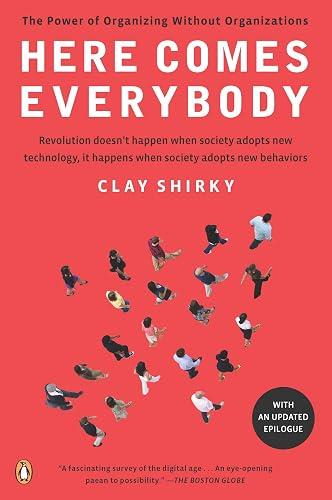
Get the complete 30-minute summary of Here Comes Everybody
Get the complete summary in the appThe cost of group formation has collapsed, and this changes everything about how society works.
Publishing is now free, which means the gatekeepers have lost their monopoly and the audience has become the producer.
The new model of media is publish-then-filter, not filter-then-publish.
Collaborative production works because it taps into motivations that traditional organizations ignore.
Collective action is easier to organize but harder to sustain in the digital age.
Social networks have a small world structure that enables information to spread quickly.
"Here Comes Everybody" is a strong fit if you want practical ideas around business, sociology, technology, especially themes like the cost of group formation has collapsed, and this changes everything about how society works; publishing is now free, which means the gatekeepers have lost their monopoly and the audience has become the producer. The MinuteRead summary distills these concepts into a focused read, whether you're deciding whether to buy the book or applying its lessons at work.
Motivated to help readers with "Our social tools are not an improvement to modern society; they are a challenge to it." Technological, Clay Shirky wrote “Here Comes Everybody” to package those ideas for a fast, focused read. In “Here Comes Everybody”, Clay Shirky focuses on "Our social tools are not an improvement to modern society; they are a challenge to it." Technological. Through “Here Comes Everybody”, Clay Shirky distills the core ideas on business into lessons readers can absorb in a sing…
Continue Reading
Access the complete 30-minute summary and thousands more nonfiction books in the MinuteRead app.

Continue reading the complete summary in the MinuteRead app.






