MinuteRead
30 min
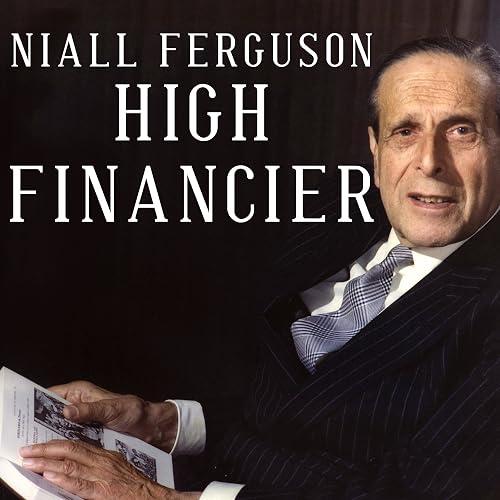
The history of modern finance is often told as a story of institutions, markets, and impersonal forces. We speak of the rise of the corporation, the globalization of capital, the invention of new financial instruments. But behind every major transformation in the financial world stands a particular kind of person: someone who saw possibilities that others missed, who possessed the nerve to act on those visions, and who was willing to break with convention in ways that permanently altered the lan
**Author:** Niall Ferguson
**Estimated Reading Time:** 45 minutes
**What You'll Learn:**
- How Siegmund Warburg transformed modern finance and created the blueprint for the global investment bank - Why the Warburg family's internal tensions shaped one of the most remarkable careers in financial history - What the rise of Nazism and forced exile taught Warburg about power, identity, and resilience - How Warburg pioneered hostile takeovers, Eurobonds, and a new philosophy of banking - Why Warburg's warnings about inflation, state power, and financial complacency remain urgent today
**Who This Book Is For:**
This book is for anyone who wants to understand how modern finance was built, not through abstract theory but through the life of a man who lived through war, exile, and reinvention. It is for readers interested in the intersection of money, power, and morality. It is for those who sense that the financial world we inhabit today was shaped by specific individuals with specific visions, and who want to meet one of the most important of those individuals up close.
The history of modern finance is often told as a story of institutions, markets, and impersonal forces. We speak of the rise of the corporation, the globalization of capital, the invention of new financial instruments. But behind every major transformation in the financial world stands a particular kind of person: someone who saw possibilities that others missed, who possessed the nerve to act on those visions, and who was willing to break with convention in ways that permanently altered the landscape. Siegmund Warburg was such a person. Born into one of Europe's most distinguished Jewish banking dynasties, Warburg could have lived a comfortable life as a minor member of an established financial family. Instead, he became one of the most consequential financiers of the twentieth century, a man who fundamentally changed how banking was practiced in the City of London and, by extension, throughout the world. Yet Warburg was never simply a banker. He was a scholar who loved literature and philosophy. He was a German patriot who became a passionate British citizen. He was a Jew who wrestled with questions of faith and identity throughout his life. He was a ruthless competitor who demanded the highest ethical standards from himself and his colleagues. He was, in the words of one observer, a man who lived several lives in one. Niall Ferguson's biography captures this complexity with rare depth and insight. Rather than presenting Warburg as a one-dimensional financial titan, Ferguson reveals a man of profound contradictions: an ascetic who appreciated luxury, an intellectual who thrived in the rough world of deal-making, an outsider who built one of the most influential firms in the City. The story…
Continue reading in the MinuteRead app
Get the complete 30-minute summary of High Financier
Get the complete summary in the appBanking is about judgment, not just money. The ability to assess risk, evaluate character, and see opportunities is what
Your unconventional background can be your greatest advantage. Warburg's literary and philosophical training gave him to
Stability is fragile. Institutions can fail. Constant vigilance and reform are necessary to prevent decline.
Exile and displacement can be opportunities for reinvention. Losing your old context can free you to build something new
Innovation often emerges from constraint. The Eurobond was a creative response to regulatory barriers.
Everyone encounters the limits of their power. Understanding these limits is essential to effective leadership.
"High Financier" is a strong fit if you want practical ideas around biography, history, finance, especially themes like banking is about judgment, not just money. the ability to assess risk, evaluate character, and see opportunities is what; your unconventional background can be your greatest advantage. warburg's literary and philosophical training gave him to. The MinuteRead summary distills these concepts into a focused read, whether you're deciding whether to buy the book or applying its lessons at work.
Motivated to help readers with the ego, Niall Ferguson wrote “High Financier” to package those ideas for a fast, focused read. In “High Financier”, Niall Ferguson focuses on the ego. Through “High Financier”, Niall Ferguson distills the core ideas on biography into lessons readers can absorb in a single short sitting. Readers turn to this work when they want Niall Ferguson's perspective on the subject without working through the entire original volume. Sir Niall Campbell Ferguson ( NEEL; born 18…
View all summaries by Niall FergusonContinue Reading
Access the complete 30-minute summary and thousands more nonfiction books in the MinuteRead app.

Continue reading the complete summary in the MinuteRead app.