 MinuteRead
30 min
Book summary
Premium summary · Opens in the app · 30 min read
Every year, thousands of companies launch branding campaigns designed to make their products memorable, likable, and distinct. They hire advertising agencies, conduct focus groups, and refine their positioning statements. They invest millions in building awareness and crafting emotional connections with consumers. Yet almost all of these efforts fail to produce anything close to an iconic brand.
**Author:** Douglas B. Holt **Estimated Reading Time:** 45 minutes
**What You'll Learn:** - Why the most powerful brands in the world are not built on unique selling propositions or emotional connections, but on cultural myths - How iconic brands like Nike, Budweiser, and Mountain Dew resolve deep tensions in society through storytelling - The difference between conventional branding models and cultural branding, and why the latter produces the most valuable brands in history - How to identify cultural contradictions, select authentic populist worlds, and craft myths that resonate with millions - The organizational capabilities required to build and sustain iconic brands over decades
**Who This Book Is For:** This book is for marketers, brand strategists, entrepreneurs, and cultural observers who want to understand why certain brands transcend commerce and become meaningful symbols in people's lives. It is for anyone who has wondered why Nike means more than shoes, why Harley-Davidson means more than motorcycles, and why some brands become woven into the fabric of national identity while others remain merely products. If you are tired of conventional marketing advice that treats brands as abstract bundles of associations, this book offers a fundamentally different way of thinking.
Every year, thousands of companies launch branding campaigns designed to make their products memorable, likable, and distinct. They hire advertising agencies, conduct focus groups, and refine their positioning statements. They invest millions in building awareness and crafting emotional connections with consumers. Yet almost all of these efforts fail to produce anything close to an iconic brand. Consider the brands that have achieved genuine cultural significance. Nike is not merely a manufacturer of athletic footwear. It is a symbol of individual achievement against all odds. Harley-Davidson is not just a motorcycle company. It represents freedom from the constraints of organized society. Coca-Cola is not simply a carbonated beverage. It embodies a particular vision of American togetherness and optimism. These brands have become icons. They occupy a place in the cultural imagination that transcends their functional utility. People tattoo their logos on their bodies. They build communities around them. They defend them fiercely against criticism. They experience them as meaningful symbols of who they are and what they believe. The central puzzle this book addresses is simple: How does a commercial product become a cultural icon? What separates the handful of brands that achieve this status from the vast majority that remain merely well-known products? The conventional answer, repeated endlessly in marketing textbooks and business schools, is that iconic brands are built through superior products, consistent messaging, and emotional connections with consumers. According to this view, brands succeed by owning a clear position in the consumer's mind, by delivering on a consistent promise, and by forging…
Continue reading in the MinuteRead app
Get the complete 30-minute summary of How Brands Become Icons
Get the complete summary in the appIconic brands perform identity myths that address cultural contradictions between a society's ideals and its citizens' l
The power of a myth depends on its fit with a particular historical moment. Myths must evolve as cultural tensions shift
Cultural branding prioritizes myth-making over persuasion, cultural expression over abstract associations, and adaptatio
Identity brands compete in myth markets against all cultural products that address similar identity desires, not just pr
The cultural brief directs myth creation through three elements: myth treatment, populist authenticity, and charismatic
Brand equity for iconic brands comes from cultural and political authority, not abstract associations.
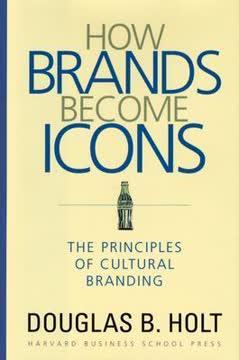
"How Brands Become Icons" is a strong fit if you want practical ideas around business, design, buisness, especially themes like iconic brands perform identity myths that address cultural contradictions between a society's ideals and its citizens' l; the power of a myth depends on its fit with a particular historical moment. myths must evolve as cultural tensions shift. The MinuteRead summary distills these concepts into a focused read, whether you're deciding whether to buy the book or applying its lessons at work.
Douglas B. Holt is the CEO of Cultural Strategy Group and a former professor of Marketing at Oxford University. He is known for his research on consumer culture theory and has published extensively in academic journals. Holt's work focuses on cultural branding and its impact on consumer behavior. His most notable books are "How Brands Become Icons" and "Cultural Strategy." Holt's expertise lies in understanding how brands can leverage cultural tensions to become iconic symbols. His research has …
View all summaries by Douglas B. HoltContinue Reading
Access the complete 30-minute summary and thousands more nonfiction books in the MinuteRead app.

Continue reading the complete summary in the MinuteRead app.






