 MinuteRead
30 min
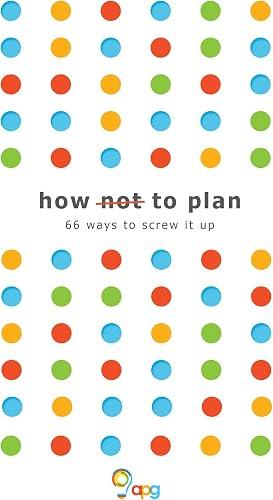
Book summary
by APG Ltd
Premium summary · Opens in the app · 30 min read
Every year, thousands of marketing plans are written with tremendous confidence and very little evidence. They contain ambitious objectives, clever strategies, and detailed execution plans. They look impressive in PowerPoint. They sound convincing in boardrooms. And then, more often than not, they fail.
**Author:** Les Binet and Sarah Carter
**Estimated Reading Time:** 45 minutes
**What You'll Learn:** Why most marketing planning is built on flawed assumptions, how to replace wishful thinking with evidence-based strategy, and the counterintuitive principles that actually drive brand growth.
**Who This Book Is For:** Marketers, planners, brand managers, business owners, and anyone who has ever sat in a meeting wondering why the strategy on the whiteboard bears no resemblance to how real people actually behave.
Every year, thousands of marketing plans are written with tremendous confidence and very little evidence. They contain ambitious objectives, clever strategies, and detailed execution plans. They look impressive in PowerPoint. They sound convincing in boardrooms. And then, more often than not, they fail. The problem is not a lack of effort. The problem is that most marketing planning rests on a foundation of assumptions that are simply wrong. We assume that customers are loyal when they are not. We assume that differentiation is the key to success when distinctiveness matters more. We assume that rational messages persuade people when emotional responses drive behavior. We assume that more data leads to better decisions when granularity often obscures the truth. Les Binet and Sarah Carter spent decades working at adam&eveDDB, one of the world's most creative advertising agencies. They have seen brilliant campaigns succeed and expensive campaigns fail. They have watched marketers repeat the same mistakes generation after generation, armed with the same flawed assumptions and the same misplaced confidence. This book began as a series of articles for AdMap magazine. The authors planned to write 24 pieces. They wrote for six years and produced over 60. The result is a collection of hard-won lessons about what actually works in marketing, based on evidence rather than wishful thinking. The title, "How Not to Plan," is deliberately provocative. It suggests that the problem with most planning is not the absence of effort but the presence of bad assumptions. The authors argue that before you can plan effectively, you need to unlearn many of the things you think you know about marketing. One of the central themes running through the book is the gap between how marketers think people behave and how people actually behave. Marketers imagine consumers carefully evaluating brands, comparing features, and making rational choices. In reality, people are busy, distracted, and largely indifferent. They buy brands out of habit. They switch between brands constantly. They rarely notice advertising, and when they do, they rarely remember the message. This gap between fantasy and reality leads to planning that is disconnected from the world it is supposed to influence. Objectives are set that have no chance of being achieved. Strategies are built on the assumption of loyalty…
Continue reading in the MinuteRead app
Get the complete 30-minute summary of How not to Plan
Get the complete summary in the appGrowth comes primarily through penetration, not loyalty. Focus on reaching new customers.
Advertising works as a weak force. Expect small nudges, not conversions.
Distinctiveness matters more than differentiation. Say ordinary things in extraordinary ways.
Emotional response matters more than rational messaging. Make people feel something.
Reach and share of voice are hygiene factors. Without them, nothing else matters.
Your customers are the customers of other brands who occasionally buy you. Define competition broadly.
"How not to Plan" is a strong fit if you want practical ideas around business, management, psychology, especially themes like growth comes primarily through penetration, not loyalty. focus on reaching new customers; advertising works as a weak force. expect small nudges, not conversions. The MinuteRead summary distills these concepts into a focused read, whether you're deciding whether to buy the book or applying its lessons at work.
Motivated to help readers with ‘A goal without a plan is just a wish’ SMART Objectives, APG Ltd wrote “How not to Plan” to package those ideas for a fast, focused read. In “How not to Plan”, APG Ltd focuses on ‘A goal without a plan is just a wish’ SMART Objectives. Through “How not to Plan”, APG Ltd distills the core ideas on business into lessons readers can absorb in a single short sitting. Readers turn to this work when they want APG Ltd's perspective on the subject without working through t…
Continue Reading
Access the complete 30-minute summary and thousands more nonfiction books in the MinuteRead app.

Continue reading the complete summary in the MinuteRead app.






