 MinuteRead
30 min
Book summary
Premium summary · Opens in the app · 30 min read
Every organization makes decisions under uncertainty. Every leader has faced a moment when someone in the room says, "Well, we can't really measure that." The statement usually ends the conversation. It suggests that some things are simply beyond quantification, that certain risks must be accepted on faith, and that intuition is the only tool available.
**Author:** Douglas W. Hubbard
**Estimated Reading Time:** 45 minutes
**What You'll Learn:** How to measure anything that matters to your decisions, even the so-called intangibles. You will discover why measurement is easier than you think, how to quantify uncertainty, how to calculate the value of information, and how to use simple tools to make dramatically better decisions.
**Who This Book Is For:** Managers, analysts, entrepreneurs, and decision-makers who have ever said "that can't be measured" or who have relied on guesswork when a better answer was possible. If you face uncertainty in important choices, this book is for you.
Every organization makes decisions under uncertainty. Every leader has faced a moment when someone in the room says, "Well, we can't really measure that." The statement usually ends the conversation. It suggests that some things are simply beyond quantification, that certain risks must be accepted on faith, and that intuition is the only tool available. Douglas Hubbard built his career challenging that assumption. He argues that the belief in immeasurability is not just wrong. It is expensive. When we declare something immeasurable, we give ourselves permission to avoid thinking carefully about it. We fall back on gut feeling, political maneuvering, or the loudest voice in the room. And we make worse decisions as a result. The problem is not that measurement is impossible. The problem is that most people have a narrow and intimidating definition of measurement. They imagine it requires perfect precision, massive data sets, and sophisticated statistical training. They think measurement means eliminating all uncertainty. Since that seems unattainable, they abandon the effort entirely. Hubbard's central insight is liberating. Measurement, he explains, is simply the reduction of uncertainty. It is not about achieving certainty. It is about knowing more than you did before. And in most decisions, even a small reduction in uncertainty can be worth a great deal. This reframing changes everything. If measurement is about reducing uncertainty rather than eliminating it, then almost anything can be measured. You do not need a perfect answer. You need an answer that is better than your current state of ignorance. You need a range instead of a wild guess. You need a calibrated estimate instead of a vague feeling. The book is filled with examples of people who measured things that seemed impossible. A second-century Greek estimated the circumference of the Earth using shadows and geometry. A modern manager measured the value of information technology investments. A risk analyst quantified the probability of a rare but catastrophic event. None of these people had perfect data. All of them reduced uncertainty enough to make better decisions. Hubbard's approach is practical and accessible. He does not ask you to become a statistician.…
Continue reading in the MinuteRead app
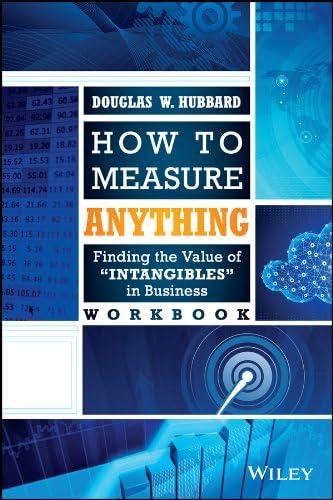
Get the complete 30-minute summary of How to Measure Anything Workbook
Get the complete summary in the appAnything that matters can be measured through its observable consequences.
Measurement is about reducing uncertainty, not achieving certainty.
Define the decision before you measure.
Calibrate your estimates through practice and feedback.
Compute the value of information before investing in measurement.
Use ranges instead of point estimates.
"How to Measure Anything Workbook" is a strong fit if you want practical ideas around business, management, economics, especially themes like anything that matters can be measured through its observable consequences; measurement is about reducing uncertainty, not achieving certainty. The MinuteRead summary distills these concepts into a focused read, whether you're deciding whether to buy the book or applying its lessons at work.
Motivated to turn hard-won expertise into something readers can use every day, Douglas W. Hubbard wrote “How to Measure Anything Workbook” to distill the ideas behind the work into clear, actionable lessons. Through “How to Measure Anything Workbook”, Douglas W. Hubbard distills the core ideas on business into lessons readers can absorb in a single short sitting. Readers turn to this work when they want Douglas W. Hubbard's perspective on the subject without working through the entire original v…
View all summaries by Douglas W. HubbardContinue Reading
Access the complete 30-minute summary and thousands more nonfiction books in the MinuteRead app.

Continue reading the complete summary in the MinuteRead app.






