MinuteRead
30 min
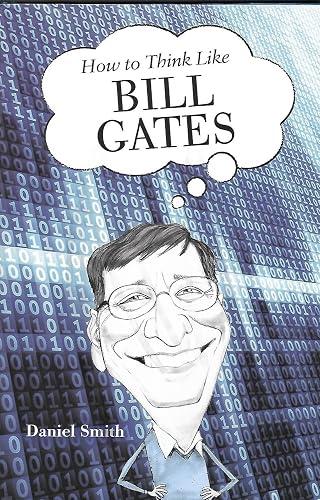
Book summary
by Daniel Smith
Premium summary · Opens in the app · 30 min read
In the mid-1970s, a young man in his early twenties sat in a small office in Albuquerque, New Mexico, staring at a problem that would define the next half-century of human history. The personal computer was about to become a reality, but there was no software to run it. The machines were little more than expensive paperweights without instructions, without a language, without a way for ordinary people to make them useful.
**Author:** Daniel Smith
**Estimated Reading Time:** 45 minutes
**What You'll Learn:** How a teenage computer enthusiast became one of the most consequential figures in technology and philanthropy, and the mental models, habits, and strategies that drove his success.
**Who This Book Is For:** Anyone who wants to understand how Bill Gates thinks, solves problems, builds organizations, and applies relentless curiosity to both business and global challenges.
In the mid-1970s, a young man in his early twenties sat in a small office in Albuquerque, New Mexico, staring at a problem that would define the next half-century of human history. The personal computer was about to become a reality, but there was no software to run it. The machines were little more than expensive paperweights without instructions, without a language, without a way for ordinary people to make them useful. Bill Gates saw this gap before almost anyone else. He understood that the value of a computer was not in the hardware, the wires, the circuits, or the plastic casing. The value was in what the machine could do. And what it could do depended entirely on software. This insight seems obvious today, when software companies rank among the most valuable businesses on earth and apps shape how we work, communicate, and live. But in 1975, it was a radical idea. Most people thought the money was in building machines. Gates bet everything on the opposite proposition: the money was in telling the machines what to do. That bet made him, for a time, the richest person in the world. But the more interesting story is what happened after. Gates did not simply accumulate wealth and retreat into comfortable obscurity. He turned the same analytical mind that built Microsoft toward a different set of problems: malaria, polio, education inequality, agricultural poverty. He applied the same intensity, the same demand for measurable results, and the same willingness to challenge conventional thinking. This book is not a biography in the traditional sense. It is an exploration of how Bill Gates thinks. It examines the mental habits, the strategic frameworks, and the personal disciplines that allowed him to succeed in two radically different arenas: the brutally competitive world of technology and the complex, often frustrating world of global philanthropy. Why does this matter? Because the way Gates thinks is not mysterious. It is not the product of genius alone, though he is undoubtedly brilliant. It is the product of specific, identifiable habits and approaches that can be studied, understood, and applied. He reads voraciously. He questions assumptions. He demands evidence. He thinks in systems. He embraces competition. He learns from failure. He treats time as a precious resource. These are not secrets. They are practices.…
Continue reading in the MinuteRead app
Get the complete 30-minute summary of How to Think Like Bill Gates
Get the complete summary in the appThink systematically: understand the system, find the leverage point, and act strategically.
Create a clear, specific vision and use it as a filter for every decision.
Develop deep expertise in a domain that matters.
Position yourself at the center of an ecosystem, not at the periphery.
Embrace competition as a driver of improvement.
Demand evidence and rigor in every decision.
"How to Think Like Bill Gates" is a strong fit if you want practical ideas around biography, business, leadership, especially themes like think systematically: understand the system, find the leverage point, and act strategically; create a clear, specific vision and use it as a filter for every decision. The MinuteRead summary distills these concepts into a focused read, whether you're deciding whether to buy the book or applying its lessons at work.
Motivated to help readers with "Sleep is for wimps." Early fascination with computers, Daniel Smith wrote “How to Think Like Bill Gates” to package those ideas for a fast, focused read. In “How to Think Like Bill Gates”, Daniel Smith focuses on "Sleep is for wimps." Early fascination with computers. Through “How to Think Like Bill Gates”, Daniel Smith distills the core ideas on biography into lessons readers can absorb in a single short sitting. Readers turn to this work when they want Daniel Sm…
Continue Reading
Access the complete 30-minute summary and thousands more nonfiction books in the MinuteRead app.

Continue reading the complete summary in the MinuteRead app.