MinuteRead
30 min
Book summary
by Daniel Smith
Premium summary · Opens in the app · 30 min read
Steve Jobs was not an engineer. He was not a programmer. He was not a businessman in the traditional sense. Yet he built the most valuable company in the world and fundamentally changed how humanity interacts with technology.
**Author:** Daniel Smith
**Estimated Reading Time:** 45 minutes
**What You'll Learn:**
- How an outsider's perspective can become your greatest creative advantage - Why simplicity is the most sophisticated design principle - How to build teams that achieve what fifty average people cannot - The art of turning setbacks into comebacks - How to create products and experiences people don't yet know they need
**Who This Book Is For:**
This book is for anyone who wants to think differently. Whether you are an entrepreneur, a creative professional, a manager, or someone who simply feels stuck in conventional patterns, the lessons drawn from Steve Jobs' life offer a practical framework for innovation, resilience, and purposeful work. If you have ever wondered how one person could reshape multiple industries, this book will show you the mental models behind that achievement.
Steve Jobs was not an engineer. He was not a programmer. He was not a businessman in the traditional sense. Yet he built the most valuable company in the world and fundamentally changed how humanity interacts with technology. This presents a puzzle. How did a college dropout with no formal technical training manage to revolutionize personal computing, animated films, music distribution, mobile phones, and retail? What was happening inside his mind that allowed him to see possibilities others missed? Daniel Smith's exploration of Jobs' thinking patterns reveals something surprising. The source of Jobs' genius was not a single skill or talent. It was a collection of mental habits, perspectives, and principles that anyone can study and adopt. The problem most people face is not a lack of intelligence or ambition. It is a lack of independent thinking. We inherit assumptions about how things should work. We accept industry norms. We follow established paths. We optimize for safety rather than significance. Jobs rejected all of this, and that rejection became the foundation of his extraordinary career. Understanding how Jobs thought matters because we live in an era of unprecedented change. The skills that made people successful in stable, predictable environments are becoming less valuable. What matters now is the ability to see what others miss, to connect disparate ideas, to simplify complexity, and to persist through uncertainty. These are precisely the thinking patterns Jobs exemplified. The challenge is that Jobs was a complex figure. He could be demanding, abrasive, and difficult. He was not a saint, and this book does not pretend otherwise. But his thinking patterns contain valuable lessons that can be extracted and applied without replicating his flaws. What made Jobs different was his willingness to trust his own judgment over conventional wisdom. He believed that rules were made by people no smarter than him, and therefore rules could be broken.…
Continue reading in the MinuteRead app
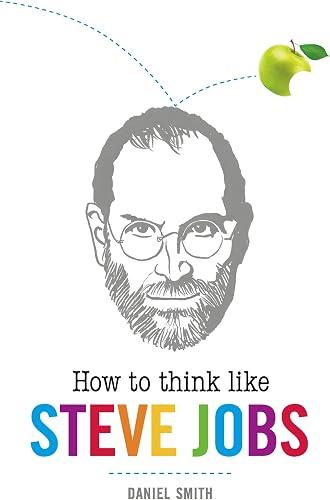
Get the complete 30-minute summary of How to Think Like Steve Jobs
Get the complete summary in the appThink like an outsider. Your unique perspective is your greatest asset.
Trust your vision over consensus. Customers don't know what they want until you show them.
Pursue simplicity relentlessly. Say no to everything that does not serve the user.
Build a team of A-players. A small team of exceptional people can outperform a large team of average people.
Master the art of storytelling. People buy stories, not products.
Turn setbacks into comebacks. Failure is information, not a verdict.
"How to Think Like Steve Jobs" is a strong fit if you want practical ideas around biography, business, self help, especially themes like think like an outsider. your unique perspective is your greatest asset; trust your vision over consensus. customers don't know what they want until you show them. The MinuteRead summary distills these concepts into a focused read, whether you're deciding whether to buy the book or applying its lessons at work.
Motivated to help readers with 1) Embrace Your Outsider Status to Foster Innovation 2) Cultivate a Unique Vision and Follow Your Own Path 3), Daniel Smith wrote “How to Think Like Steve Jobs” to package those ideas for a fast, focused read. In “How to Think Like Steve Jobs”, Daniel Smith focuses on 1) Embrace Your Outsider Status to Foster Innovation 2) Cultivate a Unique Vision and Follow Your Own Path 3). Through “How to Think Like Steve Jobs”, Daniel Smith distills the core ideas on biography…
Continue Reading
Access the complete 30-minute summary and thousands more nonfiction books in the MinuteRead app.

Continue reading the complete summary in the MinuteRead app.