 MinuteRead
30 min
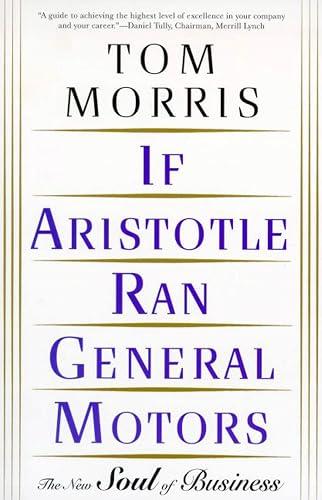
Book summary
by Tom Morris
Premium summary · Opens in the app · 30 min read
Every organization operates on a set of assumptions about what makes people tick. Most modern businesses have settled on a narrow set: people are motivated primarily by money, status, and security. Manage those levers correctly, the thinking goes, and you will get results.
**Author:** Tom Morris **Estimated Reading Time:** 45 minutes
**What You'll Learn:**
- Why truth, beauty, goodness, and unity are not abstract ideals but practical business tools - How ancient wisdom from Aristotle, Plato, and other philosophers can transform modern organizations - The four universal spiritual needs that drive human fulfillment at work - Why ethical decision-making requires more than rule-following - How to build organizations where people thrive and excellence follows naturally
**Who This Book Is For:**
This book is for leaders who sense that something is missing in modern organizational life. It is for managers tired of superficial quick fixes and employees who want their work to matter. It is for anyone who suspects that the deepest answers to workplace challenges might come from the oldest questions philosophers ever asked.
Every organization operates on a set of assumptions about what makes people tick. Most modern businesses have settled on a narrow set: people are motivated primarily by money, status, and security. Manage those levers correctly, the thinking goes, and you will get results. Tom Morris looked at this assumption and found it wanting. Not because money and security do not matter, but because they represent only a fraction of what human beings actually need to flourish. And when organizations ignore the full range of human needs, they pay a price in disengagement, distrust, mediocrity, and quiet desperation. Morris came to this conclusion through an unusual path. He spent fifteen years teaching philosophy at the University of Notre Dame, immersed in the works of Aristotle, Plato, and other ancient thinkers. These philosophers spent their lives asking fundamental questions: What makes a good life? What does it mean to flourish? How should we treat one another? What makes communities strong? When Morris began consulting with businesses, he discovered something surprising. The questions executives were wrestling with were not fundamentally different from the questions the ancient philosophers had explored. How do we build trust? How do we create environments where people do their best work? How do we make decisions that serve both our organization and our values? How do we sustain excellence over time? The ancient philosophers had thought deeply about these questions. Their answers, Morris realized, were not dusty relics but living wisdom that could transform modern organizations. The problem with most business advice, Morris observed, is that it operates at the surface level. It offers techniques without understanding, tactics without principles. It tells you what to do without explaining why it works or what deeper human needs it addresses. This approach produces short-term gains at best and lasting damage at worst. Morris proposed something different. He suggested that the most practical thing a leader can do is understand the…
Continue reading in the MinuteRead app
Get the complete 30-minute summary of If Aristotle Ran General Motors
Get the complete summary in the appTruth, beauty, goodness, and unity are not abstract ideals but practical business tools that address fundamental human n
Trust is the lubricant of human relations, and truth is the foundation of trust.
Sharing knowledge multiplies power rather than diminishing it.
Beauty in the workplace, both passive and active, refreshes, restores, and inspires.
Goodness creates strength in individuals and organizations, not just avoidance of problems.
Collaboration trumps competition, and the best teams balance individual uniqueness with collective unity.
"If Aristotle Ran General Motors" is a strong fit if you want practical ideas around business, philosophy, leadership, especially themes like truth, beauty, goodness, and unity are not abstract ideals but practical business tools that address fundamental human n; trust is the lubricant of human relations, and truth is the foundation of trust. The MinuteRead summary distills these concepts into a focused read, whether you're deciding whether to buy the book or applying its lessons at work.
Motivated to help readers with trust is like a lubricant for human relations, Tom Morris wrote “If Aristotle Ran General Motors” to package those ideas for a fast, focused read. Through “If Aristotle Ran General Motors”, Tom Morris distills the core ideas on business into lessons readers can absorb in a single short sitting. Readers turn to this work when they want Tom Morris's perspective on the subject without working through the entire original volume. The book is structured so each chapter h…
Continue Reading
Access the complete 30-minute summary and thousands more nonfiction books in the MinuteRead app.

Continue reading the complete summary in the MinuteRead app.






