MinuteRead
30 min
Book summary
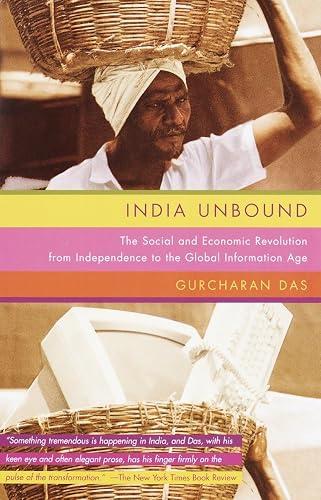
by Gurcharan Das
Premium summary · Opens in the app · 30 min read
For most of the twentieth century, India was the world's most famous underachiever. The country that had once been among the richest civilizations on earth, that had produced great universities, thriving trade networks, and sophisticated manufacturing, had become synonymous with poverty, bureaucracy, and missed opportunity.
**Author:** Gurcharan Das **Estimated Reading Time:** 45 minutes
**What You'll Learn:**
- Why India's economy stagnated for four decades after independence - How the 1991 crisis became the catalyst for transformation - The rise of a confident new middle class and what it means - How entrepreneurs built world-class companies despite the system - The unfinished agenda that will determine India's future
**Who This Book Is For:**
Anyone who wants to understand how a nation of a billion people moved from socialist stagnation to economic dynamism. This book is for readers curious about India's transformation, the forces that held it back, the people who changed it, and the challenges that remain.
For most of the twentieth century, India was the world's most famous underachiever. The country that had once been among the richest civilizations on earth, that had produced great universities, thriving trade networks, and sophisticated manufacturing, had become synonymous with poverty, bureaucracy, and missed opportunity. The numbers told a grim story. Between 1950 and 1980, India's economy grew at roughly 3.5 percent per year, a rate economists derisively called the "Hindu rate of growth." Per capita income barely moved. Hundreds of millions of people remained trapped in poverty. The country that had helped spark the Industrial Revolution through its cotton textiles could not produce enough food to feed its own people. What went wrong? The answer, as Gurcharan Das explains in this remarkable book, lies in a fateful choice made at independence. In 1947, India's leaders faced a decision: embrace the market economy that had made the West prosperous, or follow the Soviet model of centralized planning. They chose the latter, convinced that socialism would deliver faster growth and greater equity. The result was the License Raj, a system of permits, quotas, and controls that regulated nearly every aspect of economic life. To start a business, you needed a license. To expand production, you needed another license. To import machinery, you needed still more permits. The system was designed to prevent the concentration of wealth, but it ended up concentrating power in the hands of bureaucrats and politicians. Das lived through this era, first as a student, then as a corporate executive at Procter & Gamble. He saw the system from the inside, navigating its absurdities while watching talented Indians leave the country in search of opportunity elsewhere. He also saw something else: the resilience and ingenuity of ordinary Indians who found ways to survive and sometimes thrive despite the obstacles. This book is part memoir, part economic history, part social commentary. It tells the story of India's journey from socialist stagnation to market-driven growth, from a closed economy to an increasingly open one, from a country that viewed…
Continue reading in the MinuteRead app
Get the complete 30-minute summary of India Unbound
Get the complete summary in the appIndia's poverty was the result of policy choices, not fate. Different choices produced different outcomes in countries l
The License Raj was a system of control that stifled innovation, encouraged corruption, and treated citizens as subjects
The 1991 crisis created the political opening for reforms that dismantled much of the License Raj.
The reforms unleashed entrepreneurial energy, leading to the rise of companies like Infosys and the transformation of ci
The new middle class is the most visible consequence of reform, transforming Indian society and politics.
India has succeeded in services but struggled in manufacturing, reflecting different strengths and policy choices than C
"India Unbound" is a strong fit if you want practical ideas around india, history, economics, especially themes like india's poverty was the result of policy choices, not fate. different choices produced different outcomes in countries l; the license raj was a system of control that stifled innovation, encouraged corruption, and treated citizens as subjects. The MinuteRead summary distills these concepts into a focused read, whether you're deciding whether to buy the book or applying its lessons at work.
Motivated to help readers with "The economic reforms, Gurcharan Das wrote “India Unbound” to package those ideas for a fast, focused read. In “India Unbound”, Gurcharan Das focuses on "The economic reforms. Through “India Unbound”, Gurcharan Das distills the core ideas on india into lessons readers can absorb in a single short sitting. Readers turn to this work when they want Gurcharan Das's perspective on the subject without working through the entire original volume. India Unbound: From Indepe…
Continue Reading
Access the complete 30-minute summary and thousands more nonfiction books in the MinuteRead app.

Continue reading the complete summary in the MinuteRead app.