 MinuteRead
30 min
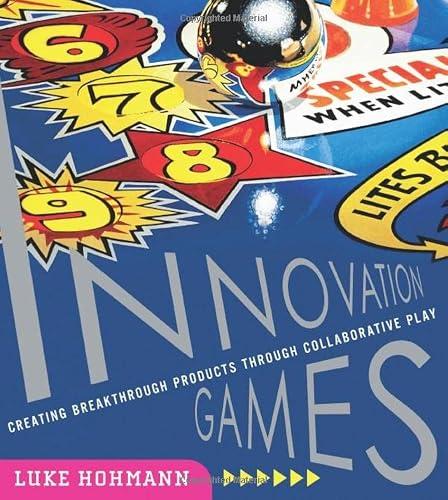
Book summary
by Luke Hohmann
Premium summary · Opens in the app · 30 min read
Every product team faces the same fundamental challenge. You need to know what your customers want, but customers often cannot tell you directly. They may not know themselves. They may struggle to articulate needs that feel obvious to them. They may tell you what they think you want to hear. Or they may simply lack the vocabulary to describe the gap between what they have and what they wish they had.
**Author:** Luke Hohmann
**Estimated Reading Time:** 45 minutes
**What You'll Learn:** How to use structured, collaborative games to uncover what your customers truly need, prioritize features with confidence, and build products that resonate deeply with the people who use them.
**Who This Book Is For:** Product managers, designers, entrepreneurs, marketers, and anyone who needs to understand customers better than surveys and focus groups can reveal.
Every product team faces the same fundamental challenge. You need to know what your customers want, but customers often cannot tell you directly. They may not know themselves. They may struggle to articulate needs that feel obvious to them. They may tell you what they think you want to hear. Or they may simply lack the vocabulary to describe the gap between what they have and what they wish they had. Traditional market research tools were built for a different era. Surveys reduce rich human experience to checkboxes and rating scales. Focus groups let the loudest voice dominate while quieter participants nod along. Interviews depend heavily on the skill of the interviewer and still only scratch the surface of what people actually do, feel, and need. All of these methods share a common flaw: they ask customers to be analysts of their own behavior, a task most people are poorly equipped to perform. Luke Hohmann recognized this problem during his years leading product teams at software companies. He watched smart, well-intentioned teams build features that nobody wanted. He saw roadmaps driven by the opinions of the highest-paid person in the room rather than evidence from actual customers. He observed the gap between what customers said in surveys and what they actually did when given a real product. And he wondered whether there was a better way. The answer he developed draws on a simple but profound insight: people reveal more when they are playing than when they are being interrogated. Children learn about the world through play. Adults, despite all their sophistication, still respond to the same dynamics. When you give someone a game to play, you lower their defenses. You engage their creativity. You invite them to show you what matters to them rather than asking them to explain it. Innovation Games are structured activities that use this principle to uncover customer needs. Each game creates a specific context that makes it easier for customers to express what they want, what frustrates them, and what they value. The games are not frivolous entertainment. They are carefully designed tools rooted in cognitive psychology and organizational behavior. They work because they change the nature of the conversation between a company and its customers. Consider the difference between asking a customer "What features do you want?" and…
Continue reading in the MinuteRead app
Get the complete 30-minute summary of Innovation Games
Get the complete summary in the appPlay is more effective than interrogation for understanding customers. Games lower defenses and engage creativity.
Prune the Product Tree reveals what customers value by asking them to shape a visual representation of your product, add
Remember the Future asks customers to describe what your product has done for them, revealing their definition of succes
Buy a Feature forces customers to make trade-offs with limited resources, revealing what they truly value.
Speed Boat makes negative feedback safe by using a boat metaphor where anchors represent frustrations.
Product Box taps into customer expertise in buying products, revealing what they would emphasize to convince others to b
"Innovation Games" is a strong fit if you want practical ideas around business, design, management, especially themes like play is more effective than interrogation for understanding customers. games lower defenses and engage creativity; prune the product tree reveals what customers value by asking them to shape a visual representation of your product, add. The MinuteRead summary distills these concepts into a focused read, whether you're deciding whether to buy the book or applying its lessons at work.
Motivated to help readers with innovation Games are fun ways to collaborate with your customers to better understand their needs, Luke Hohmann wrote “Innovation Games” to package those ideas for a fast, focused read. In “Innovation Games”, Luke Hohmann focuses on innovation Games are fun ways to collaborate with your customers to better understand their needs. Through “Innovation Games”, Luke Hohmann distills the core ideas on business into lessons readers can absorb in a single short sitting. R…
Continue Reading
Access the complete 30-minute summary and thousands more nonfiction books in the MinuteRead app.

Continue reading the complete summary in the MinuteRead app.






