MinuteRead
30 min
Book summary
by Rebekah Brown
Premium summary · Opens in the app · 30 min read
Every day, security teams around the world face the same frustrating reality. They are drowning in data. Alerts flood their dashboards. Logs pile up in endless streams. Threat feeds deliver thousands of indicators that may or may not matter. Yet despite this overwhelming volume of information, many organizations still struggle to answer the most fundamental question: what is actually happening on our networks, and what should we do about it?
**Author:** Rebekah Brown
**Estimated Reading Time:** 45 minutes
**What You'll Learn:** How to transform raw security data into actionable intelligence, build a systematic incident response capability, and create a defense strategy that adapts to evolving adversaries.
**Who This Book Is For:** Security analysts, incident responders, threat intelligence practitioners, and organizational leaders who want to move beyond reactive security and build an intelligence-driven defense program.
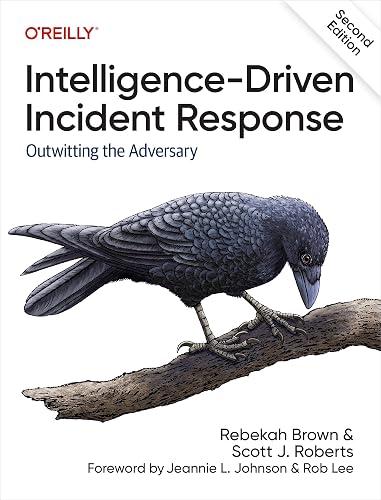
Every day, security teams around the world face the same frustrating reality. They are drowning in data. Alerts flood their dashboards. Logs pile up in endless streams. Threat feeds deliver thousands of indicators that may or may not matter. Yet despite this overwhelming volume of information, many organizations still struggle to answer the most fundamental question: what is actually happening on our networks, and what should we do about it? This is not a technology problem. It is an intelligence problem. The security industry has spent decades building better tools for detection, prevention, and response. Firewalls have become more sophisticated. Endpoint detection has improved dramatically. SIEM platforms can process billions of events. But tools alone cannot tell you who is attacking you, why they are doing it, what they are after, or how to stop them effectively. Those questions require something different. They require intelligence. Rebekah Brown wrote Intelligence-Driven Incident Response to address a critical gap in how security organizations operate. For too long, threat intelligence and incident response have been treated as separate disciplines. Intelligence teams collect and analyze threat data. Incident response teams react to breaches and clean up the damage. The two groups often work in isolation, speaking different languages and pursuing different goals. This separation creates inefficiency, slows response times, and leaves organizations vulnerable to repeated attacks. Brown's central argument is simple but profound: intelligence and incident response are not separate functions. They are two halves of the same process. Intelligence provides the context and understanding that makes incident response effective. Incident response provides the ground truth and feedback that makes intelligence relevant. When these two disciplines work together, organizations can move from reactive firefighting to proactive defense. The book draws on Brown's extensive experience in both military intelligence and civilian cybersecurity. She understands how intelligence agencies think, how they structure their operations, and how they train analysts to overcome cognitive biases. She also understands the practical realities of corporate security teams, where resources are limited, time is short, and the stakes are high. Her approach bridges these two worlds, bringing the rigor of intelligence analysis to the chaos of incident response. What makes this book different from other cybersecurity texts is its focus on thinking rather than tools. Brown does not promise that a particular software platform will solve your problems.…
Continue reading in the MinuteRead app
Get the complete 30-minute summary of Intelligence-Driven Incident Response
Get the complete summary in the appIntelligence is a process that transforms data into understanding and guides decisions. It is not a product you buy or a
The intelligence cycle provides a repeatable framework: direction, collection, processing, analysis, dissemination, and
Cognitive biases affect all analysts. Structured analytical techniques like the Key Assumptions Check and Analysis of Co
Incident response follows a structured cycle: preparation, identification, containment, eradication, recovery, and lesso
Intelligence and incident response are not separate functions. They are two halves of the same process. Integration is e
Context matters. Nothing happens in a vacuum. Understanding the geopolitical, economic, organizational, and historical c
"Intelligence-Driven Incident Response" is a strong fit if you want practical ideas around technical, technology, computer science, especially themes like intelligence is a process that transforms data into understanding and guides decisions. it is not a product you buy or a; the intelligence cycle provides a repeatable framework: direction, collection, processing, analysis, dissemination, and. The MinuteRead summary distills these concepts into a focused read, whether you're deciding whether to buy the book or applying its lessons at work.
Motivated to help readers with "Intelligence seeks to give decision makers the information that they need to make the right choice in any, Rebekah Brown wrote “Intelligence-Driven Incident Response” to package those ideas for a fast, focused read. In “Intelligence-Driven Incident Response”, Rebekah Brown focuses on "Intelligence seeks to give decision makers the information that they need to make the right choice in any. Through “Intelligence-Driven Incident Response”, Rebekah Brown distills the…
Continue Reading
Access the complete 30-minute summary and thousands more nonfiction books in the MinuteRead app.

Continue reading the complete summary in the MinuteRead app.