 MinuteRead
30 min
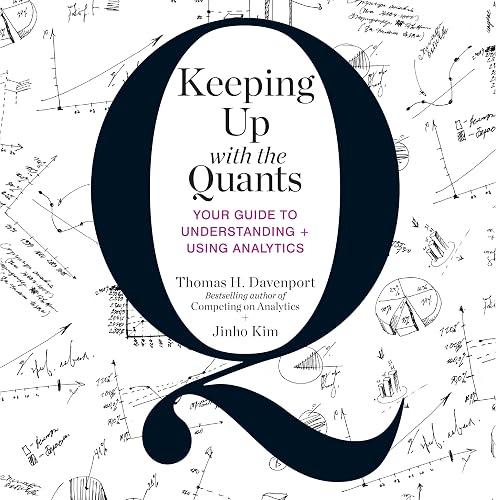
Book summary
Premium summary · Opens in the app · 30 min read
Every day, your organization generates more data than it can possibly use. Every transaction, every customer interaction, every employee action leaves a digital trail. The sensors in your equipment record performance metrics. Your website tracks visitor behavior. Your supply chain generates streams of information about inventory, shipping, and demand.
**Author:** Thomas H. Davenport
**Estimated Reading Time:** 42 minutes
**What You'll Learn:** - How to think like a quantitative analyst without becoming a statistician - The six-step process for turning data into better decisions - Why storytelling matters as much as mathematics in analytics - How to build productive relationships between analysts and decision-makers - The habits and mindset that separate analytical thinkers from everyone else
**Who This Book Is For:** Managers who need to make sense of data without drowning in it. Executives who want to ask better questions of their analysts. Professionals who feel intimidated by numbers but recognize that analytical thinking is no longer optional. And anyone curious about how organizations like Amazon, Google, and Caesars Entertainment use data to outperform competitors.
Every day, your organization generates more data than it can possibly use. Every transaction, every customer interaction, every employee action leaves a digital trail. The sensors in your equipment record performance metrics. Your website tracks visitor behavior. Your supply chain generates streams of information about inventory, shipping, and demand. Most of this data sits in databases, unexamined. It accumulates like sediment, layer upon layer, while decisions get made the way they always have been: through intuition, experience, and gut feeling. There is nothing wrong with intuition. Experienced executives often have excellent instincts honed over decades of watching patterns play out. But intuition has limits. It struggles with complexity. It falls prey to cognitive biases. It cannot process millions of data points. And in a world where competitors are using sophisticated analytics to squeeze every advantage from their data, intuition alone is a handicap. Thomas Davenport has spent his career studying how organizations use data and analytics to compete. He has watched companies transform themselves by embracing quantitative thinking. He has also watched others fall behind because they treated analytics as a technical specialty rather than a core business capability. This book addresses a specific problem: the gap between the people who do quantitative analysis and the people who make decisions based on it. Analysts speak the language of statistics, models, and algorithms. Executives speak the language of strategy, risk, and opportunity. When these two groups fail to communicate, expensive analytical projects produce reports that nobody reads and recommendations that nobody follows. Davenport's argument is simple but profound: you do not need to become a statistician to benefit from quantitative analysis. You need to understand enough about how analysis works to ask good questions, evaluate answers critically, and communicate results effectively. You need to become a sophisticated consumer of analytics, not necessarily a producer of them. The book emerged from Davenport's observation that business schools were producing graduates who could neither perform quantitative analysis nor work…
Continue reading in the MinuteRead app
Get the complete 30-minute summary of Keeping Up with the Quants
Get the complete summary in the appAnalytics is about thinking, not math. The goal is better decisions.
Frame the problem before you analyze it. A well-framed problem is half-solved.
Review what is already known before collecting new data.
Build a simple model that captures the essential variables.
Check data quality before trusting your analysis.
Correlation does not imply causation. Be skeptical of causal claims.
"Keeping Up with the Quants" is a strong fit if you want practical ideas around business, management, mathematics, especially themes like analytics is about thinking, not math. the goal is better decisions; frame the problem before you analyze it. a well-framed problem is half-solved. The MinuteRead summary distills these concepts into a focused read, whether you're deciding whether to buy the book or applying its lessons at work.
Motivated to help readers with if we can’t turn that data into better decision making through quantitative analysis, Thomas H. Davenport wrote “Keeping Up with the Quants” to package those ideas for a fast, focused read. In “Keeping Up with the Quants”, Thomas H. Davenport focuses on if we can’t turn that data into better decision making through quantitative analysis. Through “Keeping Up with the Quants”, Thomas H. Davenport distills the core ideas on business into lessons readers can absorb in …
View all summaries by Thomas H. DavenportContinue Reading
Access the complete 30-minute summary and thousands more nonfiction books in the MinuteRead app.

Continue reading the complete summary in the MinuteRead app.






