 MinuteRead
30 min
Book summary
by Alice M. Tybout
Premium summary · Opens in the app · 30 min read
Most people think they know what a brand is. They point to logos, slogans, packaging, or advertising campaigns. They describe brands as names attached to products, or as promises made to customers. But this understanding, while not exactly wrong, misses something essential.
**Author:** Alice M. Tybout
**Estimated Reading Time:** 45 minutes
**What You'll Learn:** How brands function as mental concepts, why positioning matters more than messaging, how to design brands that trigger the right perceptions, and how to build brand-driven organizations that deliver lasting value.
**Who This Book Is For:** Marketing leaders, brand managers, entrepreneurs, and anyone responsible for building or managing a brand who wants to move beyond tactics and understand the strategic foundations of branding.
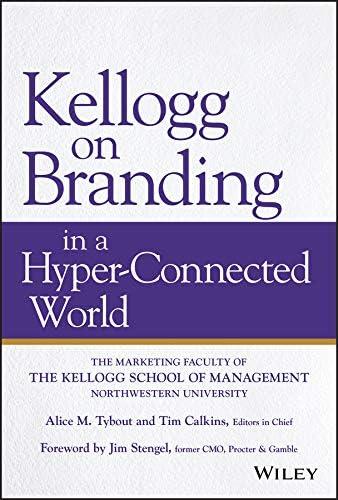
Most people think they know what a brand is. They point to logos, slogans, packaging, or advertising campaigns. They describe brands as names attached to products, or as promises made to customers. But this understanding, while not exactly wrong, misses something essential. A brand is not what a company says it is. A brand is what exists in the minds of consumers. It is a set of associations, emotions, memories, and expectations linked to a name or symbol. These associations can be positive or negative, strong or weak, clear or confused. And they are shaped by everything a company does, not just by what its marketing department produces. This distinction matters more than most executives realize. When a company treats its brand as a communications exercise, it focuses on messaging, creative campaigns, and media placement. When a company treats its brand as a mental concept, it focuses on something far more fundamental: how every interaction with a customer shapes the way that customer categorizes and evaluates the company's offerings. The Kellogg School of Management has been at the center of brand thinking for decades. This book, edited by Alice M. Tybout and drawing on the expertise of Kellogg faculty, brings together the school's most important insights about how brands work, how they create value, and how they can be built and managed effectively. The problem the book addresses is simple but profound: most branding efforts fail because they are built on incomplete or incorrect assumptions about how brands actually function. Companies invest heavily in advertising without first establishing clear positioning. They launch brand extensions without understanding whether the extension fits the parent brand's meaning. They measure brand health using metrics that fail to capture what actually drives customer behavior. They treat branding as a marketing function rather than an organizational responsibility. The result is wasted spending, confused customers, and brands that fail to realize their potential as strategic assets. The approach in this book is different. It starts from the premise that brands are concepts, sets of associations that live in consumers' minds. From this foundation, it builds a comprehensive framework for understanding how brands are created, how they evolve, how they can be extended, and how they should be measured. The book draws on…
Continue reading in the MinuteRead app
Get the complete 30-minute summary of Kellogg on Branding
Get the complete summary in the appA brand is a set of associations in consumers' minds, not a logo, name, or promise.
Positioning defines the specific intended meaning for a brand and requires clarity on target audience, frame of referenc
Brand design triggers perceptual categories that shape how consumers evaluate the brand.
Brand meaning evolves through customer interactions and cultural context, not just through marketing communications.
Brand extensions succeed when they fit the parent brand's associations and positioning.
Brand portfolios require strategic management, including building core brands and pruning weak ones.
"Kellogg on Branding" is a strong fit if you want practical ideas around business, marketing, design, especially themes like a brand is a set of associations in consumers' minds, not a logo, name, or promise; positioning defines the specific intended meaning for a brand and requires clarity on target audience, frame of referenc. The MinuteRead summary distills these concepts into a focused read, whether you're deciding whether to buy the book or applying its lessons at work.
Motivated to help readers with brands are not always a positive; associations can be positive or negative, Alice M. Tybout wrote “Kellogg on Branding” to package those ideas for a fast, focused read. In “Kellogg on Branding”, Alice M. Tybout focuses on brands are not always a positive; associations can be positive or negative. Through “Kellogg on Branding”, Alice M. Tybout distills the core ideas on business into lessons readers can absorb in a single short sitting. Readers turn to this work whe…
Continue Reading
Access the complete 30-minute summary and thousands more nonfiction books in the MinuteRead app.

Continue reading the complete summary in the MinuteRead app.






