 MinuteRead
30 min
Book summary
by David Parmenter
Premium summary · Opens in the app · 30 min read
Walk into almost any organization today and ask to see their performance measures. You will likely be handed a spreadsheet with hundreds of metrics. Revenue per employee. Customer satisfaction scores. On-time delivery rates. Employee turnover. Website traffic. Safety incidents. Training hours completed.
**Author:** David Parmenter **Estimated Reading Time:** 45 minutes
**What You'll Learn:** - The critical difference between KPIs, KRIs, and PIs, and why most organizations get this wrong - How to identify the few measures that truly drive organizational success - A practical framework for implementing KPIs without expensive consultants - How to build performance measurement from the ground up, starting with teams - Why most KPI dashboards fail and how to design reporting that actually works
**Who This Book Is For:** Senior leaders who want to cut through measurement clutter. Managers responsible for performance improvement. Team leaders seeking meaningful ways to track progress. Anyone who has ever sat through a meeting reviewing dozens of metrics that never seem to change anything.
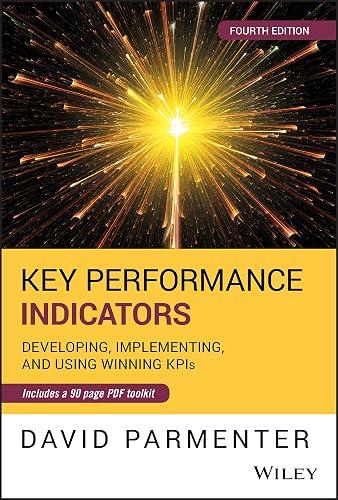
Walk into almost any organization today and ask to see their performance measures. You will likely be handed a spreadsheet with hundreds of metrics. Revenue per employee. Customer satisfaction scores. On-time delivery rates. Employee turnover. Website traffic. Safety incidents. Training hours completed. Now ask a simple question: which of these numbers actually tells you what to do differently tomorrow? The silence that follows reveals a fundamental problem in modern management. We have convinced ourselves that measuring more things means managing better. We collect data relentlessly. We build dashboards. We hold review meetings. Yet in most organizations, performance measurement has become an exercise in documentation rather than a driver of improvement. David Parmenter wrote Key Performance Indicators to address this exact problem. His central argument is both simple and provocative: most organizations do not actually have KPIs. What they have is a collection of measures, many of them useful for reporting, but very few that genuinely qualify as key performance indicators. The distinction matters more than it might seem. When everything is labeled a KPI, nothing receives focused attention. Leaders spread their energy across dozens of metrics. Teams drown in reporting requirements. The truly critical measures, the ones that could transform performance if acted upon daily, get lost in the noise. Parmenter's insight emerged from years of observing organizations struggle with performance measurement. He noticed that companies would spend enormous sums implementing balanced scorecards, only to find that the resulting dashboards did little to change behavior. The problem was not the concept of measurement. The problem was a failure to distinguish between different types of measures and to recognize that only a tiny number of them deserve the KPI label. Think of it this way. A pilot flying a plane has access to dozens of instruments. Some provide background information: fuel levels, cabin temperature, exterior lighting status. These matter, but the pilot does not check them every thirty seconds. Then there are the critical instruments: airspeed, altitude, heading. These are…
Continue reading in the MinuteRead app
Get the complete 30-minute summary of Key Performance Indicators
Get the complete summary in the appMost organizations do not have true KPIs. They have KRIs and PIs that are mislabeled as KPIs.
A true KPI is nonfinancial, measured daily, acted on by senior leadership, and clearly tied to a critical success factor
Use the 10/80/10 rule: about 10 KRIs, up to 80 PIs, and 10 KPIs.
Identify 5-8 critical success factors that determine your organization's health and vitality.
Use six balanced scorecard perspectives: financial, customer, internal processes, learning and growth, employee satisfac
Build a KPI team of 2-4 full-time members reporting directly to the CEO, mixing experienced oracles with innovative youn
"Key Performance Indicators" is a strong fit if you want practical ideas around business, management, leadership, especially themes like most organizations do not have true kpis. they have kris and pis that are mislabeled as kpis; a true kpi is nonfinancial, measured daily, acted on by senior leadership, and clearly tied to a critical success factor. The MinuteRead summary distills these concepts into a focused read, whether you're deciding whether to buy the book or applying its lessons at work.
Motivated to help readers with "KPIs represent a set of measures focusing on those aspects of organizational performance that are the most, David Parmenter wrote “Key Performance Indicators” to package those ideas for a fast, focused read. In “Key Performance Indicators”, David Parmenter focuses on "KPIs represent a set of measures focusing on those aspects of organizational performance that are the most. Through “Key Performance Indicators”, David Parmenter distills the core ideas on business i…
Continue Reading
Access the complete 30-minute summary and thousands more nonfiction books in the MinuteRead app.

Continue reading the complete summary in the MinuteRead app.






