 MinuteRead
30 min
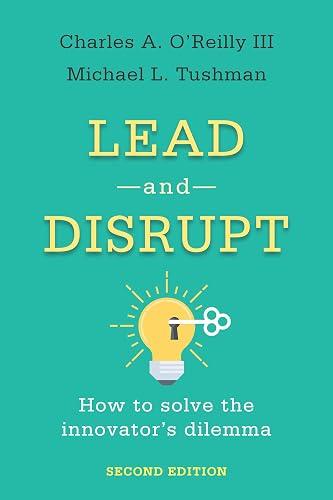
Book summary
by Charles A. O'Reilly
Premium summary · Opens in the app · 30 min read
Every year, once-dominant companies disappear from the business landscape. Not small companies. Not poorly managed companies. But industry leaders with brilliant people, deep resources, and decades of success behind them. Sears, once the largest retailer in America, filed for bankruptcy in 2018. Kodak, the company that invented digital photography, went bankrupt in 2012. Blockbuster, which at its peak operated over nine thousand stores, collapsed in 2010. These were not companies that lacked tal
### By Charles A. O'Reilly
**Estimated Reading Time:** 45 minutes
**What You'll Learn:**
- Why successful companies fail despite doing everything right - The ambidexterity solution that allows organizations to exploit and explore simultaneously - How leaders like those at Amazon, IBM, and Fujifilm built enduring enterprises - Practical frameworks for implementing ambidexterity in your organization - The leadership behaviors required to manage the tensions between today's business and tomorrow's opportunities
**Who This Book Is For:**
This book is for leaders who sense that their organization's current success may be planting the seeds of future failure. It is for executives frustrated by the difficulty of getting new ideas to take root in established companies. It is for managers who wonder why their talented people struggle to innovate despite abundant resources. And it is for anyone who has watched a once-great company stumble and asked: How could this happen?
Every year, once-dominant companies disappear from the business landscape. Not small companies. Not poorly managed companies. But industry leaders with brilliant people, deep resources, and decades of success behind them. Sears, once the largest retailer in America, filed for bankruptcy in 2018. Kodak, the company that invented digital photography, went bankrupt in 2012. Blockbuster, which at its peak operated over nine thousand stores, collapsed in 2010. These were not companies that lacked talent, money, or market knowledge. They failed for a different reason entirely. The uncomfortable truth is that success itself often contains the seeds of failure. The very alignment that makes a company excellent at serving today's customers, optimizing today's operations, and defending today's market position creates a kind of organizational rigidity. The company becomes so good at what it currently does that it cannot do something different. This is the paradox at the heart of modern business: what makes you great today can make you irrelevant tomorrow. Charles O'Reilly and Michael Tushman have spent decades studying this phenomenon. Their research spans industries, geographies, and decades of corporate history. They have examined companies that navigated disruption successfully and companies that did not. The pattern they discovered is remarkably consistent. Companies that survive and thrive over long periods share a common capability: they can simultaneously exploit their existing strengths while exploring new opportunities. They are ambidextrous. The term ambidexterity comes from the Latin words for "both" and "right-handed." A person who is ambidextrous can use both hands with equal skill. An ambidextrous organization can use both its exploitation hand and its exploration hand with equal skill. It can run today's business efficiently while building tomorrow's business experimentally. It can serve current customers while developing offerings for customers it does not yet have. It can protect its core while disrupting itself. This is…
Continue reading in the MinuteRead app
Get the complete 30-minute summary of Lead and Disrupt
Get the complete summary in the app**Success breeds failure.** The alignment that produces success creates structural and cultural inertia that makes adapt
**Ambidexterity is the answer.** Long-term survival requires the ability to exploit existing capabilities and explore ne
**Structure matters.** Exploration requires separate structures with real autonomy, not just new names on an org chart.
**Leadership is the binding constraint.** Ambidexterity requires leaders who can manage tensions, not resolve them.
**Innovation comes in types.** Incremental, architectural, discontinuous, and disruptive innovations require different a
**Transform before crisis.** The best time to change is when you have the resources and legitimacy to do so.
"Lead and Disrupt" is a strong fit if you want practical ideas around business, leadership, management, especially themes like **success breeds failure.** the alignment that produces success creates structural and cultural inertia that makes adapt; **ambidexterity is the answer.** long-term survival requires the ability to exploit existing capabilities and explore ne. The MinuteRead summary distills these concepts into a focused read, whether you're deciding whether to buy the book or applying its lessons at work.
Motivated to help readers with the difference between the right word and the almost right word is the difference between lightning and a, Charles A. O'Reilly wrote “Lead and Disrupt” to package those ideas for a fast, focused read. In “Lead and Disrupt”, Charles A. O'Reilly focuses on the difference between the right word and the almost right word is the difference between lightning and a. Through “Lead and Disrupt”, Charles A. O'Reilly distills the core ideas on business into lessons readers ca…
Continue Reading
Access the complete 30-minute summary and thousands more nonfiction books in the MinuteRead app.

Continue reading the complete summary in the MinuteRead app.






