MinuteRead
30 min
Book summary
Premium summary · Opens in the app · 5 min read
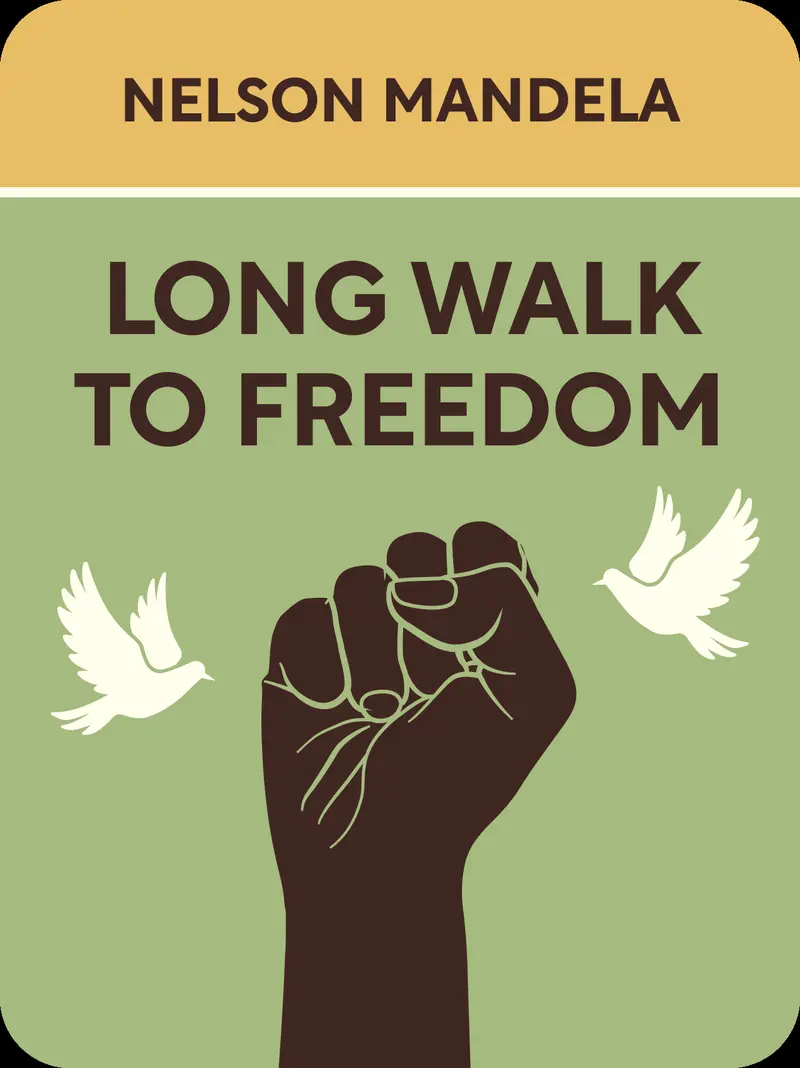
Long Walk To Freedom is the autobiography of Nelson Mandela, South African anti-apartheid activist, national icon and the first South African black president, elected in the first, fully democratic election in the country.
Long Walk To Freedom is the autobiography of Nelson Mandela, South African anti-apartheid activist, national icon and the first South African black president, elected in the first, fully democratic election in the country.
As I was reading through these blinks, the theme of violence vs. non-violence kept coming up. It probably feels natural to focus on the violent protests and Nelson Mandela’s attitude towards violence as a justified means in desperate times, but if you look beyond those, you’ll see that Nelson Mandela was as committed to education as very few people are.
He was the first person in his family to go to school, which is also where his teacher Miss Mdigane gave him his British name Nelson – the reason for which he never found out (but guessed it had something to do with Lord Nelson).
From the very start of his education, Nelson Mandela realized that this was the true path to freedom.
He studied so hard that he finished his junior certificate at Healdtown College within two years, instead of the usual three. At 19 years old, he then attended Fort Hare College, where he studied English, politics, anthropology, native administration and law.
That is, until he got expelled for supporting a major student boycott two years later. Speaking of which…
Having learned and developed strong opinions about social injustice as a little child already, while attending tribe meetings with his father, it wasn’t long before Nelson started challenging authority.
For example, at Fort Hare, he and fellow students decided freshmen weren’t represented well in the House Committee, so they elected their own. After garnering support from other freshmen, they told the warden they would resign if he overruled them, causing a riot among students, so their committee was granted to stand.
Nelson was lucky in that he learned this lesson very early in his life, so challenging authority came natural to him. For most of us, it doesn’t. I swam with the current for most of my life, so the habit of breaking the status quo was one I acquired (and still am learning).
However, if you think about the people you admire, how many of them would you describe as obedient, normal, authority-abiding people? Zero.
We don’t remember the yes-men and the quiet followers, we remember the rebels, the ruckus-causers, the troublemakers. If you want to be remembered, you’ll have to learn to challenge what’s the norm.
By the way, Nelson Mandela’s real, African tribe name was Rolihlahla – which means troublemaker.
In 1964, after being convicted of high treason for conspiring to violently overthrow the government, Nelson Mandela was sentenced to life in prison. A “lucky” outcome, considering high treason was usually punished…
Continue reading in the MinuteRead app
Get the complete 5-minute summary of Long Walk To Freedom
Get the complete summary in the appEducation holds the key to freedom.
The only way to be remembered is to learn to challenge authority.
The most important time to practice is right after your biggest loss.
"Long Walk To Freedom" is a strong fit if you want practical ideas around biography, culture, education, especially themes like education holds the key to freedom; the only way to be remembered is to learn to challenge authority. The MinuteRead summary distills these concepts into a focused read, whether you're deciding whether to buy the book or applying its lessons at work.
Nelson Mandela was born in Transkei, South Africa, on 18 July 1918. He joined the African National Congress in 1944 and was engaged in resistance against the ruling National Party’s apartheid policies after 1948 before being arrested in August 1962. In November 1962 he was sentenced to five years in prison and started serving his sentence at Robben Island Prison in 1963 before being returned to Pretoria, where he was to later stand in the Rivonia Trial. From 1964 to 1982, he was again incarcerat…
View all summaries by Nelson MandelaContinue Reading
Access the complete 5-minute summary and thousands more nonfiction books in the MinuteRead app.

Continue reading the complete summary in the MinuteRead app.