MinuteRead
30 min
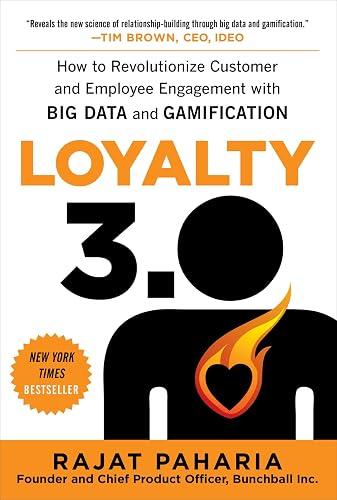
Book summary
by Rajat Paharia
Premium summary · Opens in the app · 30 min read
Every business claims to want loyal customers. Every company says it values engaged employees. Every organization hopes its partners feel invested in mutual success. Yet most of what passes for loyalty strategy amounts to little more than bribery dressed up in marketing language.
**Author:** Rajat Paharia
**Estimated Reading Time:** 45 minutes
**What You'll Learn:**
- Why traditional loyalty programs fail to create genuine engagement - The five intrinsic motivators that drive human behavior - How big data transforms customer relationships - The mechanics of gamification and why they work - Real-world case studies from major brands - A practical roadmap for implementation
**Who This Book Is For:**
Business leaders, marketers, product managers, HR professionals, and anyone responsible for engaging customers, employees, or partners in meaningful ways. If you have ever wondered why points programs feel hollow or why engagement initiatives fall flat, this book provides the framework to build something better.
Every business claims to want loyal customers. Every company says it values engaged employees. Every organization hopes its partners feel invested in mutual success. Yet most of what passes for loyalty strategy amounts to little more than bribery dressed up in marketing language. The typical loyalty program works like this: spend money, earn points, redeem points for rewards. Repeat until bored. The customer feels like a transaction. The company feels like a vending machine. Neither side builds anything resembling a genuine relationship. Rajat Paharia saw this problem from an unusual vantage point. Before founding Bunchball, a company that pioneered gamification technology, he worked in the video game industry. He watched people pour hours into games that offered no monetary rewards, no discounts, no tangible benefits. They played because the games made them feel something: competence, progress, connection, autonomy, purpose. Meanwhile, businesses spent billions on loyalty programs that generated little more than indifference. The contrast was stark. Games created intense engagement without extrinsic rewards. Loyalty programs offered extrinsic rewards and created almost no engagement. This observation led Paharia to a fundamental question: what if businesses could harness the same motivational forces that make games compelling? What if loyalty could be designed rather than purchased? The answer required rethinking several assumptions. First, loyalty is not something you buy with points. It is something you earn by creating meaningful experiences. Second, data is not just for targeting ads. It can reveal what actually motivates people. Third, engagement is not a nice-to-have. It is the foundation of business success. Paharia calls this new approach Loyalty 3.0. The name signals an evolution. Loyalty 1.0 was the era of mass marketing and brand advertising. Loyalty 2.0 introduced points programs, frequent flyer miles, and punch cards. Loyalty 3.0 represents something fundamentally different: the use of big data and motivational design to create experiences that people genuinely want to participate in. The timing matters. We now generate enormous amounts of data through our digital interactions. Every click, purchase, comment, and share reveals something about our preferences and behaviors. This data…
Continue reading in the MinuteRead app
Get the complete 30-minute summary of Loyalty 3.0
Get the complete summary in the appLoyalty is earned through meaningful experiences, not purchased with points and rewards.
Five intrinsic motivators drive human behavior: autonomy, mastery, purpose, progress, and social interaction.
Big data reveals what actually motivates people, not just what they say motivates them.
Gamification is motivating people through data, making invisible progress visible.
Fast feedback is one of the most powerful engagement tools available.
Different audiences are motivated by different things. Understand your specific audience before designing.
"Loyalty 3.0" is a strong fit if you want practical ideas around business, management, technology, especially themes like loyalty is earned through meaningful experiences, not purchased with points and rewards; five intrinsic motivators drive human behavior: autonomy, mastery, purpose, progress, and social interaction. The MinuteRead summary distills these concepts into a focused read, whether you're deciding whether to buy the book or applying its lessons at work.
Motivated to help readers with "Loyalty 3.0 expands upon traditional loyalty in various ways." A new paradigm, Rajat Paharia wrote “Loyalty 3.0” to package those ideas for a fast, focused read. In “Loyalty 3.0”, Rajat Paharia focuses on "Loyalty 3.0 expands upon traditional loyalty in various ways." A new paradigm. Through “Loyalty 3.0”, Rajat Paharia distills the core ideas on business into lessons readers can absorb in a single short sitting. Readers turn to this work when they want Rajat Paha…
Continue Reading
Access the complete 30-minute summary and thousands more nonfiction books in the MinuteRead app.

Continue reading the complete summary in the MinuteRead app.