 MinuteRead
30 min
Book summary
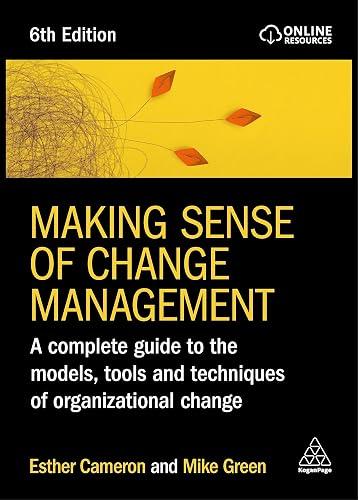
by Esther Cameron
Premium summary · Opens in the app · 30 min read
Every year, organizations around the world spend billions of dollars on change initiatives. They restructure, reengineer, implement new technologies, pursue mergers, and attempt cultural transformations. They hire consultants, develop detailed project plans, and communicate extensively with employees. And yet, study after study confirms what most experienced managers already know: the majority of these change efforts fail to achieve their intended outcomes.
**Author:** Esther Cameron (with Mike Green)
**Estimated Reading Time:** 45 minutes
**What You'll Learn:** How organizational culture shapes every change effort, why individuals resist change and how to support them through transitions, what leaders and change agents must do differently, and how to apply proven frameworks to mergers, cultural transformation, and technology-driven change.
**Who This Book Is For:** Leaders, managers, change agents, HR professionals, consultants, and anyone responsible for guiding people through organizational change. If you have ever wondered why a well-planned change initiative failed despite excellent project management, this book will show you what was missing.
Every year, organizations around the world spend billions of dollars on change initiatives. They restructure, reengineer, implement new technologies, pursue mergers, and attempt cultural transformations. They hire consultants, develop detailed project plans, and communicate extensively with employees. And yet, study after study confirms what most experienced managers already know: the majority of these change efforts fail to achieve their intended outcomes. Why does this happen? Why do organizations with smart leaders, talented employees, and abundant resources so often struggle to change? The answer, as Esther Cameron and Mike Green demonstrate throughout this book, is that most change efforts focus on the visible, mechanical aspects of change while ignoring the invisible, human dimensions. Leaders spend their time on strategy, structure, systems, and processes. They create detailed roadmaps and carefully sequenced implementation plans. They measure progress against milestones and adjust course as needed. All of this is necessary. None of it is sufficient. What gets missed is the fact that organizations are not machines. They are living social systems composed of people who have emotions, relationships, identities, and deeply held assumptions about how the world works. When change threatens these human elements, people resist. Not because they are stubborn or irrational, but because they are protecting something valuable: their sense of competence, their social standing, their psychological safety, their understanding of what makes work meaningful. This book exists to help you see the full picture. It brings together decades of research and practical experience from multiple disciplines: psychology, sociology, organizational behavior, leadership studies, and systems thinking. It provides frameworks for understanding change at four interconnected levels: the individual, the team, the organization, and the wider system. It offers practical tools for diagnosing what is really happening when change stalls, and for designing interventions that address root causes rather than surface symptoms. The central insight running through every chapter is simple but profound: successful change requires working simultaneously with the rational and the emotional, the structural and the cultural, the planned and the emergent. Leaders who master this integration create organizations that can adapt and thrive in an increasingly turbulent world. Leaders who ignore it will…
Continue reading in the MinuteRead app
Get the complete 30-minute summary of Making Sense of Change Management
Get the complete summary in the appCulture is the invisible force that determines whether change efforts succeed or fail. Understand it before attempting c
Individuals experience change as a psychological transition through predictable stages. Support them through the journey
Resistance is information. Listen to understand the concerns behind it rather than trying to overcome it.
Leadership is the single most important factor in change success. Model the behaviors you want to see.
Teams are where change succeeds or fails in practice. Invest in team development during change.
Change agents create conditions for change rather than imposing change on others.
"Making Sense of Change Management" is a strong fit if you want practical ideas around business, leadership, management, especially themes like culture is the invisible force that determines whether change efforts succeed or fail. understand it before attempting c; individuals experience change as a psychological transition through predictable stages. support them through the journey. The MinuteRead summary distills these concepts into a focused read, whether you're deciding whether to buy the book or applying its lessons at work.
Motivated to help readers with "Culture is the pattern of basic assumptions that a given group has invented, Esther Cameron wrote “Making Sense of Change Management” to package those ideas for a fast, focused read. In “Making Sense of Change Management”, Esther Cameron focuses on "Culture is the pattern of basic assumptions that a given group has invented. Through “Making Sense of Change Management”, Esther Cameron distills the core ideas on business into lessons readers can absorb in a single s…
Continue Reading
Access the complete 30-minute summary and thousands more nonfiction books in the MinuteRead app.

Continue reading the complete summary in the MinuteRead app.






