 MinuteRead
30 min
Book summary
Premium summary · Opens in the app · 30 min read
In the late 1990s, as the twentieth century drew to a close, Peter Drucker looked at the management discipline he had helped create and reached an uncomfortable conclusion. The assumptions that had guided managers for nearly a hundred years were no longer working. They were not merely outdated in small ways. They had become actively misleading.
**Author:** Peter F. Drucker
**Estimated Reading Time:** 45 minutes
**What You'll Learn:**
- Why the fundamental assumptions that guided management for a century no longer work - The five new certainties that will shape every organization's strategy - How to lead change without destroying your organization - What knowledge worker productivity actually requires - Why managing yourself has become the central survival skill
**Who This Book Is For:**
Leaders who sense that old management formulas are failing. Knowledge workers who want to understand the forces reshaping their careers. Anyone responsible for guiding an organization through a period of profound transition.
In the late 1990s, as the twentieth century drew to a close, Peter Drucker looked at the management discipline he had helped create and reached an uncomfortable conclusion. The assumptions that had guided managers for nearly a hundred years were no longer working. They were not merely outdated in small ways. They had become actively misleading. Drucker was uniquely positioned to make this judgment. He had been writing about management since the 1930s. He had watched the modern corporation take shape, studied its evolution, and advised its leaders. He had coined the term "knowledge worker" decades before most people recognized that such a category existed. And now, at the end of his career, he saw that the ground was shifting beneath the entire edifice of management theory. The problem was not that managers were incompetent. The problem was that they were operating from a set of assumptions that no longer matched reality. These assumptions had become so deeply embedded that most people never questioned them. They were simply "the way things are." Consider what managers in the twentieth century took for granted. Management was about running businesses. Organizations had a single correct structure. Employees were subordinates who needed to be managed. Technology determined how work was done. The scope of management ended at the legal boundaries of the organization. Every one of these assumptions, Drucker argued, was now wrong or dangerously incomplete. The consequences of clinging to outdated assumptions were not merely academic. Organizations were making strategic decisions based on demographic trends that had already reversed. They were structuring themselves according to principles that no longer fit their work. They were treating knowledge workers as if they were manual laborers, then wondering why productivity stagnated. Drucker wrote this book as a warning and a guide. He wanted to identify the new realities that managers would face in the twenty-first century and provide a framework for navigating them. He was not interested in predicting the future in detail. He was interested in identifying the certainties that were already visible, the trends that had already happened but whose implications most people had…
Continue reading in the MinuteRead app
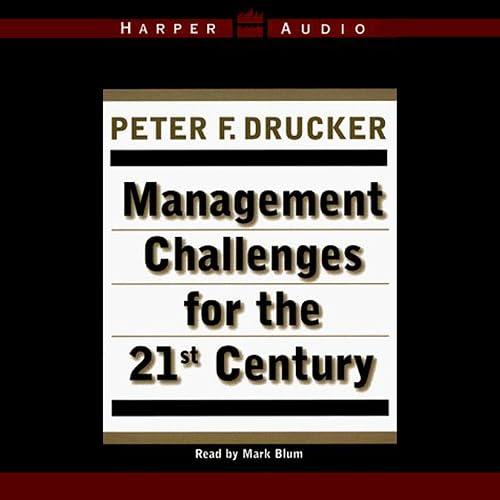
Get the complete 30-minute summary of Management Challenges for the 21st Century
Get the complete summary in the appManagement is needed by all organizations, not just businesses.
There is no single right organization structure. Fit the structure to the situation.
Strategy must be based on certainties: the collapsing birthrate, the shift to services, the redefinition of performance,
You cannot manage change. You can only be ahead of it through systematic abandonment, continuous improvement, and system
The purpose of information is to enable right action, not to accumulate data.
Knowledge worker productivity is the key management challenge of the twenty-first century.
"Management Challenges for the 21st Century" is a strong fit if you want practical ideas around business, leadership, self help, especially themes like management is needed by all organizations, not just businesses; there is no single right organization structure. fit the structure to the situation. The MinuteRead summary distills these concepts into a focused read, whether you're deciding whether to buy the book or applying its lessons at work.
Motivated to help readers with management is the specific and distinguishing organ of any and all organizations, Peter F. Drucker wrote “Management Challenges for the 21st Century” to package those ideas for a fast, focused read. In “Management Challenges for the 21st Century”, Peter F. Drucker focuses on management is the specific and distinguishing organ of any and all organizations. Through “Management Challenges for the 21st Century”, Peter F. Drucker distills the core ideas on business into…
View all summaries by Peter F. DruckerContinue Reading
Access the complete 30-minute summary and thousands more nonfiction books in the MinuteRead app.

Continue reading the complete summary in the MinuteRead app.






