 MinuteRead
30 min
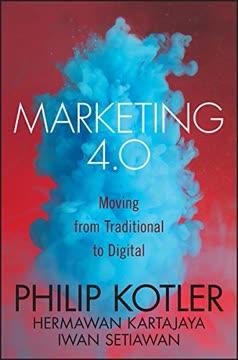
Marketing has always been about understanding people. But for most of the twentieth century, understanding people meant segmenting them into neat demographic categories, broadcasting messages at them through mass media, and hoping something stuck. The marketer controlled the conversation. The customer listened, or at least pretended to.
**Author:** Philip Kotler
**Estimated Reading Time:** 45 minutes
**What You'll Learn:**
- Why the digital economy demands a fundamentally new approach to marketing - How power has shifted from corporations to connected customer communities - The five stages of the modern customer journey and how to optimize each one - Why youth, women, and netizens hold the keys to digital influence - How to build brands that behave like authentic human beings - Practical frameworks for measuring marketing productivity in the digital age - How to integrate online and offline experiences seamlessly
**Who This Book Is For:**
Marketing professionals who feel overwhelmed by the pace of digital change. Business leaders who sense that traditional marketing approaches are losing effectiveness but are unsure what should replace them. Entrepreneurs who want to understand how connected customers think and behave. Students of marketing who need a framework for navigating the new landscape. Anyone responsible for building brands, driving growth, or creating customer relationships in an era where customers hold more power than ever before.
Marketing has always been about understanding people. But for most of the twentieth century, understanding people meant segmenting them into neat demographic categories, broadcasting messages at them through mass media, and hoping something stuck. The marketer controlled the conversation. The customer listened, or at least pretended to. That world is gone. The digital revolution did not simply add new channels to the marketing mix. It fundamentally rewired how people discover products, evaluate brands, make purchasing decisions, and share their experiences with others. The customer journey that once followed a predictable linear path from awareness to purchase has become a complex, multi-directional web of touchpoints, influences, and conversations. Customers no longer passively receive marketing messages. They actively create them, critique them, and amplify them. This transformation has left many marketers disoriented. They sense that the old playbook no longer works, but they struggle to articulate what should replace it. Some respond by doubling down on digital tactics, chasing every new platform and algorithm change. Others retreat to traditional methods, hoping the disruption will pass. Both approaches fail because they misunderstand the fundamental nature of the shift. Marketing 4.0 is not about abandoning traditional marketing for digital marketing. It is about recognizing that the distinction itself has become obsolete. Customers do not think in terms of online and offline channels. They move fluidly between physical stores and mobile apps, between word-of-mouth recommendations and social media reviews, between television advertisements and YouTube videos. They expect brands to meet them wherever they are, with consistent experiences and authentic voices. Philip Kotler has spent decades at the forefront of marketing theory. His textbook Marketing Management has shaped how generations of business students understand the…
Continue reading in the MinuteRead app
Get the complete 30-minute summary of Marketing 4.0
Get the complete summary in the appPower has shifted from companies to connected customers. Accept this reality and build strategies around it.
Integrate online and offline experiences. Customers do not think in terms of channels, and neither should you.
Use technology to enhance human connection, not replace it. High-tech environments increase demand for high-touch experi
Engage youth, women, and netizens. These three groups are the most influential in the digital economy.
Map the customer journey using the Five A's: Aware, Appeal, Ask, Act, and Advocate. Optimize each stage.
Measure PAR and BAR. Track how well you convert awareness into purchase and advocacy.
"Marketing 4.0" is a strong fit if you want practical ideas around business, management, buisness, especially themes like power has shifted from companies to connected customers. accept this reality and build strategies around it; integrate online and offline experiences. customers do not think in terms of channels, and neither should you. The MinuteRead summary distills these concepts into a focused read, whether you're deciding whether to buy the book or applying its lessons at work.
Philip Kotler is a renowned marketing expert and professor. His book "Marketing Management" is widely used in graduate-level marketing education worldwide. Kotler has developed numerous marketing concepts, including atmospherics, demarketing, and megamarketing. He believes marketing theory should incorporate innovation, distribution, and promotion systems. Kotler has worked with large companies on marketing strategy and international marketing. He presents seminars globally on the latest marketi…
View all summaries by Philip KotlerContinue Reading
Access the complete 30-minute summary and thousands more nonfiction books in the MinuteRead app.

Continue reading the complete summary in the MinuteRead app.






