 MinuteRead
30 min
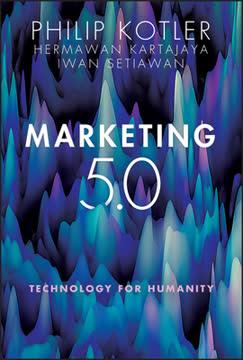
Marketing has always been about understanding people. For decades, the discipline evolved through distinct phases, each responding to shifts in society, technology, and consumer expectations. Marketing 1.0 focused on products. Marketing 2.0 shifted attention to the customer. Marketing 3.0 introduced the idea that brands should stand for something beyond profit, addressing human values, meaning, and purpose. Marketing 4.0 embraced digital connectivity, social media, and the power of online commun
**Author:** Philip Kotler
**Estimated Reading Time:** 45 minutes
**What You'll Learn:** How to combine human-centric marketing with advanced technologies to create seamless customer experiences, why generational shifts demand new approaches, and how to build data-driven marketing systems that anticipate customer needs.
**Who This Book Is For:** Marketing professionals, business leaders, entrepreneurs, and students who want to understand how artificial intelligence, sensors, and connected devices are transforming the way companies create and deliver value.
Marketing has always been about understanding people. For decades, the discipline evolved through distinct phases, each responding to shifts in society, technology, and consumer expectations. Marketing 1.0 focused on products. Marketing 2.0 shifted attention to the customer. Marketing 3.0 introduced the idea that brands should stand for something beyond profit, addressing human values, meaning, and purpose. Marketing 4.0 embraced digital connectivity, social media, and the power of online communities. Now we stand at the threshold of another transformation. The world is changing faster than most organizations can adapt. Five generations of consumers now interact with brands simultaneously, each with different expectations shaped by their unique experiences with technology. Income inequality is widening, creating social tensions that businesses can no longer ignore. Digital divides separate those who embrace technology from those who feel left behind. And artificial intelligence, once a futuristic concept, now powers everyday interactions from product recommendations to customer service. Marketing 5.0 emerges from this convergence of forces. It is not a rejection of previous marketing approaches but an evolution that integrates the best of human-centric thinking with the capabilities of advanced technology. The definition is deceptively simple: Marketing 5.0 is the application of human-mimicking technologies to create, communicate, deliver, and enhance value throughout the customer journey. The key phrase is "human-mimicking." These technologies do not replace human connection. They amplify it. They allow marketers to understand individual customers at a depth never before possible and to respond with relevance that feels personal, not mechanical. Consider what happens when a customer walks into a modern retail store equipped with sensor technology. The store recognizes the customer through facial recognition or a mobile app. It knows their purchase history, their preferences, and even their current mood based on behavioral signals. The store can then deliver personalized offers, guide the customer to products they are likely to appreciate, and adjust the shopping experience in real time. This is not science fiction. It is happening today in stores across Asia, Europe, and increasingly in North America. But technology alone is not the answer. The most sophisticated AI system fails if it does not serve genuine human needs. The challenge for modern marketers is to balance the efficiency and scale of machines with the empathy and creativity that only humans…
Continue reading in the MinuteRead app
Get the complete 30-minute summary of Marketing 5.0
Get the complete summary in the appMarketing 5.0 combines human-centric philosophy with human-mimicking technology to create superior customer experiences.
Technology should serve humanity, not the other way around.
Understand generational differences, but never stereotype individual customers.
Build data ecosystems that enable segments of one: treating each customer as unique.
Use predictive analytics to anticipate customer needs before they arise.
Extend personalization to physical spaces through contextual marketing.
"Marketing 5.0" is a strong fit if you want practical ideas around business, technology, especially themes like marketing 5.0 combines human-centric philosophy with human-mimicking technology to create superior customer experiences; technology should serve humanity, not the other way around. The MinuteRead summary distills these concepts into a focused read, whether you're deciding whether to buy the book or applying its lessons at work.
Филип Котлер - это признанный эксперт в области маркетинга и автор, широко известный как отец современного маркетинга. Его учебник "Управление маркетингом" является самым популярным учебником по маркетингу на уровне магистратуры в мире. Котлер разработал множество маркетинговых концепций и сотрудничал с крупными компаниями по вопросам маркетинговой стратегии. Он регулярно проводит семинары по всему миру, посвященные последним достижениям в области маркетинга. Работа Котлера подчеркивает важность…
View all summaries by Philip KotlerContinue Reading
Access the complete 30-minute summary and thousands more nonfiction books in the MinuteRead app.

Continue reading the complete summary in the MinuteRead app.






