MinuteRead
30 min
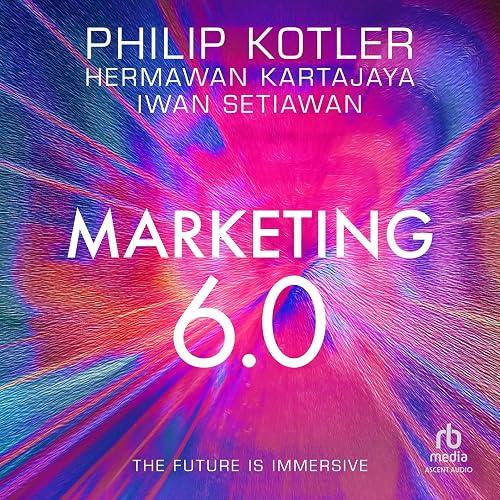
Marketing has always been a discipline defined by adaptation. Every major shift in technology, culture, and human behavior has forced marketers to rethink how they connect with customers. The product-centric approach of the industrial era gave way to customer orientation. Customer orientation evolved into human-centric marketing that emphasized purpose and sustainability. The digital revolution then transformed everything again, pushing brands toward digital engagement and eventually toward arti
**Author:** Philip Kotler
**Estimated Reading Time:** 45 minutes
**What You'll Learn:**
- Why the boundaries between physical and digital marketing are dissolving - How Generation Z and Generation Alpha are reshaping customer expectations - The five technologies powering immersive marketing experiences - Practical frameworks for creating multisensory customer experiences - How to strategically enter the metaverse without wasting resources
**Who This Book Is For:**
This book is for marketing leaders, business owners, brand managers, and anyone responsible for connecting with customers in an era where the line between online and offline has disappeared. If you have noticed that traditional marketing approaches feel increasingly ineffective with younger audiences, this book explains why and shows you what to do about it.
Marketing has always been a discipline defined by adaptation. Every major shift in technology, culture, and human behavior has forced marketers to rethink how they connect with customers. The product-centric approach of the industrial era gave way to customer orientation. Customer orientation evolved into human-centric marketing that emphasized purpose and sustainability. The digital revolution then transformed everything again, pushing brands toward digital engagement and eventually toward artificial intelligence. But something more fundamental is happening now. The distinction between the physical world and the digital world, a boundary that has organized marketing strategy for decades, is collapsing. Customers no longer think in terms of "online" and "offline" experiences. They simply have experiences. They move through their day checking a phone while shopping in a store, attending a virtual concert while sitting in their living room, and buying a physical product they discovered in a virtual world. For them, there is no separation. This is the world of Marketing 6.0. The challenge for most brands is not that they lack digital capabilities. Nearly every company has a website, social media presence, and e-commerce operation. The challenge is that these digital touchpoints exist alongside physical touchpoints rather than being integrated with them. Customers experience the disconnect. They see a product in a store, search for it online, find conflicting information, and encounter friction when trying to move between channels. The experience feels fragmented because it is fragmented. The problem runs deeper than technology. Most marketing organizations are structured around channels. There is a digital marketing team and a retail marketing team. There is an e-commerce division and a brick-and-mortar division. These silos reflect an outdated mental model. They assume that physical and digital are separate domains requiring separate strategies. But customers do not experience channels. They experience a brand. And they expect that brand to show up consistently and seamlessly across every touchpoint, whether physical or digital. The emergence of Generation Z and Generation Alpha has accelerated this shift. These younger consumers have never…
Continue reading in the MinuteRead app
Get the complete 30-minute summary of Marketing 6.0
Get the complete summary in the appMetamarketing transcends the boundary between physical and digital, creating immersive experiences where customers perce
Phygital natives expect immersive, interactive experiences as the default.
Five micro-trends are making immersive marketing inevitable: short-form video, community social media, interactive e-com
Immersive experiences require five pillars: multisensory, interactive, participative, frictionless, and storytelling.
Five technologies enable metamarketing: IoT, AI, spatial computing, AR/VR, and blockchain.
Extended Reality enhances physical spaces with digital capabilities rather than replacing them.
"Marketing 6.0" is a strong fit if you want practical ideas around business, technology, management, especially themes like metamarketing transcends the boundary between physical and digital, creating immersive experiences where customers perce; phygital natives expect immersive, interactive experiences as the default. The MinuteRead summary distills these concepts into a focused read, whether you're deciding whether to buy the book or applying its lessons at work.
Motivated to help readers with metamarketing is defined as a marketing approach that transcends the boundaries between the physical and, Philip Kotler wrote “Marketing 6.0” to package those ideas for a fast, focused read. In “Marketing 6.0”, Philip Kotler focuses on metamarketing is defined as a marketing approach that transcends the boundaries between the physical and. Through “Marketing 6.0”, Philip Kotler distills the core ideas on business into lessons readers can absorb in a single short si…
View all summaries by Philip KotlerContinue Reading
Access the complete 30-minute summary and thousands more nonfiction books in the MinuteRead app.

Continue reading the complete summary in the MinuteRead app.