MinuteRead
30 min
Book summary
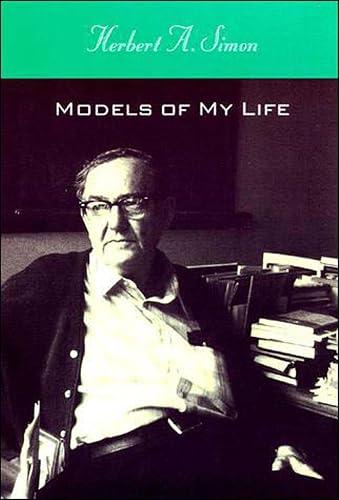
by Herbert A. Simon
Premium summary · Opens in the app · 30 min read
Most scientific autobiographies read like polished resumes. They present a tidy sequence of discoveries, awards, and publications, as if the author's life unfolded according to a predetermined plan. Herbert Simon's autobiography is different. It is the story of a mind in motion, a restless intellect that refused to stay within the lines drawn by academic departments and disciplinary traditions.
**Author:** Herbert A. Simon
**Estimated Reading Time:** 42 minutes
**What You'll Learn:**
- How a boy from Milwaukee became one of the most influential thinkers of the twentieth century - The intellectual journey that led to the birth of artificial intelligence - Why understanding human decision-making required overturning centuries of economic theory - How computer simulation revolutionized the study of the human mind - The collaborative process behind groundbreaking scientific discoveries - What bounded rationality really means and why it matters for every decision you make
**Who This Book Is For:**
This book is for anyone curious about how ideas are born, how scientific revolutions happen, and how one person can reshape multiple fields of knowledge. It is for readers interested in artificial intelligence, cognitive psychology, economics, or the history of science. It is also for anyone who has ever wondered how the human mind works and whether machines can think. Most of all, it is for people who believe that the boundaries between disciplines are artificial and that the most important discoveries happen when those boundaries are crossed.
Most scientific autobiographies read like polished resumes. They present a tidy sequence of discoveries, awards, and publications, as if the author's life unfolded according to a predetermined plan. Herbert Simon's autobiography is different. It is the story of a mind in motion, a restless intellect that refused to stay within the lines drawn by academic departments and disciplinary traditions. Simon won the Nobel Prize in Economics in 1978 for his work on decision-making in organizations. He won the Turing Award, the highest honor in computer science, in 1975 for his contributions to artificial intelligence. He made foundational contributions to psychology, political science, public administration, and the philosophy of science. Yet he was not a specialist who happened to wander into other fields. He was something rarer: a genuine polymath who saw connections where others saw boundaries. The problem Simon spent his life addressing was deceptively simple. How do human beings make decisions? This question sounds straightforward, but it cuts to the heart of economics, psychology, political science, and computer science. For centuries, economists had assumed that humans are rational actors who weigh all available options and choose the one that maximizes their utility. Simon looked at actual human behavior and saw something very different. He saw people who had limited information, limited time, and limited cognitive capacity. He saw people who did not optimize but rather satisfied, choosing the first option that was good enough rather than searching endlessly for the best possible choice. This insight, which Simon called bounded rationality, seems obvious in retrospect. Of course humans cannot process infinite information. Of course we make decisions based on incomplete knowledge.…
Continue reading in the MinuteRead app
Get the complete 30-minute summary of Models of My Life
Get the complete summary in the appHuman thinking is information processing, and the mind can be studied scientifically through computer simulation.
Bounded rationality means that humans satisfice rather than optimize, settling for good enough instead of searching endl
The Logic Theorist, created in 1955, was the first artificial intelligence program, proving that computers can solve pro
Expertise comes from knowledge, not innate ability. Experts recognize patterns and apply strategies that novices lack.
Complex systems are organized hierarchically, which makes them more robust and easier to understand.
Collaboration is essential for scientific progress. Simon's partnership with Allen Newell and Cliff Shaw produced result
"Models of My Life" is a strong fit if you want practical ideas around biography, science, psychology, especially themes like human thinking is information processing, and the mind can be studied scientifically through computer simulation; bounded rationality means that humans satisfice rather than optimize, settling for good enough instead of searching endl. The MinuteRead summary distills these concepts into a focused read, whether you're deciding whether to buy the book or applying its lessons at work.
Motivated to help readers with "Since information processing theories of cognition represent a specific layer of explanation lying between, Herbert A. Simon wrote “Models of My Life” to package those ideas for a fast, focused read. In “Models of My Life”, Herbert A. Simon focuses on "Since information processing theories of cognition represent a specific layer of explanation lying between. Through “Models of My Life”, Herbert A. Simon distills the core ideas on biography into lessons readers can…
Continue Reading
Access the complete 30-minute summary and thousands more nonfiction books in the MinuteRead app.

Continue reading the complete summary in the MinuteRead app.