 MinuteRead
30 min
Book summary
Premium summary · Opens in the app · 30 min read
Every year, companies around the world pour billions of dollars into developing new products. They hire brilliant engineers, conduct extensive market research, build sophisticated prototypes, and run elaborate launch campaigns. They do everything right according to the traditional playbook.
**Author:** Madhavan Ramanujam
**Estimated Reading Time:** 45 minutes
**What You'll Learn:** - Why most new products fail and how to avoid the same fate - How to discover what customers will actually pay before building anything - The four fatal monetization failures that sink innovations - How to segment customers, configure products, and choose the right pricing model - How to build a business case that survives contact with reality - How to communicate value, apply behavioral pricing, and protect your price after launch
**Who This Book Is For:** Product managers, entrepreneurs, executives, marketers, and anyone involved in creating or launching new products. If you have ever watched a promising innovation fail in the marketplace, this book will show you why and how to prevent it from happening again.
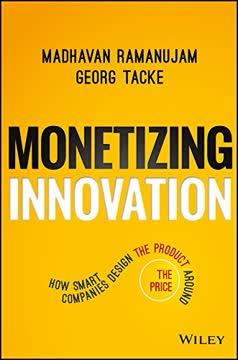
Every year, companies around the world pour billions of dollars into developing new products. They hire brilliant engineers, conduct extensive market research, build sophisticated prototypes, and run elaborate launch campaigns. They do everything right according to the traditional playbook. And then most of those products fail. The numbers are sobering. Across industries, roughly 72 percent of new products do not meet their revenue targets. Some estimates place the failure rate even higher. The cost is staggering, not just in wasted development dollars but in lost opportunities, damaged brands, and demoralized teams. Why does this happen? The conventional wisdom blames execution. The product was not innovative enough. The marketing missed the mark. The timing was off. The competition was too fierce. But Madhavan Ramanujam, a partner at the global pricing consultancy Simon-Kucher & Partners, has spent years studying product failures across industries and has identified a deeper, more uncomfortable truth. The problem is not execution. The problem is the process itself. Most companies develop products first and figure out pricing later. They invest months or years designing features, building prototypes, and refining the user experience. Only when the product is ready to launch does someone ask the fateful question: What should we charge for this? At that point, it is too late. The product has already been built. The features are fixed. The costs are sunk. The company has no choice but to guess at a price and hope for the best. If customers do not respond, the company can only cut the price or watch the product die. Ramanujam argues that this sequence is fundamentally backward. Pricing is not a final step in the product development process. It is the starting point. The question of what customers are willing to pay should be asked before a single feature is designed, before a single line of code is written, before a single prototype is built. This insight is the foundation of what…
Continue reading in the MinuteRead app
Get the complete 30-minute summary of Monetizing Innovation
Get the complete summary in the appDesign the product around the price, not the price around the product.
Have the willingness-to-pay talk early, before building anything.
Segment customers based on needs, value, and willingness to pay.
Build products around Leaders, include Fillers selectively, and eliminate Killers.
Choose the right monetization model, not just the right price.
Develop a comprehensive pricing strategy with clear goals and reaction principles.
"Monetizing Innovation" is a strong fit if you want practical ideas around business, entrepreneurship, startup, especially themes like design the product around the price, not the price around the product; have the willingness-to-pay talk early, before building anything. The MinuteRead summary distills these concepts into a focused read, whether you're deciding whether to buy the book or applying its lessons at work.
Madhavan Ramanujam is a partner at Simon-Kucher & Partners, a global consulting firm specializing in pricing and marketing strategy. He has over 15 years of experience advising Fortune 500 companies across various industries on monetization and growth strategies. Madhavan Ramanujam is recognized as a leading expert in pricing and product innovation, frequently speaking at conferences and contributing to publications on these topics. His work focuses on helping businesses maximize revenue and pro…
View all summaries by Madhavan RamanujamContinue Reading
Access the complete 30-minute summary and thousands more nonfiction books in the MinuteRead app.

Continue reading the complete summary in the MinuteRead app.






