 MinuteRead
30 min
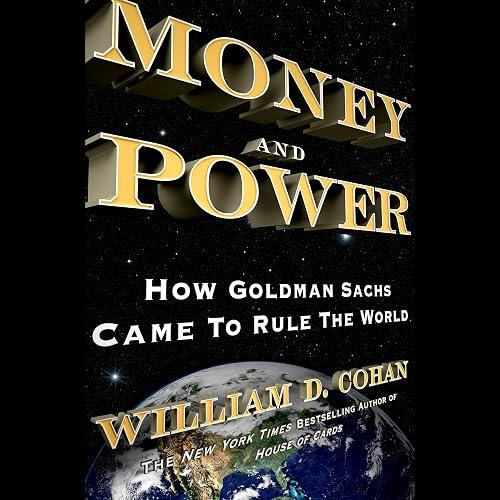
Book summary
by William D. Cohan
Premium summary · Opens in the app · 30 min read
In the fall of 2008, as the global financial system teetered on the edge of collapse, one name appeared in nearly every conversation about the crisis: Goldman Sachs. Depending on whom you asked, the firm was either the savior of American capitalism or the architect of its near-destruction. Politicians summoned its executives to testify before Congress. Protesters gathered outside its headquarters. Journalists wrote thousands of articles attempting to explain how a single investment bank could wi
**Author:** William D. Cohan
**Estimated Reading Time:** 45 minutes
**What You'll Learn:**
How a one-man commercial paper business founded by a Jewish immigrant in 1869 became the most influential and controversial investment bank in history. You will learn the cultural principles that drove Goldman Sachs to dominance, the crises that nearly destroyed it, the leadership models that sustained it, and the strategic decisions that transformed it into a global financial powerhouse.
**Who This Book Is For:**
Anyone who wants to understand how power actually operates on Wall Street. This book is for investors, business leaders, students of finance, and readers fascinated by the intersection of money, influence, and institutional culture. It is also for anyone who has ever wondered how a firm could inspire both fierce loyalty and intense criticism while remaining at the center of American capitalism for over a century.
In the fall of 2008, as the global financial system teetered on the edge of collapse, one name appeared in nearly every conversation about the crisis: Goldman Sachs. Depending on whom you asked, the firm was either the savior of American capitalism or the architect of its near-destruction. Politicians summoned its executives to testify before Congress. Protesters gathered outside its headquarters. Journalists wrote thousands of articles attempting to explain how a single investment bank could wield so much influence over the global economy. Yet the story of Goldman Sachs did not begin in the boardrooms of Lower Manhattan or the trading floors of London. It began in 1869, when a German Jewish immigrant named Marcus Goldman arrived in New York City with little more than a horse-drawn cart and a simple idea: buy promissory notes from merchants at a discount, then sell them to banks at a slightly smaller discount. The difference, a fraction of a percent, was his profit. From that humble beginning grew an institution that would shape the modern financial world. Goldman Sachs would pioneer equity underwriting, transform trading into a science, advise on the largest mergers in corporate history, and produce more Treasury Secretaries and central bankers than any other private firm. Its alumni would populate the highest ranks of government, including positions at the Federal Reserve, the Treasury Department, and the White House. William D. Cohan, a former Wall Street banker turned investigative journalist, spent years researching this remarkable institution. He interviewed current and former partners, reviewed internal documents, and reconstructed the pivotal moments that defined Goldman's trajectory. What emerges from his work is not a simple story of triumph or villainy. It is a nuanced portrait of an institution built on contradictions: fiercely competitive yet deeply collaborative, ruthlessly pragmatic yet guided by stated principles, obsessed with profits yet capable of extraordinary restraint.…
Continue reading in the MinuteRead app
Get the complete 30-minute summary of Money and Power
Get the complete summary in the appGoldman Sachs began in 1869 when Marcus Goldman, a German Jewish immigrant, started trading commercial paper in New York
The firm's success was built on a culture of client focus, integrity, teamwork, and long-term thinking.
Sidney Weinberg rose from janitor's assistant to senior partner, demonstrating that Goldman was a meritocracy.
The Penn Central bankruptcy nearly destroyed Goldman in 1970, but the firm survived by settling claims and implementing
The Two Johns, John Whitehead and John Weinberg, demonstrated that co-leadership can work when leaders have complementar
Goldman's decision to avoid hostile takeovers differentiated the firm and built trust with corporate clients.
"Money and Power" is a strong fit if you want practical ideas around business, finance, history, especially themes like goldman sachs began in 1869 when marcus goldman, a german jewish immigrant, started trading commercial paper in new york; the firm's success was built on a culture of client focus, integrity, teamwork, and long-term thinking. The MinuteRead summary distills these concepts into a focused read, whether you're deciding whether to buy the book or applying its lessons at work.
Motivated to help readers with "Marcus Goldman could not have imagined the size, William D. Cohan wrote “Money and Power” to package those ideas for a fast, focused read. In “Money and Power”, William D. Cohan focuses on "Marcus Goldman could not have imagined the size. Through “Money and Power”, William D. Cohan distills the core ideas on business into lessons readers can absorb in a single short sitting. Readers turn to this work when they want William D. Cohan's perspective on the subject wit…
Continue Reading
Access the complete 30-minute summary and thousands more nonfiction books in the MinuteRead app.

Continue reading the complete summary in the MinuteRead app.






