 MinuteRead
30 min
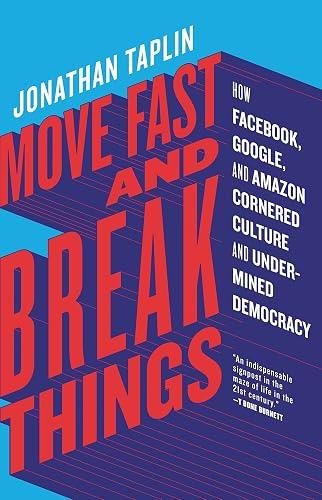
Book summary
by Jonathan Taplin
Premium summary · Opens in the app · 30 min read
In 1969, Jonathan Taplin was twenty-two years old and working as a road manager for Bob Dylan and The Band. He lived inside a world where artists could make a living, where record labels invested in talent, and where the economics of creativity supported a thriving middle class of musicians, writers, and filmmakers. By the time he produced Martin Scorsese's film *To Die For* in 1995, that world was already beginning to fracture. Something was shifting beneath the surface of the entertainment ind
**Author:** Jonathan Taplin
**Estimated Reading Time:** 45 minutes
**What You'll Learn:**
- How a handful of technology platforms captured the economic value of creative work - Why the internet's original promise of decentralization gave way to monopoly power - The ideological shift that transformed Silicon Valley from countercultural experiment to libertarian stronghold - How surveillance marketing devalued art, journalism, and music - What artists, citizens, and policymakers can do to reclaim the digital future
**Who This Book Is For:**
This book is for anyone who has wondered why musicians struggle despite millions of streams, why newspapers are dying while platforms profit, or why the internet feels less like a commons and more like a shopping mall. It is for creators, citizens, and readers who sense that something fundamental has gone wrong with the digital economy and want to understand exactly what happened and what might be done about it.
In 1969, Jonathan Taplin was twenty-two years old and working as a road manager for Bob Dylan and The Band. He lived inside a world where artists could make a living, where record labels invested in talent, and where the economics of creativity supported a thriving middle class of musicians, writers, and filmmakers. By the time he produced Martin Scorsese's film *To Die For* in 1995, that world was already beginning to fracture. Something was shifting beneath the surface of the entertainment industry, and the consequences would reshape not only how art is distributed but who profits from it. The story Taplin tells in *Move Fast and Break Things* is not the familiar Silicon Valley narrative of disruption and innovation. It is instead a story about power: who holds it, how it was acquired, and what happens when a small group of technology companies gains control over the distribution channels that connect creators to audiences. The book argues that the digital revolution, for all its genuine achievements, has produced a massive transfer of wealth away from the people who make culture and toward the platforms that monetize attention. The numbers are stark. In 2000, the recorded music industry in the United States generated nearly $20 billion in revenue. By 2015, that figure had collapsed to just over $7 billion. Newspaper advertising revenue fell from $65.8 billion in 2000 to $23.6 billion in 2014. During the same period, Google's revenue grew from $1.5 billion to $74.5 billion. The pattern is unmistakable: consumption of music, news, and film remains high, but the income flows to a different set of hands. Taplin's perspective is unusual because he has lived on both sides of this divide. He managed musicians when the music business still functioned as a viable economic ecosystem. He produced films when studios…
Continue reading in the MinuteRead app
Get the complete 30-minute summary of Move Fast and Break Things
Get the complete summary in the appThe internet was built by countercultural visionaries who believed in decentralization and empowerment, but it was captu
The business model of Google and Facebook is surveillance marketing: collecting personal data and selling targeted adver
In this model, the user is the product, and the advertiser is the customer.
The music industry collapsed because piracy enabled by platforms destroyed the economics of recorded music, and the "inf
Journalism collapsed because Google and Facebook captured the advertising revenue that funded newsrooms, without replaci
Digital markets tend toward monopoly because of network effects, and antitrust enforcement has been too weak to prevent
"Move Fast and Break Things" is a strong fit if you want practical ideas around business, technology, politics, especially themes like the internet was built by countercultural visionaries who believed in decentralization and empowerment, but it was captu; the business model of google and facebook is surveillance marketing: collecting personal data and selling targeted adver. The MinuteRead summary distills these concepts into a focused read, whether you're deciding whether to buy the book or applying its lessons at work.
Motivated to help readers with since 1995—the last time I produced a movie (To Die For)—the digital distribution of most popular forms of, Jonathan Taplin wrote “Move Fast and Break Things” to package those ideas for a fast, focused read. In “Move Fast and Break Things”, Jonathan Taplin focuses on since 1995—the last time I produced a movie (To Die For)—the digital distribution of most popular forms of. Through “Move Fast and Break Things”, Jonathan Taplin distills the core ideas on business int…
Continue Reading
Access the complete 30-minute summary and thousands more nonfiction books in the MinuteRead app.

Continue reading the complete summary in the MinuteRead app.






