MinuteRead
30 min
Book summary
Premium summary · Opens in the app · 30 min read
Every year, companies around the world spend billions of dollars on technology. They buy enterprise resource planning systems, advanced planning software, supply chain management tools, and customer relationship platforms. The promises attached to these investments are always the same: increased efficiency, better visibility, lower costs, higher profits. The board approves the budget. The implementation begins. Eighteen months later, the system goes live. And then, quietly, nothing much changes.
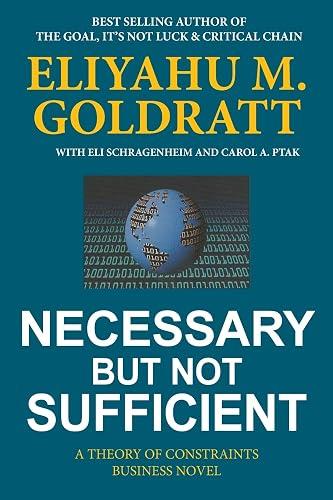
**Author:** Eliyahu M. Goldratt **Estimated Reading Time:** 45 minutes
**What You'll Learn:** Why technology investments so often fail to deliver promised returns, how outdated rules and measurements sabotage performance, and what specific changes in thinking, selling, and operating unlock the true value of new systems.
**Who This Book Is For:** Executives who have been disappointed by expensive technology implementations, managers struggling to translate system capabilities into bottom-line results, technology vendors who want to sell value instead of features, and anyone who suspects their organization is doing the wrong things faster instead of doing the right things better.
Every year, companies around the world spend billions of dollars on technology. They buy enterprise resource planning systems, advanced planning software, supply chain management tools, and customer relationship platforms. The promises attached to these investments are always the same: increased efficiency, better visibility, lower costs, higher profits. The board approves the budget. The implementation begins. Eighteen months later, the system goes live. And then, quietly, nothing much changes. The reports are faster. The screens are prettier. The data is more accessible. But the balance sheet looks remarkably similar to what it looked like before the project started. Inventories remain bloated. Lead times remain long. Customer service remains mediocre. The promised return on investment never materializes, and everyone involved quietly agrees not to talk about it too much. This is not a rare occurrence. It is the norm. Eliyahu Goldratt, the physicist turned management thinker who reshaped modern manufacturing with his book *The Goal*, spent the final decade of his career investigating why technology so consistently fails to deliver its promised value. He was not interested in blaming software vendors or implementation consultants. He was interested in something deeper: the hidden logic that causes intelligent, well-intentioned people to spend millions of dollars on systems that do not improve their businesses. What he discovered was both simple and profound. Technology is necessary, but it is not sufficient. A new system can remove a limitation. It can eliminate the constraint that forced your organization to operate in a certain way for decades. But if you do not change the rules, policies, measurements, and habits that grew up around that old limitation, the technology will simply automate those outdated behaviors. You will do the wrong things faster. You will generate useless reports more efficiently. You will optimize processes that should have been eliminated entirely. The problem is not the technology. The problem is the rules. Consider what happens when a company installs a new planning system that can recalculate production schedules in minutes instead of weeks. The old limitation was computational speed. The old rule, developed over decades, was to run the planning cycle once a month…
Continue reading in the MinuteRead app
Get the complete 30-minute summary of Necessary But Not Sufficient
Get the complete summary in the appTechnology removes limitations, but value comes from changing the rules that recognized those limitations.
The technology trap is doing the wrong things faster instead of doing the right things.
In a dependent system, the constraint determines throughput. Focus on the constraint.
Local efficiency is an illusion. It creates inventory and destroys global performance.
Optimizing within the noise amplifies chaos. Simplify planning and protect the constraint with buffers.
Push systems create surpluses and shortages. Pull systems eliminate both by replenishing based on actual sales.
"Necessary But Not Sufficient" is a strong fit if you want practical ideas around business, management, leadership, especially themes like technology removes limitations, but value comes from changing the rules that recognized those limitations; the technology trap is doing the wrong things faster instead of doing the right things. The MinuteRead summary distills these concepts into a focused read, whether you're deciding whether to buy the book or applying its lessons at work.
Motivated to help readers with ...technology is a necessary condition, Eliyahu M. Goldratt wrote “Necessary But Not Sufficient” to package those ideas for a fast, focused read. In “Necessary But Not Sufficient”, Eliyahu M. Goldratt focuses on ...technology is a necessary condition. Through “Necessary But Not Sufficient”, Eliyahu M. Goldratt distills the core ideas on business into lessons readers can absorb in a single short sitting. Readers turn to this work when they want Eliyahu M. Goldratt's…
View all summaries by Eliyahu M GoldrattContinue Reading
Access the complete 30-minute summary and thousands more nonfiction books in the MinuteRead app.

Continue reading the complete summary in the MinuteRead app.