MinuteRead
30 min
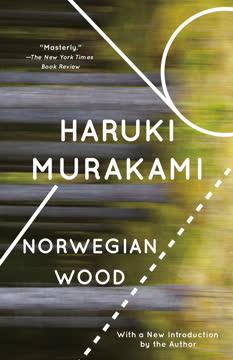
Haruki Murakami wrote *Norwegian Wood* in 1987, and it became the novel that transformed him from a cult writer into a national phenomenon in Japan. The book sold millions of copies, made him a household name, and, by his own account, made him so uncomfortable with fame that he left Japan for a while. It is, in many ways, his most straightforward novel: no talking cats, no parallel worlds, no fish falling from the sky. Instead, it is a love story, a coming-of-age story, and a grief story, told w
**Author:** Haruki Murakami **Estimated Reading Time:** 18 minutes
**What This Story Explores:** The way grief embeds itself in the body and refuses to leave on schedule. The impossible arithmetic of loving someone who is disappearing. The strange, ordinary miracle of choosing to stay alive.
**Who This Book Is For:** Readers who have lost someone too young and spent years afterward trying to understand what happened. Anyone who has loved a person they could not save. Those who believe a song can crack open a decade of carefully sealed memory.
Haruki Murakami wrote *Norwegian Wood* in 1987, and it became the novel that transformed him from a cult writer into a national phenomenon in Japan. The book sold millions of copies, made him a household name, and, by his own account, made him so uncomfortable with fame that he left Japan for a while. It is, in many ways, his most straightforward novel: no talking cats, no parallel worlds, no fish falling from the sky. Instead, it is a love story, a coming-of-age story, and a grief story, told with the kind of aching clarity that makes readers feel as though they have lived through something rather than merely read about it. The novel opens in 1987, when Toru Watanabe is thirty-seven years old and landing in Hamburg, Germany. An orchestral version of the Beatles song "Norwegian Wood" plays over the airplane's speakers, and the melody sends him hurtling backward eighteen years, to 1969, when he was nineteen and in love with a woman named Naoko. The memory arrives not as a gentle nostalgia but as a physical force, something that knocks the breath out of him. From that moment, the novel becomes a long act of remembering, a deliberate excavation of the past. The story Toru tells is set in Tokyo in the late 1960s, a time of student protests, political upheaval, and cultural transformation. But Toru himself is largely indifferent to the revolution happening around him. He is a student of drama, a lover of American literature, and a young man who has already learned that death is not something that waits at the end of life but something that lives inside it. His best friend, Kizuki, killed himself at seventeen, and that death has shaped everything that followed. The central tension of the novel is simple and devastating: Toru loves Naoko, Kizuki's former girlfriend, but Naoko is unraveling. She carries a grief and a psychological fragility that no amount of love seems able to reach. At the same time, Toru meets Midori, a woman who is vividly, almost violently alive, and who offers him a different kind of love entirely. The novel asks whether it is possible to…
Continue reading in the MinuteRead app
Get the complete 30-minute summary of Norwegian Wood
Get the complete summary in the appHaruki Murakami wrote *Norwegian Wood* in 1987, and it became the novel that transformed him from a cult writer into a national phenomenon in Japan. The book sold millions of copies, made him a household name, and, by his own account, made
"Norwegian Wood" will resonate with readers drawn to romance, japan, japanese literature. Haruki Murakami wrote *Norwegian Wood* in 1987, and it became the novel that transformed him from a cult writer into a national phenomenon in Japan. The book sold millions of copie… Our summary captures the core argument so you can learn the essentials before committing to the full book.
Haruki Murakami is a renowned Japanese author known for his accessible yet complex writing style. Heavily influenced by Western culture, particularly music and literature, Murakami's work often incorporates references to American writers and musicians. He studied drama at Waseda University and worked at a record store before opening a jazz bar with his wife. Murakami's novels frequently feature themes and titles inspired by classical music and popular songs. His unique blend of Western influence…
View all summaries by Haruki MurakamiContinue Reading
Access the complete 30-minute summary and thousands more nonfiction books in the MinuteRead app.

Continue reading the complete summary in the MinuteRead app.