 MinuteRead
30 min
Book summary
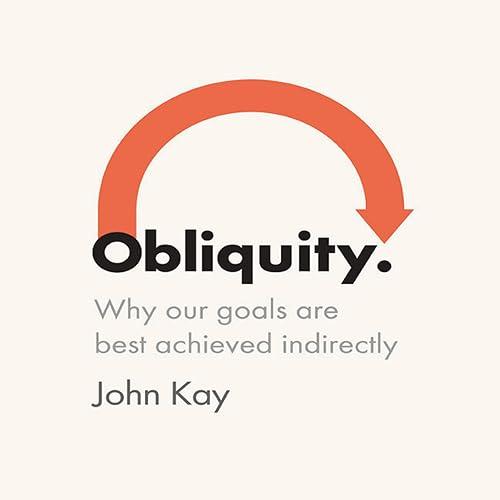
by John Kay
Premium summary · Opens in the app · 30 min read
In 1914, the Panama Canal opened to connect the Atlantic and Pacific oceans. If you look at a map, you might assume the canal runs east to west, slicing directly across the narrowest part of Panama. But it doesn't. The canal runs southeast from the Atlantic to the Pacific, following a route that appears roundabout to anyone fixated on the shortest distance between two points.
**Why Our Goals Are Best Achieved Indirectly**
By John Kay
**Estimated Reading Time:** 45 minutes
**What You'll Learn:**
- Why the most profitable companies rarely make profit their primary goal - How happiness eludes those who chase it directly - Why adaptation beats rigid planning in complex environments - How the wealthiest people became rich by focusing on something else entirely - Why "muddling through" is often smarter than comprehensive analysis - How to apply oblique thinking to your career, business, and personal life
**Who This Book Is For:**
Anyone who has ever pursued a goal with single-minded determination only to find success slipping further away. This book is for leaders frustrated by strategic plans that fail, professionals puzzled by why their most focused efforts produce mediocre results, and individuals seeking fulfillment in a world that resists direct solutions. If you sense that the best things in life come sideways rather than head-on, this book will show you why that intuition is correct.
In 1914, the Panama Canal opened to connect the Atlantic and Pacific oceans. If you look at a map, you might assume the canal runs east to west, slicing directly across the narrowest part of Panama. But it doesn't. The canal runs southeast from the Atlantic to the Pacific, following a route that appears roundabout to anyone fixated on the shortest distance between two points. This geographical oddity contains a profound lesson about how the world actually works. The canal's builders did not choose their route by drawing a straight line on a map. They followed the terrain, adapted to the landscape, and worked with the natural contours of the land. The result was a route that looked indirect on paper but proved far more effective in practice. John Kay's book explores why this principle applies far beyond canal construction. In business, in personal life, in government policy, and in the pursuit of happiness itself, the most effective path to a complex goal is often indirect. We achieve our objectives not by fixating on them relentlessly but by pursuing something broader, richer, and more meaningful. Kay calls this principle "obliquity." The idea challenges one of the most deeply held assumptions of modern life: that clear objectives and direct action produce the best results. We are taught to set specific goals, measure progress against them, and pursue them with determination. Management consultants preach the gospel of key performance indicators. Self-help books instruct us to visualize success and chase it directly. Governments establish targets for everything from educational achievement to carbon emissions. Yet Kay argues that this direct approach, while appealing in its simplicity, often fails precisely when the stakes are highest. The most important goals in life are…
Continue reading in the MinuteRead app
Get the complete 30-minute summary of Obliquity
Get the complete summary in the appComplex objectives are best achieved indirectly. Stop trying to pursue happiness, profit, or wealth directly. Focus on t
Happiness comes from engagement, not pursuit. Lose yourself in meaningful work and relationships. Happiness will follow.
The most profitable companies focus on purpose, not profit. Build a great business. The financial results will follow.
The wealthiest people focus on craft, not money. Develop excellence in your field. Wealth will follow.
Adaptation beats design. Start with a rough direction, take small steps, learn from experience, and adjust course as nee
We know more than we can tell. Trust your intuition when it is informed by relevant experience. Not all knowledge can be
"Obliquity" is a strong fit if you want practical ideas around business, psychology, economics, especially themes like complex objectives are best achieved indirectly. stop trying to pursue happiness, profit, or wealth directly. focus on t; happiness comes from engagement, not pursuit. lose yourself in meaningful work and relationships. happiness will follow. The MinuteRead summary distills these concepts into a focused read, whether you're deciding whether to buy the book or applying its lessons at work.
Motivated to help readers with obliquity describes the process of achieving complex objectives indirectly, John Kay wrote “Obliquity” to package those ideas for a fast, focused read. In “Obliquity”, John Kay focuses on obliquity describes the process of achieving complex objectives indirectly. Through “Obliquity”, John Kay distills the core ideas on business into lessons readers can absorb in a single short sitting. Readers turn to this work when they want John Kay's perspective on the subject w…
Continue Reading
Access the complete 30-minute summary and thousands more nonfiction books in the MinuteRead app.

Continue reading the complete summary in the MinuteRead app.






