MinuteRead
30 min
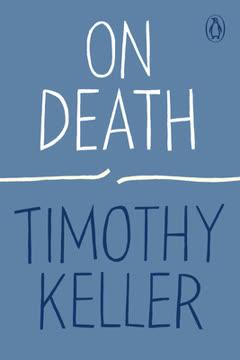
Something is wrong with the world. Every person who has ever lived has sensed it, though we describe it in different ways. We feel it when a loved one dies and the grief hits like a physical blow. We feel it when we attend a funeral and the words of comfort ring hollow against the weight of absence. We feel it in the quiet moments when we remember that we too will one day cease to breathe.
**Author:** Timothy J. Keller **Estimated Reading Time:** 45 minutes
**What You'll Learn** How to face the one certainty every human shares without denial or despair. You will discover why death feels so fundamentally wrong, how different worldviews attempt to answer its challenge, and why the Christian understanding of death offers a hope that transforms not only how we die but how we live.
**Who This Book Is For** Anyone who has lost someone they love. Anyone who has lain awake at night wondering what their life means if it all ends. Anyone who wants to stop running from the thought of death and start facing it with clarity, courage, and genuine hope.
Something is wrong with the world. Every person who has ever lived has sensed it, though we describe it in different ways. We feel it when a loved one dies and the grief hits like a physical blow. We feel it when we attend a funeral and the words of comfort ring hollow against the weight of absence. We feel it in the quiet moments when we remember that we too will one day cease to breathe. Death is the universal human problem. Every culture, every religion, every philosophy has attempted to make sense of it. Yet modern Western society has adopted a peculiar strategy. We simply try not to think about it. This was not always the case. For most of human history, death was a visible, familiar presence. People died at home, surrounded by family. Infant mortality rates meant parents regularly buried children. Life expectancy was short enough that no one could pretend death was a distant abstraction. People were forced to develop ways of understanding and preparing for their own mortality. Something shifted in the twentieth century. Medical advances moved death from the home to the hospital. Secularization eroded belief in an afterlife. A culture built on youth, productivity, and consumption found the very idea of death embarrassing, an intrusion, a failure of the system. We learned to hide the dying away and to speak of death in euphemisms. We became, as Timothy Keller argues, the worst culture in history at preparing its members for the only inevitability. This book is an attempt to recover what we have lost. Keller does not offer cheap comfort or easy answers. He takes death seriously as an enemy, a horror, a violation of how things ought to be. He insists that grief is real and appropriate. Yet he also insists that there is a hope that does not depend on pretending death is natural or good. That hope is specific. It is not a vague spirituality or a generic belief in an afterlife. It is rooted in a…
Continue reading in the MinuteRead app
Get the complete 30-minute summary of On Death
Get the complete summary in the appDeath is an enemy, not a natural part of life to be accepted.
Grief and anger in the face of death are appropriate, not signs of weak faith.
Modern culture avoids death and is worse at preparing for it than any previous era.
A secular worldview cannot solve the problem of ultimate significance.
Christianity offers bodily resurrection based on the historical resurrection of Jesus.
Salvation is a gift received through faith, not earned through merit.
"On Death" is a strong fit if you want practical ideas around christian, theology, faith, especially themes like death is an enemy, not a natural part of life to be accepted; grief and anger in the face of death are appropriate, not signs of weak faith. The MinuteRead summary distills these concepts into a focused read, whether you're deciding whether to buy the book or applying its lessons at work.
Timothy Keller was a prominent American pastor, theologian, and author. He founded Redeemer Presbyterian Church in New York City, which grew to over 5,000 weekly attendees. Keller also established Redeemer City to City, an organization that helped launch over 250 churches globally. He authored numerous bestselling books, including "The Reason for God" and "The Prodigal God," which have been translated into multiple languages. Keller was known for his ability to engage with urban professionals an…
View all summaries by Timothy J. KellerContinue Reading
Access the complete 30-minute summary and thousands more nonfiction books in the MinuteRead app.

Continue reading the complete summary in the MinuteRead app.