MinuteRead
30 min
Book summary
by Richard L. Brandt
Premium summary · Opens in the app · 30 min read
In the early 1990s, the internet was still a curiosity. Most people had never sent an email. The idea of buying something online seemed absurd to anyone who had ever worried about giving a credit card number to a stranger over the phone. Yet it was precisely this moment, when the infrastructure was barely functional and the rules were unwritten, that Jeff Bezos chose to build a company.
**Author:** Richard L. Brandt
**Estimated Reading Time:** 45 minutes
**What You'll Learn:**
How a former Wall Street analyst built one of the most transformative companies in history by obsessing over customers, thinking in decades rather than quarters, and treating failure as a necessary cost of invention. You will understand the principles, decisions, and cultural mechanisms that turned a small online bookstore into a global force that reshaped retail, publishing, and computing.
**Who This Book Is For:**
Entrepreneurs who want to understand how long-term thinking beats short-term optimization. Managers who want to build cultures that sustain innovation at scale. Investors who want to recognize transformative business models before they become obvious. And anyone curious about how a single individual's clarity of vision can reshape entire industries.
In the early 1990s, the internet was still a curiosity. Most people had never sent an email. The idea of buying something online seemed absurd to anyone who had ever worried about giving a credit card number to a stranger over the phone. Yet it was precisely this moment, when the infrastructure was barely functional and the rules were unwritten, that Jeff Bezos chose to build a company. He was not the first to sell books online. He was not the most experienced retailer. He was not even particularly passionate about books. What he possessed was a conviction that the internet would fundamentally change commerce, and that the companies that won would be the ones that figured out how to serve customers better than anyone had before. The company he founded, Amazon, began in a garage in Bellevue, Washington, with a desk made from a door and a belief that selection, convenience, and price would matter more than physical locations, friendly cashiers, or the tactile pleasure of browsing shelves. What followed was not a smooth ascent. Amazon nearly collapsed under its own growth. Wall Street repeatedly questioned its viability. Competitors dismissed it as a bookseller with delusions of grandeur. And yet, decade after decade, Amazon expanded into new categories, new business models, and new technologies with a relentlessness that left established giants scrambling. Richard L. Brandt's account of this journey is not a hagiography. It is a study in how one person's unusual way of thinking created an organization that behaves differently from almost every other large company. Bezos did not invent e-commerce, but he understood something that few others did: that the internet would reward those who prioritized customer experience above all else, even when that meant losing money, confusing analysts, and being misunderstood for years at a time. The story of Amazon is not really about books, or retail, or even technology. It is about a philosophy of decision-making. It is about the…
Continue reading in the MinuteRead app
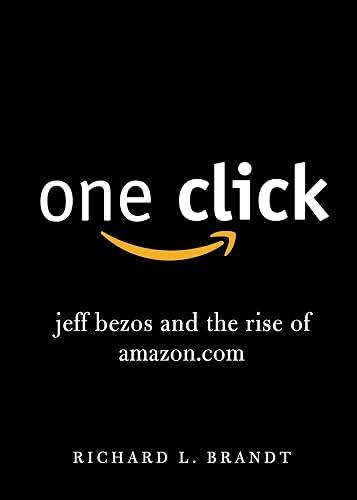
Get the complete 30-minute summary of One Click
Get the complete summary in the appCustomer obsession creates compounding advantages that competitor obsession cannot match.
The flywheel effect turns better customer experience into more traffic, more sellers, and greater selection.
Get Big Fast. In fast-growing markets, speed matters more than efficiency.
Long-term thinking creates advantages that short-term thinking cannot replicate.
Innovation requires a willingness to be misunderstood and a tolerance for experimental failure.
Day 1 is a state of mind. Day 2 is stasis, followed by decline.
"One Click" is a strong fit if you want practical ideas around business, biography, technology, especially themes like customer obsession creates compounding advantages that competitor obsession cannot match; the flywheel effect turns better customer experience into more traffic, more sellers, and greater selection. The MinuteRead summary distills these concepts into a focused read, whether you're deciding whether to buy the book or applying its lessons at work.
Motivated to help readers with "We want to be Earth's most customer-centric company where people can find and discover anything they want to, Richard L. Brandt wrote “One Click” to package those ideas for a fast, focused read. In “One Click”, Richard L. Brandt focuses on "We want to be Earth's most customer-centric company where people can find and discover anything they want to. Through “One Click”, Richard L. Brandt distills the core ideas on business into lessons readers can absorb in a singl…
Continue Reading
Access the complete 30-minute summary and thousands more nonfiction books in the MinuteRead app.

Continue reading the complete summary in the MinuteRead app.