MinuteRead
30 min
Book summary
by Dee Hock
Premium summary · Opens in the app · 30 min read
Dee Hock spent much of his life inside broken institutions. He watched banks, corporations, and governments struggle to adapt to a world changing faster than their structures could accommodate. He saw talented people trapped inside systems designed to treat them like replaceable parts. And he came to a conclusion that would shape the rest of his life: the problem is not that we have bad organizations. The problem is that we have bad ideas about what organizations are.
**Author:** Dee Hock
**Estimated Reading Time:** 45 minutes
**What You'll Learn:**
- Why organizations built like machines fail in a world that behaves like an organism - How Visa became one of the most successful companies in history without centralized control - The chaordic principles that balance chaos and order - How to build trust, distribute leadership, and create organizations people genuinely want to belong to - Practical ways to apply these ideas to your work, community, and life
**Who This Book Is For:**
This book is for anyone who has felt the friction between human nature and institutional machinery. For leaders tired of command-and-control management. For entrepreneurs building something that must adapt to survive. For citizens concerned about the health of our institutions. For anyone who senses that the old ways of organizing human effort are failing and wants to understand what might replace them.
Dee Hock spent much of his life inside broken institutions. He watched banks, corporations, and governments struggle to adapt to a world changing faster than their structures could accommodate. He saw talented people trapped inside systems designed to treat them like replaceable parts. And he came to a conclusion that would shape the rest of his life: the problem is not that we have bad organizations. The problem is that we have bad ideas about what organizations are. The dominant model of organization emerged from the industrial revolution. It borrowed heavily from the machine. Machines are predictable. They can be designed, controlled, and optimized. They respond to commands. They produce consistent output. This model worked reasonably well when the world moved slowly and problems were simple. But the world no longer moves slowly. Problems are no longer simple. And human beings have never been machine parts. Hock's central insight is that organizations are not machines. They are living systems. They are communities of people held together by shared purpose, values, and relationships. When we treat them as machines, we destroy the very qualities that make them effective: creativity, adaptability, initiative, and commitment. When we treat them as living systems, something remarkable happens. People bring their full humanity to work. Innovation flourishes. Organizations become resilient in the face of change. Hock did not merely theorize about these ideas. He put them into practice in one of the most ambitious organizational experiments of the twentieth century. In the late 1960s, he was handed a failing credit card program at a small bank in Seattle. The industry was chaotic. Banks were losing money. Fraud was rampant. Regulation was inconsistent. Most observers thought the credit card would never become a viable business. Hock saw something different. He saw an opportunity to build an organization unlike any that had…
Continue reading in the MinuteRead app
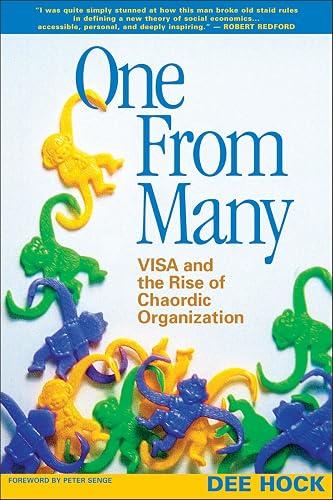
Get the complete 30-minute summary of One from Many
Get the complete summary in the appOrganizations are living systems, not machines. Treat them accordingly.
Purpose and principles are the genetic code of organizations. Clarify them and live by them.
Self-organization taps into collective intelligence. Distribute leadership and trust people to use their judgment.
Trust is the foundation of healthy organizations. Build it through consistency and transparency.
Competition and cooperation are complements, not opposites. Balance them.
Information is the lifeblood of organizations. Share it widely.
"One from Many" is a strong fit if you want practical ideas around business, leadership, management, especially themes like organizations are living systems, not machines. treat them accordingly; purpose and principles are the genetic code of organizations. clarify them and live by them. The MinuteRead summary distills these concepts into a focused read, whether you're deciding whether to buy the book or applying its lessons at work.
Motivated to help readers with healthy organizations are a mental concept of relationship to which people are drawn by hope, Dee Hock wrote “One from Many” to package those ideas for a fast, focused read. In “One from Many”, Dee Hock focuses on healthy organizations are a mental concept of relationship to which people are drawn by hope. Through “One from Many”, Dee Hock distills the core ideas on business into lessons readers can absorb in a single short sitting. Readers turn to this work when t…
Continue Reading
Access the complete 30-minute summary and thousands more nonfiction books in the MinuteRead app.

Continue reading the complete summary in the MinuteRead app.