 MinuteRead
30 min
Book summary
by Stephen Key
Premium summary · Opens in the app · 30 min read
Every year, millions of people have ideas for products they believe could change the world. They sketch them on napkins, describe them to friends, and dream about seeing them on store shelves. Yet almost none of these ideas ever reach the marketplace. The gap between having an idea and turning it into income remains one of the most frustrating chasms in modern life.
**Author:** Stephen Key
**Estimated Reading Time:** 42 minutes
**What You'll Learn:**
- Why simple improvements to existing products outperform radical inventions - How to research the marketplace before investing time and money - How to protect your idea affordably without a full patent - How to craft benefit statements and sell sheets that open doors - How to cold call potential licensees with confidence - How to negotiate licensing agreements that create lasting income - How to stay involved after licensing to maximize your success
**Who This Book Is For:**
Anyone who has ever had an idea for a product but didn't know what to do next. Whether you're a first-time inventor, a creative professional, a stay-at-home parent looking for additional income, or someone who simply enjoys solving everyday problems, this book provides a proven path from idea to licensing deal without requiring deep technical expertise, large capital, or manufacturing experience.
Every year, millions of people have ideas for products they believe could change the world. They sketch them on napkins, describe them to friends, and dream about seeing them on store shelves. Yet almost none of these ideas ever reach the marketplace. The gap between having an idea and turning it into income remains one of the most frustrating chasms in modern life. The traditional path to bringing a product to market is daunting. It involves prototyping, engineering, manufacturing, distribution, marketing, and sales. It requires significant capital, technical expertise, and an appetite for risk that most people simply don't have. The conventional wisdom says that if you want to profit from your invention, you need to become an entrepreneur in the fullest sense: raise money, build a company, and compete in the marketplace. Stephen Key spent years believing this conventional wisdom. He built businesses around his inventions, struggled with manufacturing, wrestled with distribution, and learned through painful experience how difficult the traditional path can be. But over time, he discovered a different way. Instead of building companies around his ideas, he began licensing them to companies that already had the infrastructure, distribution channels, and brand recognition to bring products to market successfully. This shift changed everything. Key has now licensed more than twenty product ideas to companies of all sizes. Some of his ideas have generated millions of dollars in retail sales. Others have provided steady royalty income for years. What makes his story remarkable is not just the success itself, but the simplicity of his approach. He doesn't hold engineering degrees. He doesn't have deep technical expertise. He doesn't spend years developing complex inventions. Instead, he focuses on finding simple improvements to existing products and licensing those improvements to companies that can benefit from them immediately. The premise…
Continue reading in the MinuteRead app
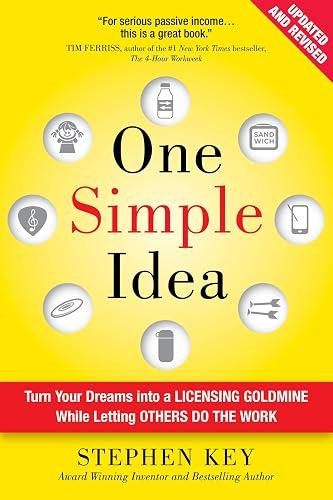
Get the complete 30-minute summary of One Simple Idea
Get the complete summary in the appSimple improvements to existing products are more licensable than radical inventions.
Research the market before investing time and money in developing an idea.
File a Provisional Patent Application for $110 instead of spending thousands on a full patent.
Craft a benefit statement of 25 words or less that focuses on what your product does for the consumer.
Create a one-page sell sheet that presents your idea professionally.
Cold call potential licensees in marketing or sales, starting with your benefit statement.
"One Simple Idea" is a strong fit if you want practical ideas around business, entrepreneurship, self help, especially themes like simple improvements to existing products are more licensable than radical inventions; research the market before investing time and money in developing an idea. The MinuteRead summary distills these concepts into a focused read, whether you're deciding whether to buy the book or applying its lessons at work.
Motivated to help readers with all it takes is one simple idea—one that's ripe for the marketplace, Stephen Key wrote “One Simple Idea” to package those ideas for a fast, focused read. In “One Simple Idea”, Stephen Key focuses on all it takes is one simple idea—one that's ripe for the marketplace. Through “One Simple Idea”, Stephen Key distills the core ideas on business into lessons readers can absorb in a single short sitting. Readers turn to this work when they want Stephen Key's perspective …
View all summaries by Stephen KeyContinue Reading
Access the complete 30-minute summary and thousands more nonfiction books in the MinuteRead app.

Continue reading the complete summary in the MinuteRead app.






