 MinuteRead
30 min
Book summary
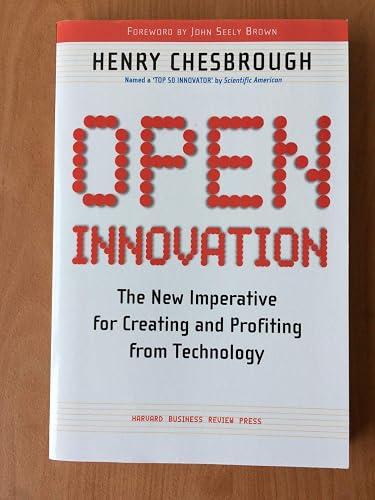
by Henry Chesbrough
Premium summary · Opens in the app · 30 min read
For most of the twentieth century, the formula for innovation success seemed settled. Hire the brightest scientists and engineers. Give them generous budgets and state-of-the-art laboratories. Protect the resulting intellectual property with walls of patents and armies of lawyers. The company that controlled the most research would produce the most breakthroughs, and those breakthroughs would secure market dominance for decades.
**Author:** Henry Chesbrough
**Estimated Reading Time:** 45 minutes
**What You'll Learn:**
- Why the traditional model of corporate innovation is collapsing - How companies can profit from ideas that originate outside their walls - Why business models matter more than technology itself - How to manage intellectual property as a strategic asset rather than a defensive shield - What role universities, venture capital, and startups play in the new innovation landscape - How to redesign R&D for a world where knowledge is distributed everywhere
**Who This Book Is For:**
This book is for executives, R&D leaders, entrepreneurs, investors, and policymakers who sense that the old rules of innovation no longer apply. It is for anyone who has watched a great idea die inside a large organization because it did not fit the existing business model. It is for leaders who want to understand why some companies thrive by opening their doors while others wither behind closed ones.
For most of the twentieth century, the formula for innovation success seemed settled. Hire the brightest scientists and engineers. Give them generous budgets and state-of-the-art laboratories. Protect the resulting intellectual property with walls of patents and armies of lawyers. The company that controlled the most research would produce the most breakthroughs, and those breakthroughs would secure market dominance for decades. This was the logic of Closed Innovation. It powered the great corporate research laboratories of the twentieth century: Bell Labs, Xerox PARC, IBM Research, DuPont's Experimental Station. These institutions produced transistors, lasers, graphical user interfaces, and countless other technologies that shaped the modern world. The system worked because the smartest people worked for you, because competitors lacked comparable resources, and because the path from laboratory to market ran exclusively through your own factories and sales force. Then the ground shifted. Skilled workers became more mobile. Venture capital matured into a powerful engine for funding new ventures. Universities began actively commercializing their research. Startups emerged as serious competitors to established firms. The internet accelerated the flow of information across organizational boundaries. The assumptions that underpinned Closed Innovation began to erode, one by one. Henry Chesbrough watched this transformation from a unique vantage point. He had worked in the computer industry during the 1980s and 1990s, observing how companies like Xerox struggled to commercialize their own inventions while smaller, more nimble firms capitalized on ideas that leaked out of corporate labs. He saw how Cisco built a dominant position by acquiring and partnering with external innovators rather than relying solely on internal R&D. He noticed that the companies winning in this new environment were not necessarily the ones that invented the most, but the ones that best connected internal and external ideas. The result of…
Continue reading in the MinuteRead app
Get the complete 30-minute summary of Open Innovation
Get the complete summary in the appClosed Innovation assumed that successful innovation requires control. Those assumptions have eroded.
Open Innovation recognizes that valuable ideas can come from inside or outside the company and can go to market from ins
Not all the smart people work for you. Tap into external knowledge to complement internal capabilities.
Technology has no inherent economic value. The business model determines how value is created and captured.
The same technology commercialized through different business models yields different returns.
Intellectual property is a strategic asset with both defensive and offensive uses. Manage it actively.
"Open Innovation" is a strong fit if you want practical ideas around business, management, technology, especially themes like closed innovation assumed that successful innovation requires control. those assumptions have eroded; open innovation recognizes that valuable ideas can come from inside or outside the company and can go to market from ins. The MinuteRead summary distills these concepts into a focused read, whether you're deciding whether to buy the book or applying its lessons at work.
Motivated to help readers with "The Closed Innovation paradigm is a view that says successful innovation requires control." Closed, Henry Chesbrough wrote “Open Innovation” to package those ideas for a fast, focused read. In “Open Innovation”, Henry Chesbrough focuses on "The Closed Innovation paradigm is a view that says successful innovation requires control." Closed. Through “Open Innovation”, Henry Chesbrough distills the core ideas on business into lessons readers can absorb in a single sho…
Continue Reading
Access the complete 30-minute summary and thousands more nonfiction books in the MinuteRead app.

Continue reading the complete summary in the MinuteRead app.






