 MinuteRead
30 min
Book summary
Premium summary · Opens in the app · 30 min read
There is a story about a colony of penguins living on an iceberg in the Antarctic. For as long as anyone could remember, the iceberg had been their home. It provided shelter from storms, a place to raise their young, and proximity to the rich fishing grounds that sustained them. The penguins were not foolish. They knew the iceberg had cracks and imperfections. But it was home, and home is a powerful thing.
**Author:** John P. Kotter **Estimated Reading Time:** 45 minutes
**What You'll Learn:**
- Why change fails in organizations and how to make it succeed - The eight-step process for leading meaningful change - How to recognize threats before they become disasters - How to build momentum and make change permanent
**Who This Book Is For:**
Leaders, managers, and anyone who has ever tried to change something in an organization and met resistance. If you have ever felt frustrated by people who refuse to see what seems obvious, this book will give you a new way forward.
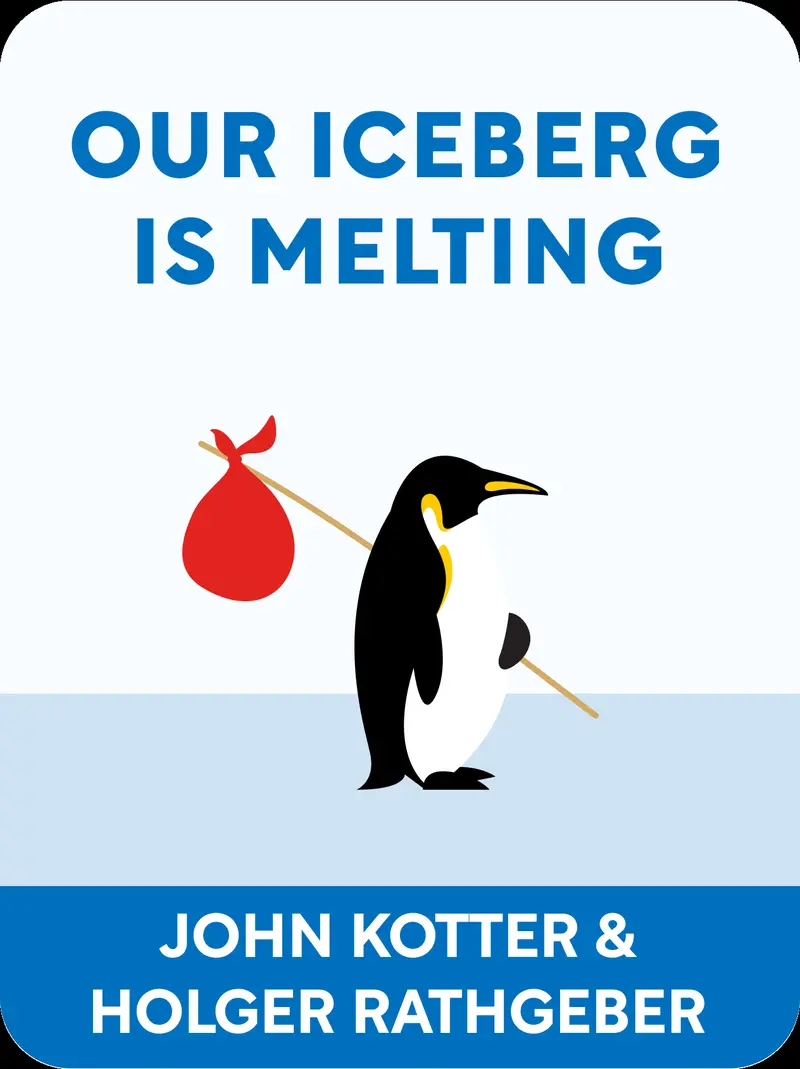
There is a story about a colony of penguins living on an iceberg in the Antarctic. For as long as anyone could remember, the iceberg had been their home. It provided shelter from storms, a place to raise their young, and proximity to the rich fishing grounds that sustained them. The penguins were not foolish. They knew the iceberg had cracks and imperfections. But it was home, and home is a powerful thing. One day, a curious penguin named Fred noticed something troubling. The iceberg was melting. Not in the ordinary way that ice melts and refreezes with the seasons, but in a deeper, more dangerous way. Water had collected in cavities inside the iceberg. Under the right conditions, the entire structure could fracture and collapse. If that happened during a winter storm, the colony would be devastated. Fred faced a difficult challenge. He had discovered a serious problem, but he was not a leader. He was an observer, a thinker, someone who noticed things others missed. The leaders of the colony were respected, experienced penguins who had managed the community for years. How could Fred convince them that everything they knew was about to change? This is the story John Kotter tells in *Our Iceberg Is Melting*. It is a fable, but it is also one of the most practical books ever written about organizational change. Kotter spent decades studying why change efforts succeed or fail in companies, governments, and communities. He identified a pattern, a sequence of steps that dramatically improves the odds of successful transformation. Then he did something unusual for a Harvard Business School professor: he wrote a story about penguins. The fable works because it strips away the complexity of corporate life and reveals the human dynamics underneath. We recognize the characters. The leader who is respected but cautious. The skeptic who opposes every new idea. The practical manager who knows how to get things done. The young innovator who sees possibilities others miss. And we recognize ourselves, because at some point we have all been asked to leave our comfortable iceberg and swim into unknown waters. Change is…
Continue reading in the MinuteRead app
Get the complete 30-minute summary of Our Iceberg Is Melting
Get the complete summary in the appCreate urgency by helping people feel the need for change, not just understand it.
Build a diverse guiding team with different skills and perspectives.
Develop a simple, compelling vision of the future.
Communicate the vision relentlessly through multiple channels.
Remove barriers that prevent people from acting on the vision.
Plan for and celebrate short-term wins.
"Our Iceberg Is Melting" is a strong fit if you want practical ideas around business, leadership, management, especially themes like create urgency by helping people feel the need for change, not just understand it; build a diverse guiding team with different skills and perspectives. The MinuteRead summary distills these concepts into a focused read, whether you're deciding whether to buy the book or applying its lessons at work.
John P. Kotter is a renowned expert on leadership and change management. He has authored numerous books, including "Leading Change" and "The Heart of Change." Kotter holds the position of Konosuke Matsushita Professor of Leadership, Emeritus at Harvard Business School, where he previously taught. He received his education from MIT and Harvard. Kotter co-founded Kotter International, a firm specializing in change management and strategy execution. His work focuses on helping organizations engage …
View all summaries by John P. KotterContinue Reading
Access the complete 30-minute summary and thousands more nonfiction books in the MinuteRead app.

Continue reading the complete summary in the MinuteRead app.






