MinuteRead
5 min
Book summary
by Ken Robinson
Premium summary · Opens in the app · 5 min read
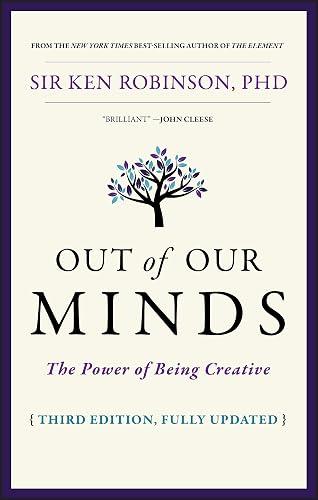
Out Of Our Minds is about how we can set ourselves and our children up for doing good work in organizations around the globe, thanks to leaving behind the old mass education model and unleashing our individual creativity.
Out Of Our Minds is about how we can set ourselves and our children up for doing good work in organizations around the globe, thanks to leaving behind the old mass education model and unleashing our individual creativity.
One of Google’s scientists concerned primarily with the future coined a phrase: the Law of Accelerating Returns. It describes the habit of evolution to speed up. For example, ships and carriages were the de facto mode of transportation for almost 2,000 years before 150 years ago, we came up with steam engine trains. A mere 30 years later, we had cars. Another 20 and we had commercial airplanes. Little after that, we set foot on the moon.
The gap of modern technology to past accomplishments gets wider and wider with each new pc, each new smartphone, each new piece of tech. For example, while a modern watch has more power and memory than the 1969 Apollo Moonlander, a modern smart watch or iPhone has more computing power than we had on the entire planet in 1940.
What does all this mean? It means we live in a world where the rules change faster than we can keep track of and in such a world, following the rules is dead.
If you’re hoping you can get a nice, cushy job, where you do what you’re told for 40 years and go home with a big, fat pension check, you may kiss that fantasy goodbye right now. It’s very unlikely to happen. From here on out, all good careers will be built on being creative.
Few of us ever bother to do it, but if we researched what makes humans unique in the animal world, we’d realize biologically, there are very few elements we don’t share with some other species. What no other living being can do like us is psychological: simulate. Our imagination is limitless.
We can mentally travel back to the past, analyze it and learn from it to do better in the future. We can consider our context in the present and imagine our situation from someone else’s perspective. And, our ultimate simulation power, we can consider the events we haven’t yet experienced.
All creativity really is, then, is applying this imagination in the real world. We do this by channeling our creativity into one of three kinds of mediums:
Physical, like forming steel, weaving cloth or cooking food. Sensory, like singing, giving a speech or performing magic. Cognitive, like writing or crunching numbers.
Whichever medium we step into, the creative process then always plays out in the same two steps, over and over: we come up with ideas, which we then either improve or eventually reject.
So what’s stopping us?
Continue reading in the MinuteRead app
Get the complete 5-minute summary of Out Of Our Minds
Get the complete summary in the appAs evolution changes faster and faster, creativity will become our competitive edge.
Creativity is applied imagination.
A common mistake in creativity is that we think we have to let go of our rules and take the blame.
"Out Of Our Minds" is a strong fit if you want practical ideas around creativity, culture, education, especially themes like as evolution changes faster and faster, creativity will become our competitive edge; creativity is applied imagination. The MinuteRead summary distills these concepts into a focused read, whether you're deciding whether to buy the book or applying its lessons at work.
Sir Ken Robinson, PhD is an internationally recognized leader in the development of creativity, innovation and human resources in education and in business. He is also one of the world’s leading speakers on these topics, with a profound impact on audiences everywhere. With over 37 million views, his 2006 TED Talk is the most viewed in the history of TED. In 2011 he was listed as “one of the world's elite thinkers on creativity and innovation” by Fast Company magazine, and was ranked among the Th…
View all summaries by Ken RobinsonContinue Reading
Access the complete 5-minute summary and thousands more nonfiction books in the MinuteRead app.

Continue reading the complete summary in the MinuteRead app.