MinuteRead
30 min
Book summary
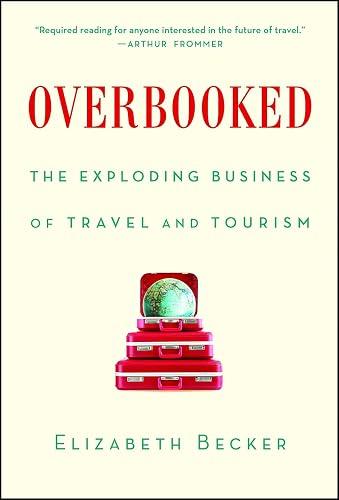
by Elizabeth Becker
Premium summary · Opens in the app · 30 min read
In 2012, the United Nations World Tourism Organization announced a milestone that would have seemed unimaginable a generation earlier. For the first time in human history, one billion international trips occurred in a single year. The number represented something profound: travel had ceased to be a luxury reserved for the wealthy and had become a mass phenomenon touching every corner of the planet.
**Author:** Elizabeth Becker **Estimated Reading Time:** 48 minutes
**What You'll Learn:**
- Why tourism became the world's largest industry while remaining largely invisible to serious analysis - How France mastered tourism as a national strategy and what it costs to maintain that position - What Venice's decline reveals about the dangers of uncontrolled visitor economies - Why Cambodia became a cautionary tale of tourism development gone wrong - How cruise ships exploit regulatory gaps while transforming coastal communities - What Dubai's rapid rise reveals about the trade-offs behind glamorous destinations - Whether Costa Rica's ecotourism model can genuinely balance profit and preservation - How China's emergence reshaped the entire global tourism landscape - What sustainable tourism actually requires beyond marketing slogans
**Who This Book Is For:**
This book is for travelers who want to understand the hidden machinery behind their vacations. It is for policymakers, business leaders, and citizens who sense that tourism deserves more serious attention than it receives. It is for anyone who has stood in a crowded piazza, walked through a historic neighborhood now filled with souvenir shops, or wondered whether their visit helps or harms the places they love. If you have ever suspected that tourism is more complicated than it appears, this book will confirm that instinct and give you the tools to think clearly about it.
In 2012, the United Nations World Tourism Organization announced a milestone that would have seemed unimaginable a generation earlier. For the first time in human history, one billion international trips occurred in a single year. The number represented something profound: travel had ceased to be a luxury reserved for the wealthy and had become a mass phenomenon touching every corner of the planet. Yet this announcement received remarkably little attention. The business pages barely noted it. Political leaders did not hold summits about it. Economists did not rush to analyze its implications. The industry that had just achieved this historic milestone remained, in the words of Elizabeth Becker, "everywhere and nowhere." Becker spent five years investigating this paradox. A former correspondent for The New York Times who had covered wars, political upheavals, and economic transformations, she noticed something strange about tourism. It was the largest industry in the world by many measures, employing hundreds of millions of people and generating trillions of dollars annually. It shaped the fates of nations, transformed ancient cities, and influenced international relations. Yet serious journalism and scholarship largely ignored it. The oversight is not accidental. Tourism presents itself as pleasure, as escape, as the opposite of work and politics. When we travel, we want to believe we are stepping outside the structures that govern ordinary life. The industry depends on this illusion. It…
Continue reading in the MinuteRead app
Get the complete 30-minute summary of Overbooked
Get the complete summary in the appTourism is the world's largest industry, and we have almost no idea how it works.
Tourism success requires deliberate strategy and coordination, not just attractive assets.
Uncontrolled tourism growth can destroy the very qualities that attract visitors.
The benefits of tourism tend to be concentrated while the costs are dispersed.
The cruise industry exploits legal loopholes to avoid labor, environmental, and tax regulations.
Tourism development without regulation tends to benefit the powerful at the expense of the vulnerable.
"Overbooked" is a strong fit if you want practical ideas around travel, economics, business, especially themes like tourism is the world's largest industry, and we have almost no idea how it works; tourism success requires deliberate strategy and coordination, not just attractive assets. The MinuteRead summary distills these concepts into a focused read, whether you're deciding whether to buy the book or applying its lessons at work.
Motivated to turn hard-won expertise into something readers can use every day, Elizabeth Becker wrote “Overbooked” to distill the ideas behind the work into clear, actionable lessons. Through “Overbooked”, Elizabeth Becker distills the core ideas on travel into lessons readers can absorb in a single short sitting. Readers turn to this work when they want Elizabeth Becker's perspective on the subject without working through the entire original volume. The book is structured so each chapter highli…
Continue Reading
Access the complete 30-minute summary and thousands more nonfiction books in the MinuteRead app.

Continue reading the complete summary in the MinuteRead app.