 MinuteRead
30 min
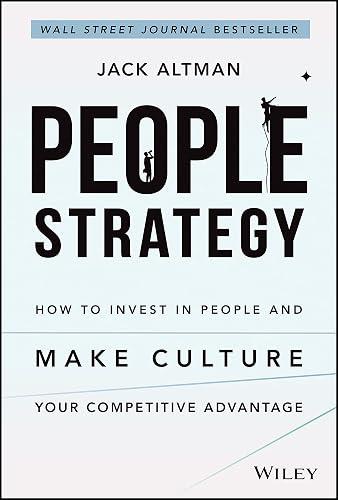
Book summary
by Jack Altman
Premium summary · Opens in the app · 30 min read
For most of the twentieth century, the relationship between employer and employee was built on a simple transaction. You showed up, you did your job, and you received a paycheck. The company did not need to inspire you. It did not need to help you grow. It did not need to feel like a community. It needed your labor, and it paid you for it.
**Author:** Jack Altman **Estimated Reading Time:** 42 minutes
**What You'll Learn:** How to build a workplace where people genuinely want to stay, contribute, and grow. You will learn how purpose, community, and development drive engagement, and how to implement the systems that make those forces work in practice.
**Who This Book Is For:** Founders, executives, HR leaders, and managers who want to move beyond treating people operations as an administrative function and start treating it as a strategic advantage.
For most of the twentieth century, the relationship between employer and employee was built on a simple transaction. You showed up, you did your job, and you received a paycheck. The company did not need to inspire you. It did not need to help you grow. It did not need to feel like a community. It needed your labor, and it paid you for it. That world no longer exists. Today, employees expect something fundamentally different from their workplaces. They want to understand how their work matters. They want to feel connected to the people around them. They want to know that they are becoming better at what they do. When those needs go unmet, they leave. Sometimes they leave for more money, but more often they leave because the work felt meaningless, the culture felt hollow, or the path forward felt invisible. Jack Altman wrote *People Strategy* to address this shift directly. As the co-founder and CEO of Lattice, a performance management and employee engagement platform used by thousands of companies, Altman has spent years observing what separates organizations that retain great people from those that constantly struggle with turnover and disengagement. His conclusion is straightforward: the companies that win are the ones that treat people strategy with the same rigor and intentionality that they apply to product strategy, marketing strategy, or financial strategy. The problem is that most leaders do not know how to do this. They inherit outdated HR practices built for a different era. Annual performance reviews that everyone dreads. Engagement surveys that produce data nobody acts on. Career paths that exist only in vague promises. Values statements that hang on walls but never influence decisions. These practices were not designed for the modern workforce, and they fail to deliver what employees now expect. Altman's approach is different because it is built on a simple premise: people strategy is not a soft skill. It is a discipline. It requires frameworks, data, and consistent practice. It requires leaders to think as carefully about how they develop talent as they do about how they develop products. It requires companies to build systems that create purpose, community, and growth at scale. This book is a guide to building those systems.…
Continue reading in the MinuteRead app
Get the complete 30-minute summary of People Strategy
Get the complete summary in the appThe employment contract has changed. Employees now expect purpose, community, and growth, not just a paycheck.
Values only matter when they are specific, unique, and actionable. Generic values are meaningless.
Hire for both culture and competence. Cultural fit is non-negotiable.
Continuous feedback means no surprises. Replace annual reviews with ongoing conversations.
Goals should be specific, measurable, and aligned with company objectives. Three to five goals is usually the right numb
Engagement surveys are only valuable if you act on the results. Do not survey if you cannot commit to action.
"People Strategy" is a strong fit if you want practical ideas around business, leadership, management, especially themes like the employment contract has changed. employees now expect purpose, community, and growth, not just a paycheck; values only matter when they are specific, unique, and actionable. generic values are meaningless. The MinuteRead summary distills these concepts into a focused read, whether you're deciding whether to buy the book or applying its lessons at work.
Motivated to help readers with "What used to be just a paycheck has now also become a community, Jack Altman wrote “People Strategy” to package those ideas for a fast, focused read. In “People Strategy”, Jack Altman focuses on "What used to be just a paycheck has now also become a community. Through “People Strategy”, Jack Altman distills the core ideas on business into lessons readers can absorb in a single short sitting. Readers turn to this work when they want Jack Altman's perspective on the…
Continue Reading
Access the complete 30-minute summary and thousands more nonfiction books in the MinuteRead app.

Continue reading the complete summary in the MinuteRead app.






