 MinuteRead
30 min
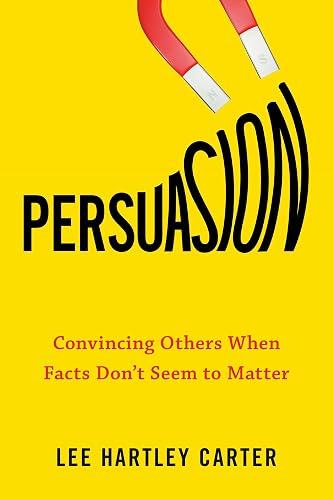
Book summary
by Lee Hartley Carter
Premium summary · Opens in the app · 30 min read
You have probably experienced this moment. You present a carefully researched argument, backed by data, supported by studies, and delivered with confidence. The logic is airtight. The evidence is overwhelming. And yet, the person across from you does not budge. Sometimes they push back harder. Sometimes they dismiss you entirely. You walk away confused, wondering why the facts did not work.
**Author:** Lee Hartley Carter **Estimated Reading Time:** 45 minutes
**What You'll Learn:** How to move people from resistance to acceptance using empathy, storytelling, and strategic communication. You will discover why facts alone fail, how to build a master narrative that sticks, and what to do when crisis hits.
**Who This Book Is For:** Leaders who need to sell ideas, communicators who want to be heard, professionals navigating difficult conversations, and anyone who has ever been frustrated by the limits of logic when trying to change someone's mind.
You have probably experienced this moment. You present a carefully researched argument, backed by data, supported by studies, and delivered with confidence. The logic is airtight. The evidence is overwhelming. And yet, the person across from you does not budge. Sometimes they push back harder. Sometimes they dismiss you entirely. You walk away confused, wondering why the facts did not work. This is the central problem Lee Hartley Carter addresses in her book. Persuasion is not a battle of information. It is a battle of connection. The person who wins is not the one with the most data. The person who wins is the one who understands what the other person feels, values, and fears. Carter has spent her career in the trenches of persuasion. She has worked on campaigns addressing prejudice against Muslims in America. She has managed corporate crises that threatened to destroy brands. She has advised leaders facing impossible audiences. Through all of this, she discovered a fundamental truth: people do not change their minds because you prove them wrong. They change their minds when they feel understood. The problem is that most of us approach persuasion backward. We start with our own perspective. We gather evidence that convinces us. We build arguments that make sense to us. Then we present those arguments to someone else and expect them to see the light. When they resist, we assume they are irrational, stubborn, or uninformed. We double down on the facts. We get louder. We get more frustrated. And the gap widens. Carter argues that this approach is doomed from the start. Human beings are not rational processors of information. We are emotional creatures who use logic to justify what we already believe. Our brains are wired to accept information that confirms our existing worldview and reject information that challenges it. This is not a flaw. It is a feature of how we survive in a complex world. We cannot evaluate every piece of information from scratch. We rely on mental shortcuts, emotional instincts, and social signals to decide what to believe. This means that persuasion requires a different starting point. Instead of asking "What do I want to say?" you…
Continue reading in the MinuteRead app
Get the complete 30-minute summary of Persuasion
Get the complete summary in the appFacts alone rarely change minds. Empathy is the foundation of persuasion.
A vision must be specific, visual, and audacious.
Authenticity and vulnerability build trust. Perfection creates distance.
Active empathy means understanding emotions, values, and behaviors.
Hear the haters. Empathy is not endorsement.
A master narrative is your one thing. Everything else supports it.
"Persuasion" is a strong fit if you want practical ideas around business, psychology, self help, especially themes like facts alone rarely change minds. empathy is the foundation of persuasion; a vision must be specific, visual, and audacious. The MinuteRead summary distills these concepts into a focused read, whether you're deciding whether to buy the book or applying its lessons at work.
Motivated to help readers with if you want to change minds, Lee Hartley Carter wrote “Persuasion” to package those ideas for a fast, focused read. In “Persuasion”, Lee Hartley Carter focuses on if you want to change minds. Through “Persuasion”, Lee Hartley Carter distills the core ideas on business into lessons readers can absorb in a single short sitting. Readers turn to this work when they want Lee Hartley Carter's perspective on the subject without working through the entire original volume. …
Continue Reading
Access the complete 30-minute summary and thousands more nonfiction books in the MinuteRead app.

Continue reading the complete summary in the MinuteRead app.






