 MinuteRead
30 min
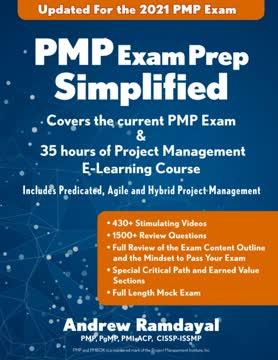
Book summary
Premium summary · Opens in the app · 30 min read
Every year, tens of thousands of professionals decide to pursue the Project Management Professional certification. They come from construction, software development, healthcare, finance, manufacturing, and dozens of other industries. They share a common goal: to prove they can lead projects successfully and to advance their careers in meaningful ways.
**Author:** Andrew Ramdayal
**Estimated Reading Time:** 45 minutes
**What You'll Learn:**
- The complete structure of the PMP certification process and exam - The five process groups and ten knowledge areas that form the backbone of project management - How to distinguish between projects and operations with total clarity - The essential tools for managing scope, schedule, cost, risk, and stakeholders - Practical strategies for passing the PMP exam on your first attempt
**Who This Book Is For:**
This condensed edition is for aspiring project managers who want to earn their PMP certification, experienced professionals seeking a structured refresher on project management fundamentals, and anyone who wants to understand how projects are planned, executed, and delivered successfully. If you have ever felt overwhelmed by the complexity of project management frameworks, this book will give you the clarity and confidence to move forward.
Every year, tens of thousands of professionals decide to pursue the Project Management Professional certification. They come from construction, software development, healthcare, finance, manufacturing, and dozens of other industries. They share a common goal: to prove they can lead projects successfully and to advance their careers in meaningful ways. The motivation is clear. A PMP certification generally means better pay and more respect from your peers. Organizations around the world recognize the credential as a mark of competence, discipline, and professional commitment. Hiring managers look for it. Clients request it. Senior leaders respect it. Yet the path to certification is not easy. The exam is rigorous. The body of knowledge is vast. The application process requires careful documentation of education and experience. Many candidates study for months, only to feel overwhelmed by the sheer volume of information they believe they must memorize. This is where the struggle begins. The Project Management Body of Knowledge, commonly known as the PMBOK Guide, contains forty-nine distinct processes organized across five process groups and ten knowledge areas. Each process has inputs, tools and techniques, and outputs. On the surface, this looks like an enormous amount of material to master. Candidates often try to memorize everything, only to discover that the exam does not reward memorization. It rewards application. Andrew Ramdayal wrote this book to solve that problem. His approach is built on a simple premise: you do not need to memorize the entire PMBOK Guide. You need to understand how project management works in practice, how the pieces fit together, and how to think like a project manager when answering exam questions. The PMBOK Guide is a standard, not a study guide. It describes best practices but does not tell you what to focus on for the exam. It does not explain how to approach questions that present complex scenarios and ask…
Continue reading in the MinuteRead app
Get the complete 30-minute summary of PMP Exam Prep Simplified
Get the complete summary in the appA project is temporary and unique. Operations are ongoing and repetitive.
The five process groups are initiating, planning, executing, monitoring and controlling, and closing.
The project manager's main job is integration across all knowledge areas.
Only approved change requests can change an approved plan.
The scope baseline includes the scope statement, WBS, and WBS dictionary.
The critical path is the longest path through a network diagram. Activities on the critical path have no float.
"PMP Exam Prep Simplified" is a strong fit if you want practical ideas around business, self help, especially themes like a project is temporary and unique. operations are ongoing and repetitive; the five process groups are initiating, planning, executing, monitoring and controlling, and closing. The MinuteRead summary distills these concepts into a focused read, whether you're deciding whether to buy the book or applying its lessons at work.
Andrew Ramdayal is the author of "PMP Exam Prep Simplified," a highly regarded resource for Project Management Professional (PMP) certification preparation. Ramdayal's work is known for its clear explanations of complex project management concepts and processes. He emphasizes understanding exam approach alongside technical knowledge. Ramdayal provides additional resources like videos and mock exams to supplement the book. His teaching style focuses on simplifying difficult topics for easier comp…
View all summaries by Andrew RamdayalContinue Reading
Access the complete 30-minute summary and thousands more nonfiction books in the MinuteRead app.

Continue reading the complete summary in the MinuteRead app.






