MinuteRead
30 min
Book summary
Premium summary · Opens in the app · 30 min read
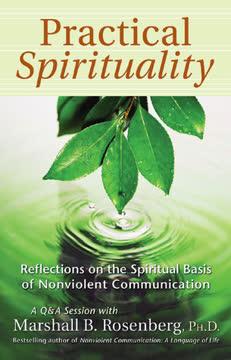
Most people think of communication as a skill. Something you learn to get what you want, persuade others, or avoid conflict. Marshall Rosenberg saw it differently. He saw communication as a doorway to the sacred.
**Author:** Marshall B. Rosenberg **Estimated Reading Time:** 45 minutes
**What You'll Learn:** How to transform everyday communication into a profound spiritual practice. You will discover why compassionate giving is the most joyful human experience, how to listen in a way that connects you with the sacred in others, and how to express yourself honestly without blame or criticism. This book reveals the spiritual foundation beneath Nonviolent Communication and shows you how to live from a place of deep connection rather than judgment.
**Who This Book Is For:** Anyone who senses that communication could be more than just exchanging information. People who want their relationships to reflect their deepest spiritual values. Those tired of conflict, misunderstanding, and the subtle violence in everyday language. If you have ever wondered how to bring genuine compassion into your daily interactions, this book is for you.
Most people think of communication as a skill. Something you learn to get what you want, persuade others, or avoid conflict. Marshall Rosenberg saw it differently. He saw communication as a doorway to the sacred. For decades, Rosenberg traveled the world teaching something he called Nonviolent Communication. On the surface, it looked like a method: four steps, some careful language, a way to talk through disagreements. But those who studied with him closely discovered something deeper. They found that Rosenberg was really teaching a spiritual practice disguised as a communication technique. The problem Rosenberg identified is ancient and universal. Human beings are born with a natural capacity for compassion. Watch any young child and you will see it: the spontaneous desire to help, to share, to connect. Yet somewhere along the way, most of us lose touch with this innate generosity. We learn to judge, to blame, to label people as good or bad. We learn to think in terms of who deserves punishment and who deserves reward. We become fluent in the language of violence, even if we never raise a hand. This cultural conditioning runs deep. For roughly eight thousand years, Rosenberg argued, human societies have been organized around domination systems that require us to disconnect from our compassionate nature. These systems teach us that some people are enemies, that certain behaviors are unforgivable, that punishment is the path to justice. They teach us to speak in ways that separate us from each other and from ourselves. The result is a world full of conflict, misunderstanding, and suffering. Not because people are inherently bad, but because they have forgotten how to connect with what Rosenberg called the Divine Energy within themselves and others. They have lost literacy in feelings and needs. They have forgotten the joy of giving from the heart. Rosenberg's approach is different because it…
Continue reading in the MinuteRead app
Get the complete 30-minute summary of Practical Spirituality
Get the complete summary in the appNonviolent Communication is a spiritual practice, not just a communication technique. Its purpose is to connect you with
Compassionate giving, offering freely without expectation of reward or fear of punishment, is the most joyful human expe
Express yourself using observations, feelings, and needs, without blame or criticism. This makes it possible for others
Listen empathically by focusing on the feelings and needs beneath people's words, even when their words are hostile.
Make requests that honor freedom. The difference between a request and a demand is how you respond when someone says no.
Develop literacy in your feelings and needs. You cannot express what you cannot name.
"Practical Spirituality" is a strong fit if you want practical ideas around spirituality, psychology, self help, especially themes like nonviolent communication is a spiritual practice, not just a communication technique. its purpose is to connect you with; compassionate giving, offering freely without expectation of reward or fear of punishment, is the most joyful human expe. The MinuteRead summary distills these concepts into a focused read, whether you're deciding whether to buy the book or applying its lessons at work.
Marshall B. Rosenberg was a renowned American psychologist who developed Nonviolent Communication (NVC), a method aimed at resolving conflicts peacefully. He founded the Center for Nonviolent Communication, an international non-profit organization. Rosenberg earned his Ph.D. in clinical psychology from the University of Wisconsin–Madison in 1961 and achieved Diplomate status in clinical psychology in 1966. His work focused on creating a communication process that facilitates the exchange of info…
View all summaries by Marshall B. RosenbergContinue Reading
Access the complete 30-minute summary and thousands more nonfiction books in the MinuteRead app.

Continue reading the complete summary in the MinuteRead app.