 MinuteRead
30 min
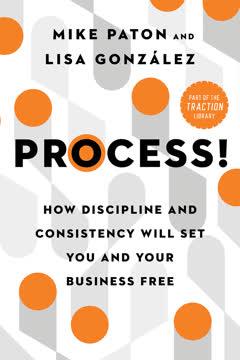
Book summary
by Mike Paton
Premium summary · Opens in the app · 30 min read
Every entrepreneur remembers the moment they first felt trapped by their own creation. The business that once felt like an expression of freedom has become a collection of obligations. You are answering the same questions repeatedly. You are fixing the same problems. You are the only person who knows how certain things get done, which means you are the only person who can do them. The dream of building something that runs without you has quietly been replaced by the reality of something that run
**Author:** Mike Paton
**Estimated Reading Time:** 45 minutes
**What You'll Learn**
Why most entrepreneurs resist process and how that resistance quietly caps their growth. How to identify the handful of core processes that actually drive your business. How to document those processes simply enough that people will actually follow them. How to build a culture where process adherence feels like freedom rather than bureaucracy. How to use process as a competitive advantage that lets you scale without losing your soul.
**Who This Book Is For**
Entrepreneurs who feel trapped by their own business. Leaders who want to scale but fear becoming corporate. Founders who have tried to implement systems before and watched them fail. Anyone who suspects that the chaos they are managing today will not survive tomorrow's growth.
Every entrepreneur remembers the moment they first felt trapped by their own creation. The business that once felt like an expression of freedom has become a collection of obligations. You are answering the same questions repeatedly. You are fixing the same problems. You are the only person who knows how certain things get done, which means you are the only person who can do them. The dream of building something that runs without you has quietly been replaced by the reality of something that runs you. Mike Paton has seen this pattern hundreds of times. As a former entrepreneur who ran a seven-million-dollar company and later as a leader at EOS Worldwide, he has sat across from countless business owners who describe the same frustration. They are working harder than ever. They are making decent money. But they cannot step away. They cannot scale. They cannot seem to build the kind of organization that operates with consistency and excellence whether or not they are in the room. The diagnosis is almost always the same. The business lacks process. The moment Paton mentions the word "process," he watches the energy drain from the room. Entrepreneurs are allergic to the concept. They picture binders full of procedures that nobody reads. They imagine bureaucratic rigidity that crushes creativity. They see the very thing they started a business to escape. The entrepreneur's identity is built on freedom, flexibility, and the ability to improvise. Process feels like the opposite of all three. This book exists to dismantle that assumption. Paton's central argument is simple and counterintuitive. Process does not destroy freedom. Process creates freedom. The discipline of documenting, simplifying, and following core processes is not a constraint on entrepreneurial energy. It is the mechanism that liberates it. When routine work is systematized, the entrepreneur's time and attention are freed for the strategic thinking, creative problem-solving, and relationship building that only a founder can do. When everyone…
Continue reading in the MinuteRead app
Get the complete 30-minute summary of Process!
Get the complete summary in the appProcess creates freedom. It does not destroy it.
Focus on the 20 percent of processes that deliver 80 percent of your results.
Identify five to twelve core processes that define how your business operates.
Document each process at the level of major steps, not every detail.
Train everyone who performs steps in each process.
Measure compliance, frequency, and outcomes.
"Process!" is a strong fit if you want practical ideas around business, management, buisness, especially themes like process creates freedom. it does not destroy it; focus on the 20 percent of processes that deliver 80 percent of your results. The MinuteRead summary distills these concepts into a focused read, whether you're deciding whether to buy the book or applying its lessons at work.
Mike Paton is an entrepreneur and business consultant with extensive experience in banking and running small companies. He discovered the Entrepreneurial Operating System® (EOS) while managing a $7 million company and became a passionate advocate for the system. Paton has conducted over 1,000 EOS sessions with leadership teams and has spoken to thousands of business leaders. He is an award-winning speaker and best-selling author, co-writing "Get A Grip: An Entrepreneurial Fable" with EOS creator…
View all summaries by Mike PatonContinue Reading
Access the complete 30-minute summary and thousands more nonfiction books in the MinuteRead app.

Continue reading the complete summary in the MinuteRead app.






