MinuteRead
30 min
Book summary
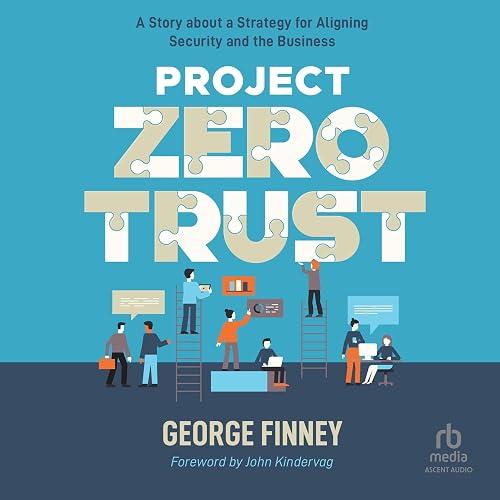
by George Finney
Premium summary · Opens in the app · 30 min read
The cybersecurity industry has a dirty secret. Despite spending billions of dollars on firewalls, intrusion detection systems, antivirus software, and security awareness training, organizations continue to suffer devastating breaches. The tools keep getting more sophisticated. The budgets keep growing. The teams keep expanding. And yet the breaches keep happening.
**Author:** George Finney
**Estimated Reading Time:** 42 minutes
**What You'll Learn:**
- Why traditional security models fail and how Zero Trust offers a fundamentally different approach - How to identify what actually needs protecting in your organization - The role of identity, devices, networks, and data in a Zero Trust architecture - How to build a security culture that supports Zero Trust principles - Practical steps for implementing Zero Trust without disrupting your business
**Who This Book Is For:**
This book is for security professionals who feel trapped in an endless cycle of breaches, executives who need to understand why security keeps failing despite massive investments, and anyone who suspects that the old way of protecting networks no longer works. If you have ever wondered why organizations with impressive security budgets still get compromised, this book will change how you think about the problem.
The cybersecurity industry has a dirty secret. Despite spending billions of dollars on firewalls, intrusion detection systems, antivirus software, and security awareness training, organizations continue to suffer devastating breaches. The tools keep getting more sophisticated. The budgets keep growing. The teams keep expanding. And yet the breaches keep happening. Something is fundamentally wrong with how we approach security. George Finney wrote Project Zero Trust to address this exact problem. As the Chief Security Officer at Southern Methodist University, he has spent years on the front lines of cybersecurity, watching talented teams deploy expensive solutions only to see attackers waltz through their defenses. He noticed a pattern. The failures were not caused by inadequate technology or lazy employees. They were caused by a flawed mental model. The traditional approach to security is built on a simple assumption: there is a trusted inside and an untrusted outside. If you build a strong enough perimeter, you can keep the bad guys out while letting the good guys work freely inside. This model made sense when networks were simple and employees worked in offices using company-owned devices. But that world no longer exists. Today, employees work from coffee shops and living rooms. They use personal phones and home computers. Applications live in the cloud, data flows between dozens of third-party services, and the perimeter has dissolved into a fog of interconnected systems. The idea that you can draw a line around your organization and defend it is not just outdated. It is dangerous. The problem goes deeper than technology. The trust-based model creates a false sense of security. Once someone is inside the perimeter, they are trusted by default. This means an attacker who steals legitimate credentials or compromises a single device can move freely through the network, accessing sensitive data with little resistance. The breach at Target, where attackers…
Continue reading in the MinuteRead app
Get the complete 30-minute summary of Project Zero Trust
Get the complete summary in the appTrust is a vulnerability. Eliminate trust from your digital systems.
The perimeter model has failed. Stop relying on firewalls to keep attackers out.
Identify your protect surfaces: the data, applications, assets, and services that matter most.
Map transaction flows to understand how your protect surfaces interact with the rest of your environment.
Use the Kipling Method to create granular access policies: Who, What, When, Where, Why, and How.
Implement multi-factor authentication everywhere. It is not foolproof, but it is essential.
"Project Zero Trust" is a strong fit if you want practical ideas around business, technology, computer science, especially themes like trust is a vulnerability. eliminate trust from your digital systems; the perimeter model has failed. stop relying on firewalls to keep attackers out. The MinuteRead summary distills these concepts into a focused read, whether you're deciding whether to buy the book or applying its lessons at work.
Motivated to turn hard-won expertise into something readers can use every day, George Finney wrote “Project Zero Trust” to distill the ideas behind the work into clear, actionable lessons. Through “Project Zero Trust”, George Finney distills the core ideas on business into lessons readers can absorb in a single short sitting. Readers turn to this work when they want George Finney's perspective on the subject without working through the entire original volume. The book is structured so each chapt…
Continue Reading
Access the complete 30-minute summary and thousands more nonfiction books in the MinuteRead app.

Continue reading the complete summary in the MinuteRead app.