 MinuteRead
30 min
Book summary
by R. Dutt
Premium summary · Opens in the app · 30 min read
Every day, thousands of product teams gather in conference rooms and video calls to make decisions about what to build next. They look at roadmaps, examine metrics, analyze user feedback, and debate priorities. Most of these teams are staffed by smart, well-intentioned people who genuinely want to create something valuable. Yet despite their efforts, many products fail to make a meaningful difference in the world.
**Author:** R. Dutt **Estimated Reading Time:** 45 minutes
**What You'll Learn:** - Why iteration without vision leads to mediocre products - How to craft a vision that drives transformative change - A practical framework for translating vision into strategy - How to diagnose and cure common product diseases - How to build ethical products that avoid digital pollution
**Who This Book Is For:** Product managers, entrepreneurs, designers, engineers, and leaders who want to build products that create meaningful change rather than incremental improvements. If you have ever felt that your product work lacks purpose or that your team is optimizing for the wrong things, this book offers a different path.
Every day, thousands of product teams gather in conference rooms and video calls to make decisions about what to build next. They look at roadmaps, examine metrics, analyze user feedback, and debate priorities. Most of these teams are staffed by smart, well-intentioned people who genuinely want to create something valuable. Yet despite their efforts, many products fail to make a meaningful difference in the world. The problem is not a lack of talent or effort. The problem is a lack of vision. We have been taught that the path to great products is iteration. Build something small, test it, learn from it, improve it, and repeat. This approach has become so deeply embedded in product culture that questioning it feels almost heretical. The lean startup movement, agile development, and design thinking all emphasize rapid iteration as the core discipline of product creation. But iteration alone cannot produce transformative change. When you iterate without a clear destination, you climb the nearest hill rather than the highest mountain. You optimize for local improvements while missing the larger opportunity. You create products that are incrementally better but not fundamentally different. Consider Boeing's 737. The original 737 was a remarkable aircraft that served airlines well for decades. Over time, Boeing iterated on the design, stretching the fuselage, upgrading engines, and adding capacity. Each iteration made sense in isolation. But the cumulative effect of these incremental changes was the 737 MAX, an aircraft that required software intervention to compensate for aerodynamic instability introduced by larger engines. The iteration process, divorced from a coherent vision of what the aircraft should be, led to tragedy. Now consider Tesla's Model 3. Tesla did not set out to make a slightly better electric car. The company's vision was to accelerate the world's transition to sustainable energy. The Model 3 was a mechanism for achieving that vision, not an end in itself. This clarity of purpose drove decisions that seemed irrational to outsiders: building a massive battery factory, creating a proprietary charging network, and designing the car around software in…
Continue reading in the MinuteRead app
Get the complete 30-minute summary of Radical Product Thinking
Get the complete summary in the appYour product is your mechanism to create the change you envision for your users. The change is the goal, not the product
Iteration without vision leads to local maxima. Define your vision before you iterate.
A good vision is problem-centered, visualizable, and meaningful. Use the Radical Vision Statement template to craft it.
The seven product diseases are Hero Syndrome, Strategic Swelling, Obsessive Sales Disorder, Hypermetricemia, Locked-In S
The RDCL framework ensures comprehensive strategy: Real pain points, Design, Capabilities, and Logistics.
Pain points must be both valued and verified. Assumptions are not evidence.
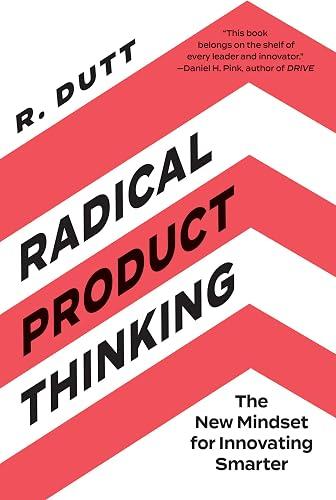
"Radical Product Thinking" is a strong fit if you want practical ideas around business, technology, management, especially themes like your product is your mechanism to create the change you envision for your users. the change is the goal, not the product; iteration without vision leads to local maxima. define your vision before you iterate. The MinuteRead summary distills these concepts into a focused read, whether you're deciding whether to buy the book or applying its lessons at work.
Motivated to help readers with your product is your mechanism to create the change you envision for your users, R. Dutt wrote “Radical Product Thinking” to package those ideas for a fast, focused read. In “Radical Product Thinking”, R. Dutt focuses on your product is your mechanism to create the change you envision for your users. Through “Radical Product Thinking”, R. Dutt distills the core ideas on business into lessons readers can absorb in a single short sitting. Readers turn to this work wh…
Continue Reading
Access the complete 30-minute summary and thousands more nonfiction books in the MinuteRead app.

Continue reading the complete summary in the MinuteRead app.






