MinuteRead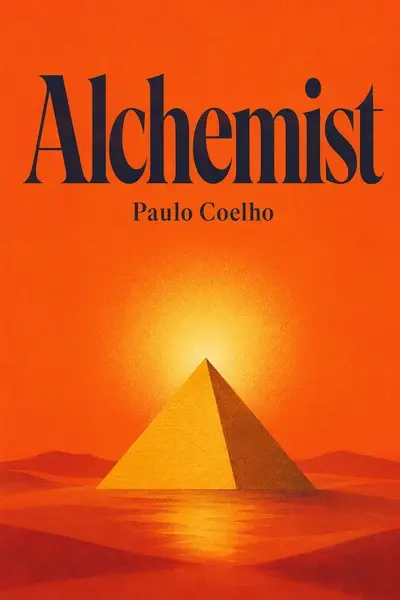
5 min

Book summary
Premium summary · Opens in the app · 5 min read
Reading Like A Writer takes you through the various elements of world-famous literature and shows you how, by paying close attention to how great authors employ them, you can not only get a lot more from your reading, but also learn to be a better writer yourself.
Reading Like A Writer takes you through the various elements of world-famous literature and shows you how, by paying close attention to how great authors employ them, you can not only get a lot more from your reading, but also learn to be a better writer yourself.
According to the Oxford Dictionary, there are around 170,000 words, currently used in the English language. Google says it’s over a million. It of course depends on what counts as a word and what is commonly used (as opposed to just being mentioned a few times in a narrow context).
Regardless, choosing words is hard, and it’s what authors spend most, if not all of their time on. Therefore, you can bet there’s a reason behind every single one they chose.
Take the first sentence of The Alchemist, for example:
Coelho didn’t say “There was a boy named Santiago.” or “Santiago was a boy.” He said “The boy’s name…”, which instantly tells you something about the perspective of the book and narrator: she’s someone with a lot of information to share, but is in a position somewhat distant to the book’s events. Using “The” also indicates that Santiago will be a piece in a big puzzle, more likely to be reacting to what’s going to happen, as opposed to proactively doing things on his own accord.
A great exercise is to try and think of synonyms the author could’ve used, for example why someone would say treasure instead of gold, creature instead of bird or hasten instead of rush.
This will help you understand the point the writer is trying to make and get in his head as to why he made the word choices he did.
If you’re Sherlock Holmes, trying to unravel the mystery of three novels by three authors, which sound awkwardly familiar, and are the cause of a copyright lawsuit, here’s where you should start looking at: paragraphs. Why paragraphs? In a paragraph, all the emphasis lies on the first and last few words. Therefore, every paragraph instantly tells you what the author thinks is important. It’s like listening to someone talk and paying attention to which words they pronounce more clearly, slowly, and maybe even repeat for emphasis. The best way to catch these accents of importance and reflect on them is to think of paragraphs as literary breathing guides. When you start a new one, you slowly breathe in and then gradually exhale as you read on and on, before coming to a full exhale upon the last word. Breathing in sync with paragraphs will give your reading a nice rhythm, and also show you what makes a good paragraph: too many one-liners and you’ll feel hectic…
Continue reading in the MinuteRead app
Get the complete 5-minute summary of Reading Like A Writer
Get the complete summary in the appTry to think of synonyms the author could’ve used to understand more.
Take a breath after each paragraph to learn more about the writer’s personality.
Actions, thoughts and dialogue reveal characters’ intentions, but one will likely overshadow the others.
"Reading Like A Writer" is a strong fit if you want practical ideas around creativity, entrepreneurship, productivity, especially themes like try to think of synonyms the author could’ve used to understand more; take a breath after each paragraph to learn more about the writer’s personality. The MinuteRead summary distills these concepts into a focused read, whether you're deciding whether to buy the book or applying its lessons at work.
Francine Prose is the author of sixteen books of fiction. Her novel A Changed Man won the Dayton Literary Peace Prize, and Blue Angel was a finalist for the National Book Award. Her most recent works of nonfiction include the highly acclaimed Anne Frank: The Book, The Life, The Afterlife, and the New York Times bestseller Reading Like a Writer. A former president of PEN American Center, and a member of the American Academy of Arts and Letters and the American Academy of Arts and Sciences, Franci…
View all summaries by Francine ProseContinue Reading
Access the complete 5-minute summary and thousands more nonfiction books in the MinuteRead app.

Continue reading the complete summary in the MinuteRead app.