 MinuteRead
30 min
Book summary
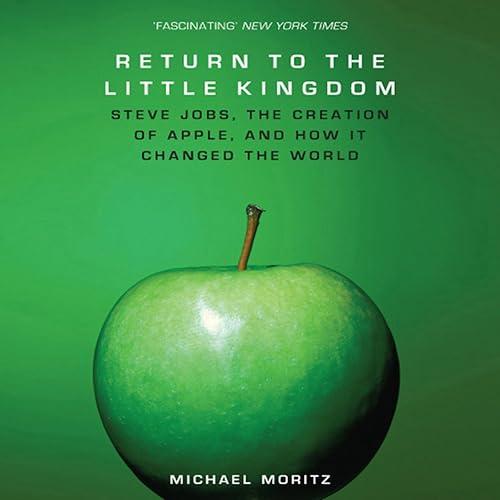
by Michael Moritz
Premium summary · Opens in the app · 30 min read
Every great company has an origin story, but few have been told as often or as imperfectly as Apple's. The broad strokes are familiar: two young men in a garage, a vision of personal computing, a meteoric rise. The details, however, are far messier, more interesting, and more instructive than the legend suggests.
**Author:** Michael Moritz **Estimated Reading Time:** 45 minutes
**What You'll Learn:**
The true story of how Apple Computer was born in a suburban garage and grew into one of the most influential companies of the twentieth century. You will learn how Steve Jobs and Steve Wozniak combined technical brilliance with visionary thinking, how their partnership worked despite profound differences, and how the company's early culture shaped everything that followed.
**Who This Book Is For:**
Anyone who wants to understand the real origins of Apple, beyond the mythology. Entrepreneurs who want to see what genuine startup chaos looks like. Readers interested in Silicon Valley history, product design, corporate culture, and the human story behind technological revolution.
Every great company has an origin story, but few have been told as often or as imperfectly as Apple's. The broad strokes are familiar: two young men in a garage, a vision of personal computing, a meteoric rise. The details, however, are far messier, more interesting, and more instructive than the legend suggests. Michael Moritz wrote this book under unusual circumstances. As a young journalist for Time magazine in the early 1980s, he was granted extraordinary access to Apple during a pivotal period. He interviewed the founders, the early employees, the investors, and the competitors. He watched the company operate from the inside at a moment when it was still small enough to understand but already large enough to matter. The result was a portrait of a company in motion, captured before the mythology hardened into conventional wisdom. The Apple that emerges from these pages is not the polished, world-conquering brand of later decades. It is a company run by young people who were brilliant in some ways and profoundly inexperienced in others. They made products that were genuinely revolutionary, and they made decisions that were genuinely foolish. They attracted extraordinary talent and drove some of it away. They built a culture that was both inspiring and dysfunctional. This matters because the real story of Apple's founding contains more useful lessons than the simplified version. The myth tells us that vision and hard work lead to success. The reality shows us that vision and hard work are necessary but insufficient. Success also requires timing, luck, the right partners, the ability to learn from mistakes, and a willingness to endure periods of chaos that would destroy most organizations. The book also captures something that has been lost in the decades since: what it felt like to believe that personal computers would change the world. In the mid-1970s, this was not an obvious proposition. Computers were large, expensive, intimidating machines owned by corporations and governments. The idea that ordinary people might want one in their homes seemed…
Continue reading in the MinuteRead app
Get the complete 30-minute summary of Return to the Little Kingdom
Get the complete summary in the appApple began in a garage, but it emerged from an ecosystem of hobbyists, suppliers, and early customers who made the comp
The partnership between Steve Jobs and Steve Wozniak worked because they had complementary skills: technical brilliance
Apple's willingness to challenge conventional wisdom was grounded in a clear vision of what computing could be.
Design was a core component of Apple's competitive advantage, not an afterthought.
Apple's early culture was a source of strength, but it also had costs, including burnout and insularity.
Growth requires fundamental changes that can threaten the qualities that made a company successful.
"Return to the Little Kingdom" is a strong fit if you want practical ideas around business, technology, biography, especially themes like apple began in a garage, but it emerged from an ecosystem of hobbyists, suppliers, and early customers who made the comp; the partnership between steve jobs and steve wozniak worked because they had complementary skills: technical brilliance. The MinuteRead summary distills these concepts into a focused read, whether you're deciding whether to buy the book or applying its lessons at work.
Motivated to help readers with "We were trying to build a company that would last and would be special." Humble Beginnings, Michael Moritz wrote “Return to the Little Kingdom” to package those ideas for a fast, focused read. In “Return to the Little Kingdom”, Michael Moritz focuses on "We were trying to build a company that would last and would be special." Humble Beginnings. Through “Return to the Little Kingdom”, Michael Moritz distills the core ideas on business into lessons readers can absor…
Continue Reading
Access the complete 30-minute summary and thousands more nonfiction books in the MinuteRead app.

Continue reading the complete summary in the MinuteRead app.






