MinuteRead
30 min
Book summary
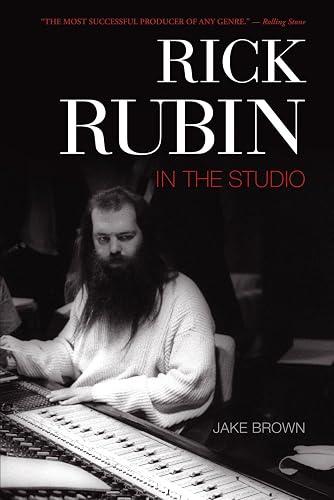
by Jake Brown
Premium summary · Opens in the app · 30 min read
In the early 1980s, a young man named Rick Rubin sat in his dorm room at New York University, hosting parties where he played hip hop records for crowds of students. He had no formal musical training. He could not play guitar, piano, or drums. He had never engineered a recording session. What he had was an ear, a conviction, and an almost radical belief that music sounded better when you removed everything that did not need to be there.
**Author:** Jake Brown **Estimated Reading Time:** 42 minutes
**What You'll Learn:** How one producer reshaped modern music by stripping away excess, trusting artists, and following creative instinct across genres. You will discover the philosophy behind some of the most influential records of the past four decades and how those principles apply far beyond the recording studio.
**Who This Book Is For:** Music lovers who want to understand what happens behind the glass. Creators of any kind who struggle with overthinking, overproducing, or losing sight of what matters. Anyone curious about how a shy kid from Long Island became the most sought-after producer in music without ever learning to play an instrument.
In the early 1980s, a young man named Rick Rubin sat in his dorm room at New York University, hosting parties where he played hip hop records for crowds of students. He had no formal musical training. He could not play guitar, piano, or drums. He had never engineered a recording session. What he had was an ear, a conviction, and an almost radical belief that music sounded better when you removed everything that did not need to be there. That belief would eventually reshape popular music. Rubin went on to co-found Def Jam Recordings, produce groundbreaking records with Run-DMC, the Beastie Boys, and LL Cool J, then expand into rock, metal, country, and beyond. He produced Slayer's ferocious "Reign in Blood" and Johnny Cash's haunting final albums. He worked with the Red Hot Chili Peppers, Tom Petty, Adele, and the Dixie Chicks. He won Grammys across multiple genres. He became known not for a signature sound, but for a signature approach: reduce, clarify, amplify. This book examines how Rick Rubin thinks about making records. It draws on decades of interviews, studio stories, and the observations of the artists who worked with him. The goal is not to catalog his discography. The goal is to understand the principles that made his work distinctive and to see how those principles might apply to anyone who creates anything. The problem most creators face is not a lack of ideas. It is an excess of them. Songs get buried under layers of instrumentation. Books get weighed down by unnecessary chapters. Businesses lose their identity by chasing every opportunity. Rubin's entire career can be understood as a sustained argument against this tendency. He believed that the job of a producer was not to add, but to remove. Not to impose, but to reveal. What makes Rubin's approach remarkable is that it worked across wildly different musical worlds. The same man who produced the minimalist brutality of Slayer also produced the sparse, intimate recordings of Johnny Cash. The same philosophy that shaped the rap-rock…
Continue reading in the MinuteRead app
Get the complete 30-minute summary of Rick Rubin
Get the complete summary in the appReduce. Strip away everything that does not serve the song's emotional core.
Build trust before building records. Genuine connection is the foundation of great collaboration.
The song comes first. Spend time on material before entering the studio.
Prepare thoroughly. Resolution before recording creates space for spontaneity.
Confidence enables risk. Insecurity produces safe, predictable work.
Cross boundaries. New contexts force new thinking and keep work fresh.
"Rick Rubin" is a strong fit if you want practical ideas around music, biography, business, especially themes like reduce. strip away everything that does not serve the song's emotional core; build trust before building records. genuine connection is the foundation of great collaboration. The MinuteRead summary distills these concepts into a focused read, whether you're deciding whether to buy the book or applying its lessons at work.
Motivated to help readers with “When I started producing [minimalism] was my thing, Jake Brown wrote “Rick Rubin” to package those ideas for a fast, focused read. In “Rick Rubin”, Jake Brown focuses on “When I started producing [minimalism] was my thing. Through “Rick Rubin”, Jake Brown distills the core ideas on music into lessons readers can absorb in a single short sitting. Readers turn to this work when they want Jake Brown's perspective on the subject without working through the entire orig…
Continue Reading
Access the complete 30-minute summary and thousands more nonfiction books in the MinuteRead app.

Continue reading the complete summary in the MinuteRead app.