 MinuteRead
30 min
Book summary
Premium summary · Opens in the app · 30 min read
Every year, organizations around the world spend billions of dollars on strategic planning. They hire consultants, schedule retreats, gather data, build models, and produce thick documents filled with mission statements, objectives, and action plans. The process feels rigorous. It feels professional. It feels like what serious organizations are supposed to do.
**Author:** Henry Mintzberg
**Estimated Reading Time:** 45 minutes
**What You'll Learn:**
- Why formal strategic planning has failed to deliver on its promises - The fundamental flaws in how organizations approach strategy - How strategy actually emerges in successful organizations - The proper role of planning in supporting strategy - Practical ways to rethink strategy formation in your organization
**Who This Book Is For:**
This book is for leaders, managers, strategists, and anyone who has ever sat through endless planning meetings wondering why the resulting documents gather dust. It is for those who suspect that the elaborate planning rituals in their organizations produce more paperwork than progress. And it is for anyone who wants to understand how strategy actually works, not how it is supposed to work according to the textbooks.
Every year, organizations around the world spend billions of dollars on strategic planning. They hire consultants, schedule retreats, gather data, build models, and produce thick documents filled with mission statements, objectives, and action plans. The process feels rigorous. It feels professional. It feels like what serious organizations are supposed to do. And yet, in far too many cases, the results are disappointing. Henry Mintzberg spent decades studying how organizations actually develop strategy. What he found was deeply troubling. The formal strategic planning that had become standard practice in corporations, governments, and nonprofits was not delivering on its promises. In fact, in many cases, it was actively harming the organizations it was meant to help. Mintzberg's critique was not based on theory alone. He examined the evidence carefully. He looked at studies comparing the performance of organizations that engaged in formal planning with those that did not. The results were striking. There was little correlation between formal planning and improved performance. Some studies even suggested that heavy investment in planning was associated with worse outcomes. The problem, Mintzberg argued, was not that planning was useless. The problem was that organizations had fundamentally misunderstood what planning could and could not do. They had elevated planning from a useful support function to the central driver of strategy. And in doing so, they had created a system that was rigid, detached from reality, and hostile to the very creativity that good strategy requires. The roots of this problem go deep. Strategic planning emerged in the mid-twentieth century as a response to the growing complexity of business environments. The idea was appealing: if organizations could systematically analyze their situation, forecast the future, and develop comprehensive plans, they could gain control over their destinies. It was a seductive promise, and it spread rapidly through business schools, consulting firms, and corporate boardrooms. But the promise was built on a series of assumptions that turned out to…
Continue reading in the MinuteRead app
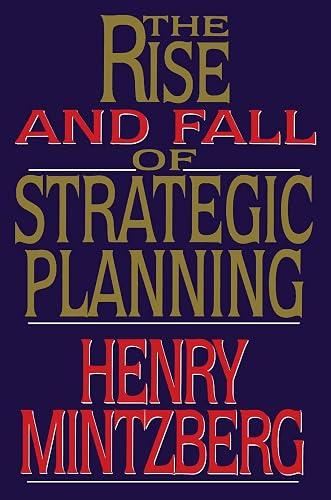
Get the complete 30-minute summary of Rise and Fall of Strategic Planning
Get the complete summary in the appStrategic planning has failed to deliver on its promises. Formal planning does not lead to better organizational perform
The future cannot be predicted. Long-range forecasts are notoriously inaccurate, and organizations that build strategies
Effective strategists immerse themselves in operational details. Detachment from operations leads to strategies that are
Hard data informs the intellect, but soft data generates wisdom. Good strategy requires both.
Strategy emerges through learning, not through formal planning. The best strategies develop through experimentation, fee
Formal planning stifles creativity and undermines commitment. Creativity diminishes under the weight of big, thick leath
"Rise and Fall of Strategic Planning" is a strong fit if you want practical ideas around business, management, leadership, especially themes like strategic planning has failed to deliver on its promises. formal planning does not lead to better organizational perform; the future cannot be predicted. long-range forecasts are notoriously inaccurate, and organizations that build strategies. The MinuteRead summary distills these concepts into a focused read, whether you're deciding whether to buy the book or applying its lessons at work.
Motivated to help readers with "Planning has been a resounding and expensive failure." Empty promises, Henry Mintzberg wrote “Rise and Fall of Strategic Planning” to package those ideas for a fast, focused read. In “Rise and Fall of Strategic Planning”, Henry Mintzberg focuses on "Planning has been a resounding and expensive failure." Empty promises. Through “Rise and Fall of Strategic Planning”, Henry Mintzberg distills the core ideas on business into lessons readers can absorb in a single shor…
View all summaries by Henry MintzbergContinue Reading
Access the complete 30-minute summary and thousands more nonfiction books in the MinuteRead app.

Continue reading the complete summary in the MinuteRead app.






