MinuteRead
30 min
Book summary
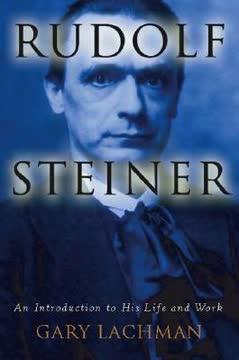
by Gary Lachman
Premium summary · Opens in the app · 30 min read
In the autumn of 1922, a remarkable building rose from a hillside in Dornach, Switzerland. The first Goetheanum, with its sweeping organic forms, double domes, and absence of right angles, looked unlike anything else in Europe. It was not a church, not a theater, not a university, yet it contained elements of all three. It was the physical embodiment of a worldview that its creator called Anthroposophy, from the Greek words for "wisdom of the human being."
**An Introduction to His Life and Work**
**Author:** Gary Lachman **Estimated Reading Time:** 45 minutes
Rudolf Steiner was one of the most prolific and controversial spiritual thinkers of the twentieth century. His ideas spawned movements in education, agriculture, medicine, art, and social reform that continue to grow worldwide. Yet for many, Steiner remains an enigma, a figure whose work is more often encountered through its applications than through a genuine understanding of his core philosophy.
This condensed edition of Gary Lachman's biographical study will take you through Steiner's remarkable intellectual and spiritual journey. You will learn how a scientifically trained philosopher from rural Austria became the founder of Anthroposophy, a "spiritual science" that sought to bridge the chasm between the material and spiritual worlds. You will discover the central role of freedom in Steiner's thought, his radical approach to human consciousness, and the practical innovations that emerged from his spiritual investigations. You will also encounter the controversies and criticisms that surrounded his work, gaining a balanced view of a thinker whose influence continues to expand more than a century after his death.
This book is for anyone who has encountered Steiner's ideas through Waldorf schools, biodynamic farming, or anthroposophical medicine and wants to understand the philosophy behind the practices. It is for readers curious about alternative spiritual paths that do not require abandoning reason. It is for those who sense that the materialist worldview is incomplete but find traditional religion unsatisfying. And it is for anyone interested in the history of modern esotericism and the remarkable individuals who shaped it.
In the autumn of 1922, a remarkable building rose from a hillside in Dornach, Switzerland. The first Goetheanum, with its sweeping organic forms, double domes, and absence of right angles, looked unlike anything else in Europe. It was not a church, not a theater, not a university, yet it contained elements of all three. It was the physical embodiment of a worldview that its creator called Anthroposophy, from the Greek words for "wisdom of the human being." The building's creator was Rudolf Steiner, a man whose life and work defy easy categorization. Was he a philosopher? A mystic? A scientist? An educator? An artist? He was all of these and none of them, or rather he was something that transcended the categories themselves. By the time of his death in 1925, Steiner had delivered more than six thousand lectures, written dozens of books, and founded movements that would reshape education, agriculture, medicine, and the arts. Yet Steiner remains a polarizing figure. To his followers, he was a spiritual teacher of the highest order, a man who could perceive spiritual realities as clearly as others perceive the physical world. To his…
Continue reading in the MinuteRead app
Get the complete 30-minute summary of Rudolf Steiner
Get the complete summary in the appAnthroposophy is a path of knowledge, not a body of doctrines. It aims at the development of cognitive capacities that e
Freedom is the capacity to act from conscious insight rather than from habit, impulse, or external pressure. It is the c
Thinking is not merely subjective. When we think truly, we participate in the objective intelligibility of the world.
The human being is a threefold being of body, soul, and spirit. Health, education, and social life must address all thre
Waldorf education addresses the whole child through a developmentally appropriate curriculum that balances intellectual,
Biodynamic agriculture treats the farm as a living organism and uses specific preparations and practices to enhance the
"Rudolf Steiner" is a strong fit if you want practical ideas around biography, philosophy, religion, especially themes like anthroposophy is a path of knowledge, not a body of doctrines. it aims at the development of cognitive capacities that e; freedom is the capacity to act from conscious insight rather than from habit, impulse, or external pressure. it is the c. The MinuteRead summary distills these concepts into a focused read, whether you're deciding whether to buy the book or applying its lessons at work.
Gary Lachman is an American writer and musician known for his extensive work on mysticism and the occult. As a founding member of the band Blondie, Lachman transitioned from music to writing, establishing himself as a respected author in esoteric and philosophical subjects. His background in both creative and scholarly pursuits allows him to approach complex topics with unique insight. Lachman's writing style is praised for its clarity and accessibility, making intricate concepts understandable …
View all summaries by Gary LachmanContinue Reading
Access the complete 30-minute summary and thousands more nonfiction books in the MinuteRead app.

Continue reading the complete summary in the MinuteRead app.